Hua Hin
Culture & Context
cultural_context_headline: ROYAL COASTAL RETREAT
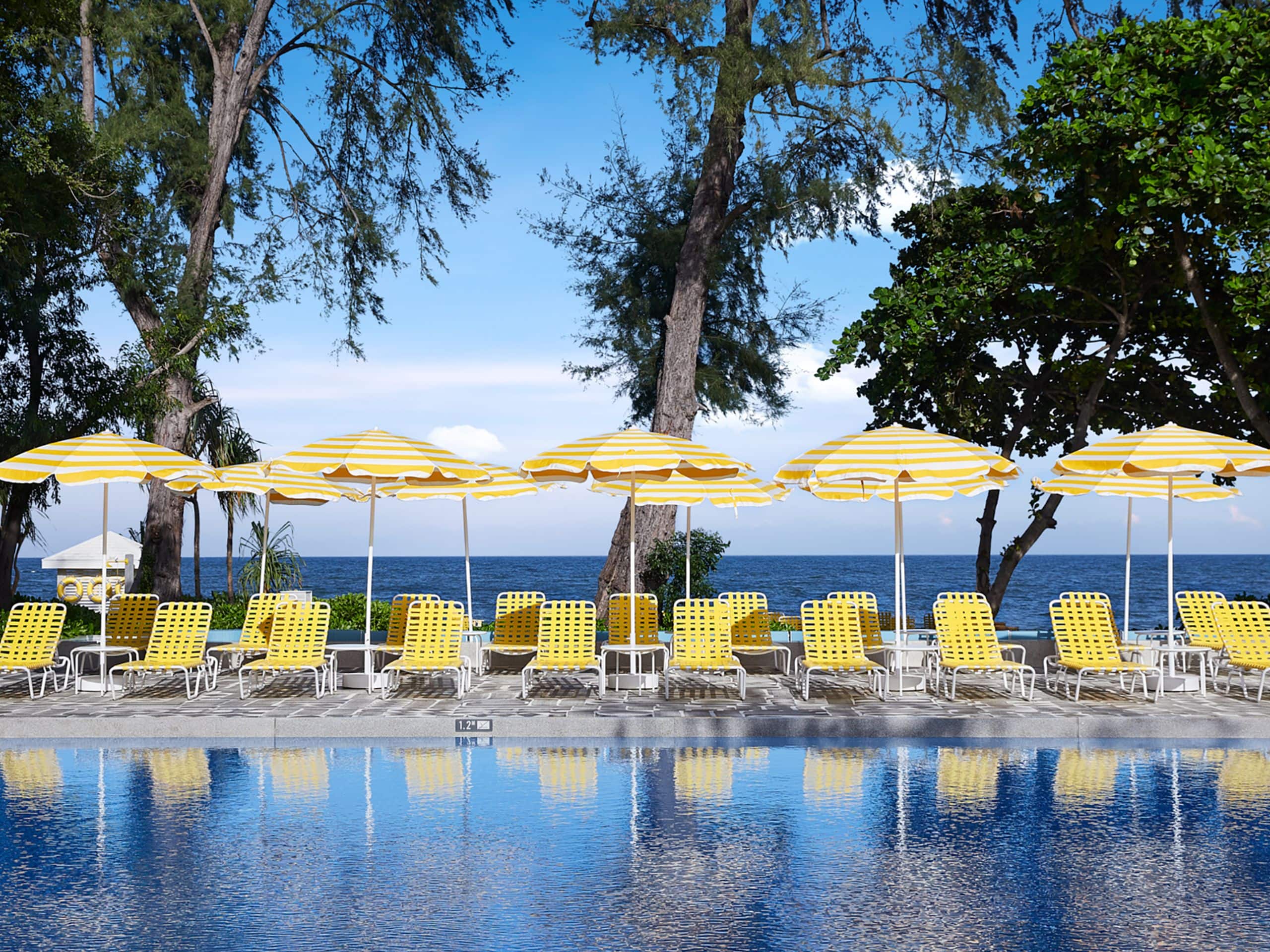
Hua Hin is Thailand's original beach resort, and it carries that history without making a big deal of it. King Rama VII built Klai Kangwon Palace here in the 1920s. The name translates to "Far From Worries." That's still the most accurate description of the place. The royal family still uses it, which means the town has never been allowed to turn into another Pattaya. No go-go bars. No Full Moon Party flyers. No armies of touts outside every restaurant.
What you get instead is a genuinely Thai coastal town. Most restaurants here serve real Thai food at real Thai spice levels, because their main customers are Thai families and Bangkok weekenders, not package tourists. The night markets on Dechanuchit Road have been operating for decades. The Cicada Market near the Hyatt adds a more arts-and-crafts layer on Friday through Sunday evenings. There's also a legitimate wine scene, with Monsoon Valley Vineyard and Hua Hin Hills producing wines that regularly surprise visitors expecting something mediocre.
Golf is a serious part of the culture here. Ten courses within 30 minutes of downtown. Six of them championship grade. Thai men love golf, retirees love golf, and Hua Hin has quietly built its identity around that fact. The kite surfing scene is equally serious. During November through March, the sky above the beach can fill with hundreds of kites. Asia's best kite surfing conditions, some say second only to Vietnam's Mui Ne.
The town sits in a rain shadow created by nearby mountains, making it one of the driest spots in Thailand. Fewer rainy days than almost anywhere else in the country.
Local Customs
Shoes off before entering temples, homes, and many traditional shops.
When in doubt, look at the floor near the entrance. A pile of shoes answers your question..
Return the wai (hands pressed together, slight bow of the head) when someone greets you with one. As a foreigner you don't need to initiate it, but ignoring a wai is considered rude.. The Thai royal family is deeply revered, and criticism is both offensive and legally serious.
If you hear the national anthem played from loudspeakers at 8am or 6pm in a public space, stop and stand still until it finishes.. Never touch anyone on the head. Even patting a child's head affectionately crosses a line in Thai culture.
The head is considered sacred.. Feet are the opposite — lowest and least clean. Don't point them at people, at Buddha statues, or at anyone while sitting.
Tuck them away or sit cross-legged.. Eat with a spoon in your right hand and fork in the left. Push food onto the spoon, don't put the fork directly in your mouth.
Chopsticks are for noodle soups only. Leaving a small amount on your plate signals you're full.. Bargaining at markets is fine, but keep it light and good-humored.
Getting aggressive or showing frustration causes loss of face for everyone involved.. Dress modestly for temples. Shoulders and knees covered, no sleeveless shirts.
Some temples keep wraparound sarongs at the entrance if you forget.. Adding 'krub' (men) or 'ka' (women) to the end of sentences is the basic politeness marker in Thai. Even tacking it onto 'thank you' (khob khun ka/krub) will earn you genuine smiles.
Safety
safety_headline: VERY SAFE
Hua Hin has a safety index of around 65 out of 100, putting it on par with Sydney. Around 88 out of 100 visitors and residents report feeling fully secure walking at night. Violent crime against tourists is extremely rare. Theft risk is similarly low, with 91 out of 100 people reporting no concern.
The risks that do exist are mostly transactional. Jet-ski rental scams are the classic: operators claim pre-existing scratches are your fault and demand on-the-spot repair fees. Photograph every surface before you ride, and use operators who issue signed condition forms. Fake police fines are another one. A man in plain clothes claiming you littered and demanding 1,000 THB cash. Real officers issue tickets payable at the station. Ask to be taken to the Tourist Police booth on Soi Bintabaht if this happens. Tuk-tuk drivers steering you to beer bars with padded bills also appear in the logbooks every month.
Practical things: avoid tap water and unverified ice. Monkeys at Khao Takiab will absolutely snatch food, sunglasses, and phones. Keep belongings secured. During the northeast monsoon (October onward), the municipality puts up red flags on sections of beach. Red flag means no swimming, full stop. Always check the flag before entering the water.
Emergency contacts: Tourist Police 1155 (English-speaking, 24/7). Bangkok Hospital Hua Hin on Phetkasem Rd handles most medical emergencies and accepts major travel insurance. San Paulo Hospital (Soi 94) has 24-hour emergency, dental, and pediatrics.
Getting Around
transport_headline: SONGTHAEW & SCOOTER
No commercial flights to Hua Hin in 2026. The airport handles private and charter only. Almost everyone arrives by road or rail.
From Bangkok, the fastest option is a minivan from Victory Monument, running about 3 hours for roughly 250-300 THB. Buses from the Southern Bus Terminal are cheaper and slightly slower. Private taxi or Grab runs 1,800-2,500 THB and goes door to door in 2.5-3 hours. The train from Hua Lamphong or Bang Sue is the slowest (3-4 hours) but the most scenic, cutting through flat countryside. Worth taking if the journey itself is the point.
Inside Hua Hin, the green songthaew (shared pickup truck) along Phetkasem Road costs just 7-15 THB per ride and covers most of the town's main arteries. It's the locals' choice. Tuk-tuks are available but negotiate the price before you get in. Grab works well and avoids meter disputes entirely. Motorbike rentals run 2,500-4,500 THB per month for longer stays, or daily rentals for shorter trips. The town is compact enough that most of the central area is reachable in 10-15 minutes by any transport. A high-speed rail connection to Bangkok is reportedly under construction, which would change the commuter dynamic significantly once complete.
Useful Phrases
Where to Stay in Hua Hin
9 recommended properties