Siena
Gothic masterpiece hosting the famous Palio horse race
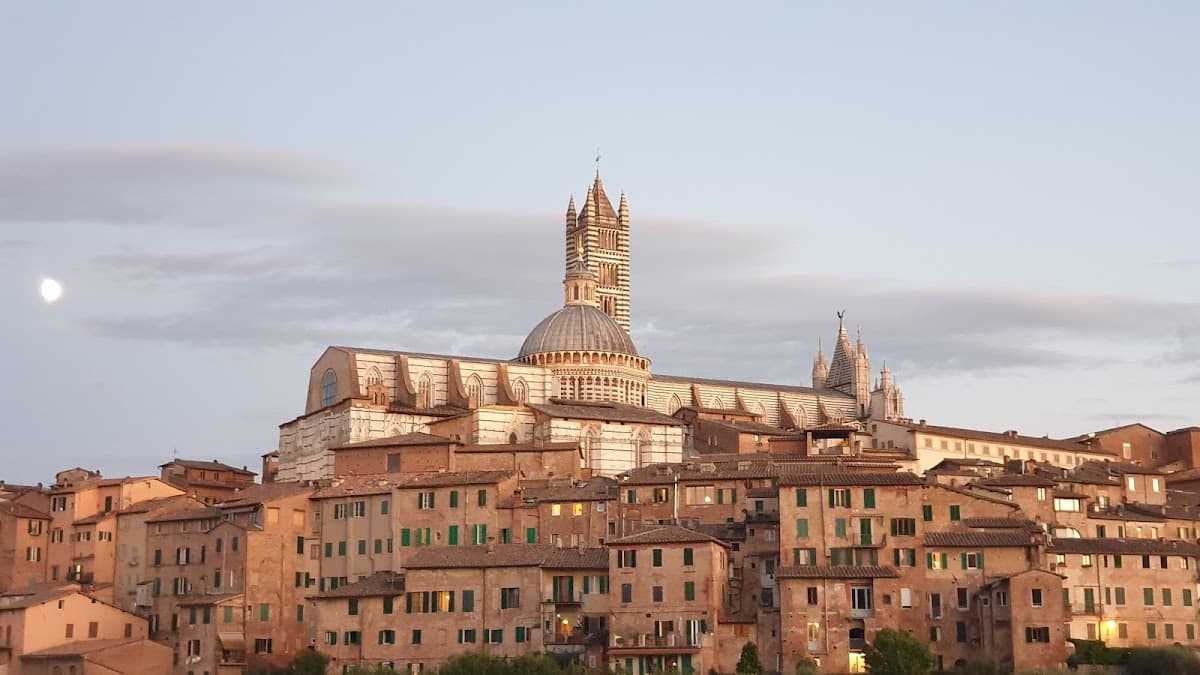
Siena stops you in your tracks. This medieval city in Tuscany's heart looks like someone froze time around 1348 — and that's exactly what happened. The Black Death hit, construction stopped, and Siena never got the Renaissance makeover that transformed other Italian cities. Lucky us.
The result? A Gothic masterpiece where narrow stone streets wind between towering palazzos, leading to the shell-shaped Piazza del Campo. Twice a year, this square transforms into a racetrack for the Palio, the most intense horse race you'll ever witness. Ten horses, no saddles, 90 seconds of pure chaos that the entire city lives for.
But Siena's magic runs deeper than its famous race. This is where Tuscan cooking gets serious — forget tourist traps and dive into osterie where locals argue over the perfect pici pasta. The Duomo's black and white stripes slice through the skyline like a medieval skyscraper, while the surrounding hills roll away in every direction, dotted with cypress trees and vineyards.
Best Months
APR · MAY · JUN · SEP · OCT
~23°C · high crowds
Culture & Context
CONTRADA LOYALTY RUNS DEEP
Siena runs on contrada loyalty. Full stop. The city is divided into 17 historic neighborhoods, each with its own animal symbol, colors, church, motto, and community structure going back to the Middle Ages.
These are Aquila, Bruco, Chiocciola, Civetta, Drago, Giraffa, Istrice, Leocorno, Lupa, Nicchio, Oca, Onda, Pantera, Selva, Tartuca, Torre, and Valdimontone. Locals aren't just "from Siena." They're from Tartuca or Oca, and that matters more than you'd expect.
Look for the small colored coats of arms on corner buildings as you walk. They mark contrada boundaries. The Palio horse race on July 2 and August 16 each year is the emotional center of everything.
It's not pageantry for tourists. It's deeply real to the people who live here. Beyond the Palio, the city runs on three main sections: Terzo di San Martino (the civic hub around Piazza del Campo), Terzo di Città (the cultural and religious quarter around the Duomo), and Terzo di Camollia (the northern district along Via Banchi di Sopra).
Monte dei Paschi di Siena, headquartered in Palazzo Salimbeni on Piazza Salimbeni, was founded in 1472 and is still one of the oldest active banks in the world. This city has been doing things its own way for a long time.
Local Customs
CAPPUCCINO BEFORE 11AM
Don't order a cappuccino after about 11am. Italians consider milk-based coffee drinks a morning thing, tied to digestion. An espresso (un caffè) is always appropriate.
You can order what you want, but you'll get a look.. Walk into any shop, bar, or restaurant and say 'Buongiorno' (before noon) or 'Buonasera' (afternoon onward). Not doing this is considered rude.
It takes one second and people genuinely appreciate it.. Don't eat and walk. Sit down, slow down.
Food is meant to be eaten at a table. This applies even to a cornetto from the bar.. The bill won't come until you ask for it.
Flag down your server and say 'Il conto, per favore.' Waiting for it to appear will leave you sitting there a long time.. Cover shoulders and knees in every church.
Not just the big ones. Every chapel. Ladies, a maxi dress with a shawl is the practical answer in summer..
Tipping is not expected the way it is in the US. Round up or leave a couple of euros for genuinely good service. The coperto on your bill (a cover charge, often €1.
50-3 per person) is not the same as a tip. Pay it, it's normal.. The passeggiata is real.
Around 6-8pm, locals stroll Via Banchi di Sopra and Piazza del Campo. Join it. Grab a gelato, walk slowly, don't be on your phone the whole time..
Restaurants often don't open for dinner until 7:30 or 8pm. If you show up at 6pm expecting a table, you'll find chairs still on the tables.
Safety
VERY SAFE, WATCH ZTL
Siena is genuinely safe. Low crime, compact layout, and a strong local community (the contrade system actually maintains social cohesion that keeps crime rates down). The main risks are entirely mundane.
Driving into the ZTL restricted zone without authorization triggers €100+ fines per camera crossing, and cameras run 24/7. Multiple crossings in one trip can stack to €200-300. Don't drive into the historic center.
Park at Santa Caterina or San Francesco and walk or take the bus. During crowded Palio events in July and August, the Campo becomes extremely packed. Keep your bag in front of you and stay aware in the thickest parts of the crowd.
The summer heat can be serious. Siena's hills and stone streets retain heat intensely. Carry water, wear a hat, and build in breaks during the hottest part of the day (2-4pm).
The Torre del Mangia climb (400+ steps, steep and narrow) is completely inaccessible without serious physical effort and has no elevator alternative.
Getting Around
WALKABLE HISTORIC CENTER
The historic center is a 24/7 pedestrian zone with cameras at every entry point. This is good news: once you're inside, you walk everywhere. The city is compact enough that most attractions are within a 15-20 minute walk of each other.
Getting from the train station to the center without dying on the uphill walk: use the Risalita Stazione escalator system inside the Porta Siena shopping center directly across from the station exit. It takes you up to Porta Camollia and a flat walk into the center. For buses, the 54 route (Piazza Gramsci to San Domenico) hits all major parking areas every 7 minutes.
The 50 bus connects the train station to the Duomo area. Buy a "Carta SI" multi-ride pass at any tobacco shop (tabaccheria) to save around 40% versus buying onboard. The Tip Tap contactless system now lets you just tap your card on boarding.
Free electric minibuses called "pollicino" navigate narrow streets that regular buses can't reach and stop near the Pinacoteca museum area. Evening buses N1 and N2 run until 1:30am. Getting to Siena: from Florence, the direct bus takes about 1h15 and drops you at Piazza Gramsci in the center, much better than the train (which requires a transfer and drops you outside the walls).
From Rome, expect around 3 hours by train or bus. Ride-hailing apps like Uber and Bolt don't operate here. It's taxis or nothing.
Useful Phrases
Siena Itineraries
Money-Saving Tips
- 1.Buy groceries at Conad on Via Taddeo di Bartolo — way cheaper than tourist shops in the center
- 2.Free Duomo entry before 10:30 AM on weekdays (usually €8 for the full complex)
- 3.Happy hour aperitivo includes free snacks — basically dinner for €8-10
- 4.Park outside the walls at Santa Caterina lot (€1/hour vs €2/hour downtown)
- 5.Municipal water fountains throughout the city — bring a bottle and skip €3 tourist water
- 6.Student discounts at museums if you're under 25 with ID — sometimes 50% off
Travel Tips
- •Book Palio accommodations 6+ months ahead — prices quadruple during race weekends
- •Wear comfortable shoes with good grip — those medieval stones get slippery when wet
- •Learn the contrade (neighborhood) names — locals take their allegiances seriously
- •Restaurant kitchens close 2:30-7:30 PM — plan lunch and dinner accordingly
- •ATMs inside the walls charge higher fees — withdraw cash at the train station
- •Duomo visits require modest dress — shoulders and knees covered, even in summer
- •Evening light hits the buildings best around 6 PM — prime photo time
Frequently Asked Questions
Explore Siena
BUILD YOUR SIENA PLAN
Insider picks, smart timing, and a plan ready when you are.