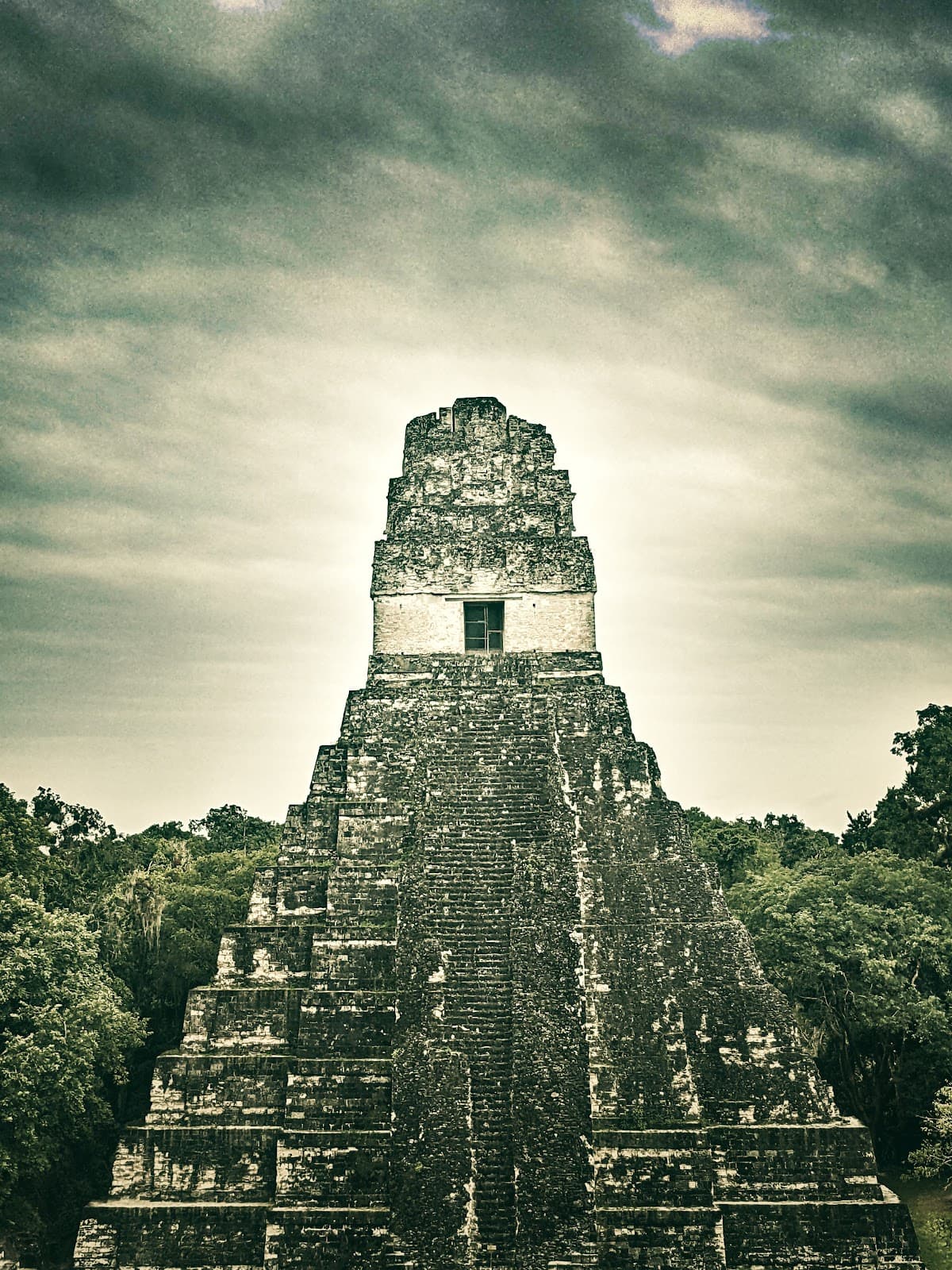
Tikal National Park
Guatemala's jungle-wrapped Maya pyramids echoing with howler monkeys
You hear them before you see anything else. Deep, guttural howler monkey calls echo through the canopy at 5 AM, nature's alarm clock in one of Guatemala's most spectacular national parks. Tikal isn't just another collection of ruins – it's 575 square kilometers of pristine rainforest hiding some of the tallest pre-Columbian structures in the Americas. Temple IV rises 65 meters above the jungle floor, taller than most city buildings. But here's what the guidebooks won't tell you: the magic happens in the spaces between the pyramids, where jaguars still roam and over 200 tree species create a living cathedral. You'll sweat through your shirt by 9 AM. The mosquitoes are relentless. And you'll probably get lost at least once on the maze of jungle trails. But when you climb Temple IV at sunrise and watch the mist rise over an endless green canopy punctuated by ancient stone peaks, you'll understand why this place has been sacred for over 2,000 years.
Best Months
JAN · FEB · MAR · APR · DEC
Culture & Context
MAYA KINGDOM BURIED
Tikal was the capital of one of the most powerful Maya kingdoms ever built. At its peak around 700 AD, somewhere between 60,000 and 90,000 people lived here, trading across routes that stretched from Mexico to Honduras. Then the city collapsed around 900 AD and the forest swallowed almost everything.
The Guatemalan government officially recognized the site in 1848 (February 26 is still commemorated as National Cultural Heritage Day). Archaeological excavations have been running since the 1950s. But here's the thing: only a fraction of the estimated 3,000 structures on the site have been excavated.
Entire sections of the ancient city are still buried under what look like jungle hills. You'll walk past them without knowing it unless a guide points them out. The Itza' Maya, whose ancestors built this city, still live nearby around Lake Petén Itzá.
Their language is critically endangered, with fewer than 40 fully fluent speakers remaining, all older adults. The Guatemalan government banned speaking Itza' in the 1930s, and two generations grew up learning only Spanish. Revitalization efforts have been underway since the 1980s, but the clock is running.
Most daily communication in the region is in Spanish, with Q'eqchi' also spoken across much of the Petén. And yes, Star Wars fans: Temple IV was filmed as the Rebel base on Yavin 4 in 1977. George Lucas's crew hauled equipment up using a pulley system and bribed a local security guard with six-packs of beer.
Local Customs
BUY TICKETS IN ADVANCE
Buy tickets before you go — not at the park. Purchase them online at boletos.culturaguate.
gob.gt (pay with a foreign Mastercard or Visa) or in cash at any BANRURAL bank branch beforehand. There is no ticket office inside the main park area.
The entrance kiosk at the park's outer gate is 17km from the temples and visitor center.. No ATMs anywhere inside the park. Come with enough quetzales.
The BANRURAL at Mundo Maya Airport in Santa Elena is open until 7pm and is the most convenient last stop before heading to Tikal.. Avoid Sundays if possible. Guatemalan citizens enter free on Sundays, which means bigger crowds from domestic day-trippers..
A certified guide is legally mandatory for sunrise tours (4-6am) and sunset tours (6-8pm). The park will not let you in during those hours without one. You can hire guides at the entrance gate during regular hours, but supply is not guaranteed — arrange in advance for early access..
Don't hand-feed the coatimundis. They're bold around the food stalls and will go through your bag given half a chance. They can bite..
Bring at least 2-3 liters of water per person. Bottled water inside the park costs $3-5 a bottle. The heat builds quickly after 9am, especially May through October..
Tickets purchased after 3pm were historically valid for the following day, but this rule has changed — confirm current policy on the official website before assuming.. Tipping guides 10-15% is expected and appreciated. Park restaurant staff appreciate tips as well, though they are not mandatory.
Safety
INSIDE SAFE, ROADS RISKY
The inside of Tikal National Park is well-patrolled by CONAP guards and considered safe. No serious crimes inside the park have been widely reported in at least a decade. That said, the more serious concern is the highway.
Do not drive the Guatemala City-to-Petén highway at night — isolated stretches have a documented robbery risk. Same goes for the road between Flores and Tikal after dark without a shuttle. Flores and El Remate are both safe tourist towns and pleasant to walk around at night.
Watch your footing on the steep wooden staircases built alongside certain temples — they feel more precarious than the stone ruins and accidents do happen on the descent. Keep your bag close around the food stalls and restaurant areas where coatimundis actively forage through tourist bags. Mosquitoes and insects are constant in the jungle; DEET-based repellent is not optional.
Medical facilities in the Petén region are limited, so travel insurance with medical evacuation coverage is strongly advisable for this trip.
Getting Around
FLY OR OVERNIGHT BUS
Getting to Tikal requires a two-step journey for most international visitors. The fastest approach: fly into Guatemala City (GUA), then catch a connecting domestic flight to Flores/Santa Elena (airport code FRS) on TAG Airlines or Avianca. The flight takes about 1 hour and costs roughly $60-120 one way.
From Flores airport, tourist shuttles to Tikal take about 90 minutes and cost $8-12 round trip. The alternative is an overnight bus from Guatemala City to Flores on Linea Dorada or ADN — 8-10 hours, departing around 9-10pm, arriving at dawn. Costs Q150-300 ($19-39) for the premium "luxury" class with reclining seats and AC.
A smart move: fly one direction, bus the other. Once in Flores, shuttle services meet most flights. Chicken buses from Santa Elena run regularly to Tikal for $3-5 round trip (first bus at 3:30am, last return at 5:30pm), though schedules can be unreliable.
Private taxis run $40-60 round trip for groups of four. Coming from Belize? The border crossing at Melchor de Mencos is only 1.
5 hours from Tikal. Shuttles from San Ignacio, Belize run daily for BZ$50-80. Park hours are 6:00am to 6:00pm daily.
Sunrise tours begin at 4:00am and require a separate ticket plus a mandatory licensed guide. Parking inside the park costs Q20/day ($2.60).
Useful Phrases
Itineraries coming soon
We're working on adding amazing itineraries for Tikal National Park. In the meantime, try the app to create your own!
Money-Saving Tips
- 1.Bring exact change in quetzales for park entry - the ticket booth doesn't give change for large bills
- 2.Pack your own snacks and water to avoid the overpriced visitor center shop
- 3.Stay in Flores instead of park lodges to save $150+ per night
- 4.Rent bikes at the entrance for $10 to cut walking time and see more sites
- 5.Book sunrise tours through your hotel to avoid middleman markup fees
- 6.Eat lunch in El Remate on the way back - cheaper than park or Flores restaurants
Travel Tips
- •Arrive at 6 AM opening for best wildlife viewing and cooler temperatures
- •Download offline maps before entering - cell service is spotty in the park
- •Wear long pants and sleeves despite the heat to avoid mosquito bites
- •Bring a headlamp for early morning temple climbs - sunrise tours start in darkness
- •Keep your park receipt handy - guards check it multiple times on trails
- •Book accommodations well in advance, especially December through March
- •Consider hiring a guide for wildlife spotting - they know where animals hang out
- •Pack extra batteries for cameras - the humidity drains them faster than usual
Frequently Asked Questions
Explore Tikal National Park
BUILD YOUR TIKAL NATIONAL PARK PLAN
Insider picks, smart timing, and a plan ready when you are.