Svalbard
Arctic wilderness at the edge of the world's northernmost frontier
Forget everything you know about island getaways. Svalbard sits 800 miles from the North Pole, where polar bears outnumber humans and the sun doesn't set for four months straight. This isn't your typical tropical escape — it's raw Arctic wilderness that'll challenge every assumption about what an island vacation looks like.
Here's the thing about Svalbard: you can't just show up. The Norwegian government requires permits, and you'll need to join organized tours for most activities. But that's exactly what makes it special. You're entering one of Earth's last true frontiers, where glaciers crash into the sea and Arctic foxes hunt beneath the northern lights.
The main settlement, Longyearbyen, feels like a frontier town from another planet. Population 2,400. No cats allowed (they hunt Arctic birds). Everyone removes their shoes indoors. And yes, you really do need to carry a rifle outside town limits because of polar bears.
Best Months
MAR – SEP
~-1°C · high crowds
Culture & Context
GEOPOLITICS & COAL GRIT
Svalbard is technically Norway but operates under a separate treaty — the 1920 Svalbard Treaty — that grants citizens of all 46 signatory nations the right to live and work here without a visa. The result is a town of 2,400 people from 53 different nationalities, including a functioning Russian settlement at Barentsburg that adds a genuinely Cold War-era layer to the geopolitics. There's active debate about sovereignty and security in 2026.
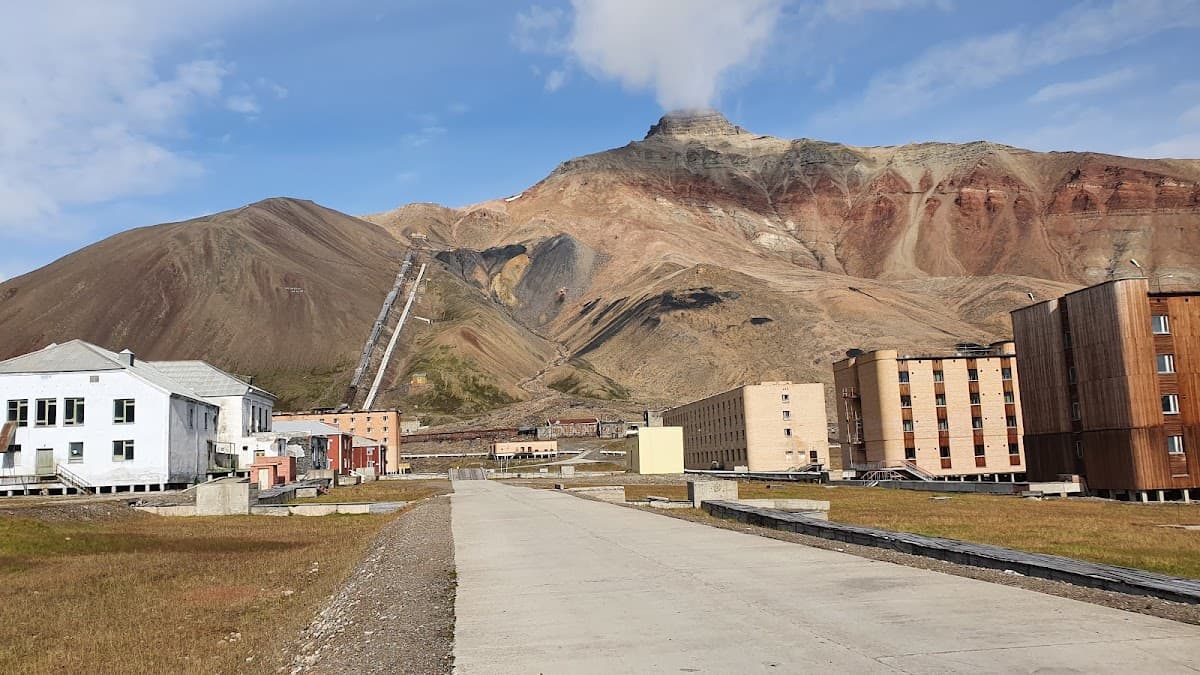
The town itself started as a coal-mining operation in 1906, founded by an American named John Munro Longyear. Mining still happens at Mine 7, about 15km up Adventdalen. The industrial bones of the place are everywhere: cable car pylons on the hillsides, old mine entrances, workers' barracks repurposed as hotels. It does not look like a resort town. And that's exactly what makes it interesting.
About 65% of Svalbard's landmass and 86% of its territorial waters are protected as national parks, nature reserves, or bird sanctuaries. The Svalbard Environmental Protection Act (2001) governs nearly everything. Don't pick flowers in summer. Don't disturb bird cliffs. Don't take anything from the landscape — including reindeer antlers you find on the ground, without checking regulations first.
The community ethos here is shaped by the reality of remote Arctic life. People help each other because they genuinely have to. Visitors consistently note that locals in Longyearbyen are more open and welcoming than on the Norwegian mainland — a warmth born out of shared conditions rather than tourist-industry cheerfulness. Come with genuine curiosity and you'll get it back tenfold.
Local Customs
UNLOCKED DOORS, REAL STAKES
Doors in Longyearbyen are traditionally left unlocked. This is a genuine safety custom — if a polar bear is chasing you, you need to get inside fast. Visitors should only use this as it was intended: in a real emergency.
Don't leave anything valuable near an unlocked door and don't treat it as an open invitation.. Remove your outdoor boots at the entrance of homes and many guesthouses. Bring a pair of light slip-ons or indoor shoes.
Several places will ask for this. It's a practical habit in a place where you can track in snow, mud, and worse.. Janteloven — the 'law of Jante' — is the unofficial social code across Scandinavia.
The core idea: nobody is better than anyone else. Don't brag, don't show off wealth, don't talk about income. Locals don't ask about your salary; don't ask about theirs.
Keep conversation grounded.. When toasting, make eye contact with every single person at the table before you drink. Skipping someone is noticed and considered rude.
It takes 10 extra seconds and earns significant goodwill.. Book guided tours early — sometimes six months in advance for peak season activities. The wilderness outside Longyearbyen is legally off-limits without a guide who carries polar bear protection.
This isn't a suggestion; it's enforced. Don't try to freelance it.. The European Health Insurance Card (EHIC) does not apply in Svalbard.
Medical care is expensive and must be paid out of pocket (except for Nordic citizens and those under the Norwegian National Insurance Scheme). Buy comprehensive travel insurance that explicitly covers Svalbard, including search and rescue. Standard travel insurance often excludes SAR costs..
When someone raises a toast, wait until the host initiates before drinking. And finishing everything on your plate at a private dinner is a genuine compliment to the cook.. Outside designated polar bear warning signs at the edge of Longyearbyen, you are legally required to carry polar bear protection — minimum a flare gun with multiple flares, ideally a rifle if you have the training.
Guides carry all of this on organized tours; you don't have to worry about it if you've booked properly.
Safety
POLAR BEARS RULE
Polar bears are the headline risk and it's real. About 3,000 polar bears live in the Barents Sea population, and roughly 300 are on Svalbard year-round. They roam the entire archipelago. Within Longyearbyen's marked safe zone (shown on a free map available at the tourism office), you can walk freely. Past the polar bear warning signs at the edge of town — the ones that say 'Gjelder hele Svalbard' — you are legally required to carry polar bear protection. Minimum is a flare gun with multiple flares; a rifle is safer. Guides on organized tours carry all of this. Don't go beyond those signs without one.
Arctic foxes can carry rabies in Svalbard. Never approach or touch one, no matter how charming they look. Same goes for reindeer — they're wild animals, not photo props.
Weather is the second big risk. It changes fast. Proper layered clothing is essential outside, even in summer. Hypothermia is possible if you're underprepared.
Medical facilities in Longyearbyen are basic. The hospital handles emergencies, but serious cases get airlifted to mainland Norway. The European Health Insurance Card does not apply here. Buy travel insurance that explicitly covers Svalbard, Arctic activities like snowmobiling, and emergency medical evacuation. Standard policies often exclude search and rescue costs — get a separate SAR policy if you're heading into the wilderness independently.
In terms of crime and personal safety within the town: Longyearbyen is one of the safest places on earth. The community is small, tight-knit, and genuinely looks out for each other. Solo travelers report feeling completely at ease at any hour within the settlement.
Getting Around
SNOWMOBILES & BOATS
Getting to Svalbard means flying. SAS and Norwegian Airlines operate daily routes from Oslo (about 3 hours) and Tromsø. Book early — prices climb fast and last-minute seats are often both scarce and expensive. There is no regular ferry or boat service from the mainland.
Once you land at Longyearbyen Airport, an airport shuttle meets all scheduled arrivals. The airport is 3km west of town. Taxis exist but are limited — if you're staying outside the central cluster of hotels, check pickup arrangements in advance.
Inside Longyearbyen, there are only about 40km of roads total, all within the settlement. You walk, take a taxi, or get collected by your tour operator. The streets have numbers, not names, but the town is small enough that getting lost is basically impossible.
Beyond Longyearbyen: there are no roads connecting settlements. In winter and spring, snowmobiles are the main mode of transport across the frozen landscape — guided day trips to glacier fronts, old trapping cabins, and the east coast are available. A valid Category B driving licence (standard car licence) is accepted for snowmobile operation. In summer, small boats and rigid inflatables (RIBs) access Isfjord Radio, Barentsburg, and Pyramiden. Isfjord Ekspressen runs daily sailings between Longyearbyen and Isfjord Radio from June to mid-September. Ny-Ålesund is only accessible by day-trip boat in summer. No solo wilderness travel without proper polar bear protection and prior notification to the Governor of Svalbard.
Useful Phrases
Itineraries coming soon
We're working on adding amazing itineraries for Svalbard. In the meantime, try the app to create your own!
Money-Saving Tips
- 1.Book accommodation and flights together through tour operators for package deals that can save 20-30%
- 2.Bring cash - many small vendors don't accept cards, and ATMs are limited to Longyearbyen center
- 3.Pack all cold weather gear before arriving - buying Arctic clothing in Svalbard costs 3x mainland prices
- 4.Join group tours instead of private guides to split costs - a private polar bear tour costs $2000+ vs $400 per person in groups
- 5.Eat breakfast at your hotel and pack lunches for day trips - restaurant meals easily hit $80 per person
- 6.Book summer trips 6+ months ahead for better flight and hotel rates before peak season pricing kicks in
Travel Tips
- •Carry a rifle or stay with armed guides outside Longyearbyen - polar bear encounters are real and potentially fatal
- •Remove shoes when entering any building - it's strictly enforced local custom throughout Svalbard
- •Pack layers, not just heavy coats - summer temperatures swing 30 degrees between day and night
- •Download offline maps before arrival - cell service exists only in Longyearbyen and is spotty at best
- •Bring sunglasses even in winter - snow blindness from reflected light is common year-round
- •Book tours immediately upon arrival - popular wildlife expeditions fill up fast, especially in summer
- •Respect wildlife viewing distances - polar bears can run 25 mph and walruses are surprisingly aggressive when approached