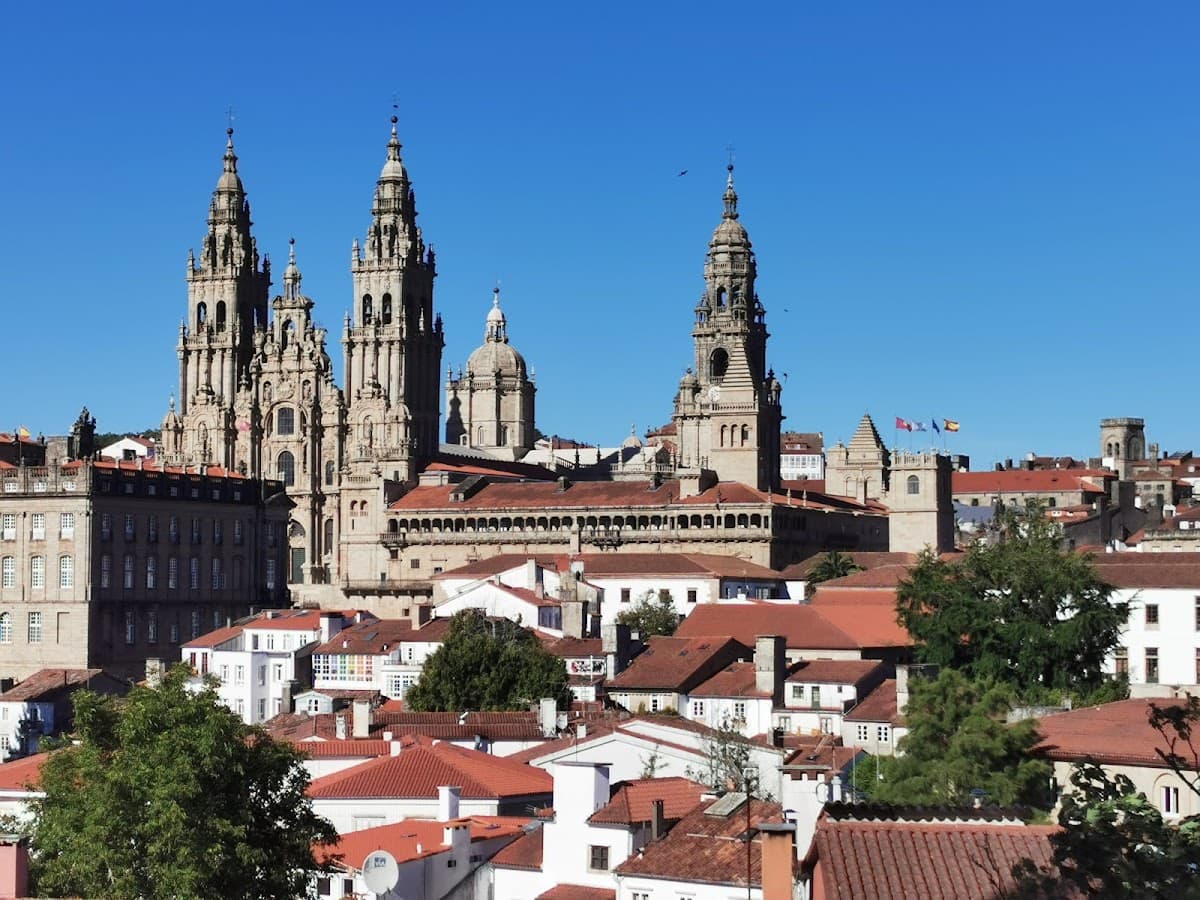
Santiago de Compostela
Sacred pilgrimage destination with medieval charm and spiritual energy
Santiago de Compostela sits at the end of the world's most famous pilgrimage route, and the city carries that weight beautifully. Stone streets worn smooth by millions of footsteps lead to one of Christianity's holiest sites, but don't let the religious significance fool you into thinking this is all solemn ceremony. The Galician capital pulses with student energy, serves some of Spain's best seafood, and maintains a laid-back charm that makes even non-pilgrims feel like they've found something sacred. Here's the thing: you don't need to walk 800 kilometers to appreciate what makes this place special.
Itineraries coming soon
We're working on adding amazing itineraries for Santiago de Compostela. In the meantime, try the app to create your own!
Money-Saving Tips
- 1.Pilgrim menus at restaurants cost €10-15 and include generous portions – you don't need to walk the Camino to order them
- 2.Buy groceries at Mercadona or Carrefour Express rather than tourist shops near the cathedral to save 30-40%
- 3.Many churches and museums offer free admission on Sunday mornings for locals – some extend this to all visitors
- 4.Galician wines cost half the price in local bars compared to hotel restaurants
- 5.The tourist bus costs €8 but Santiago's compact size makes walking free and more rewarding
- 6.Book accommodations outside peak pilgrimage season (July-August) for rates up to 50% lower
Travel Tips
- •Download the Santiago Tourism app for offline maps and audio guides to major sights
- •Carry an umbrella year-round – Galicia's weather changes quickly and rain is common
- •Learn basic Galician phrases like 'ola' (hello) – locals appreciate the effort over standard Spanish
- •Visit the cathedral's rooftop tours in advance – they sell out quickly and offer the best city views
- •Pack layers even in summer – Atlantic winds can make evenings surprisingly cool
- •Respect pilgrims at the cathedral – they've often walked hundreds of miles to reach this moment
- •Try to attend the daily Pilgrim Mass at noon for the full spiritual experience, even if you're not religious
- •Book restaurants in advance during festival periods, especially around Saint James Day (July 25)
Frequently Asked Questions
Explore Santiago de Compostela
Ready to explore Santiago de Compostela?
Get a personalized itinerary in seconds with Takeoff.
Free on iOS. No credit card required.