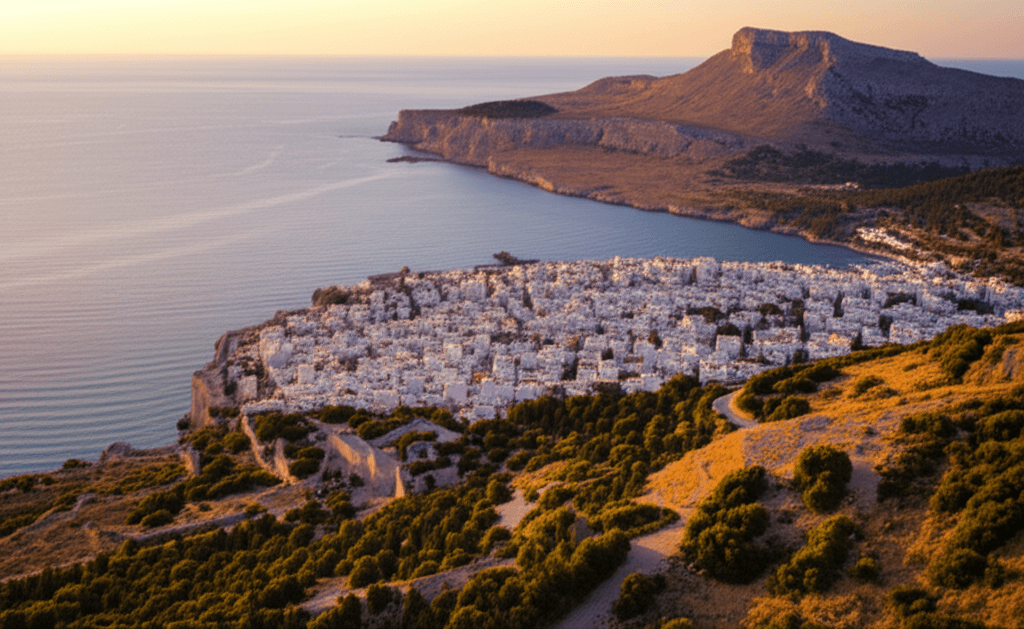
Rhodes
Greek island where medieval knights meet ancient wonders
Rhodes isn't your typical Greek island. Sure, you'll find the expected turquoise waters and whitewashed buildings, but this place throws medieval knights into the mix. The Old Town wraps you in 14th-century walls built by the Knights of St. John, while ancient Greek ruins dot the coastline. It's like someone took three different historical periods and decided they should all vacation together on the same island. The result? One of Greece's most fascinating destinations, where you can explore a crusader castle in the morning and lounge on Faliraki Beach by afternoon.
Best Months
APR · MAY · JUN · SEP · OCT
~26°C · moderate crowds
Culture & Context
EMPIRES LAYERED HERE
Rhodes has been Greek, Roman, Byzantine, Ottoman, Italian, and then Greek again — and all of it shows. The Old Town is the largest inhabited medieval city in Europe and a UNESCO World Heritage Site. The Street of the Knights, the Palace of the Grand Master, the minarets and mosques from the Ottoman period — it's genuinely layered in a way that most island destinations simply aren't.
Local food here uses cumin far more heavily than the rest of Greece. Traditional dishes include matsi (pasta in meat broth with cheese and legumes), tsouka (veal and pasta casserole), and lakani (slow-cooked veal or lamb in tomato sauce). Dinner starts late — 9 or 10pm is normal.
Arriving at a taverna at 6:30pm will get you an empty restaurant and possibly a baffled look. Greek hospitality (filoxenia) is genuine. Locals appreciate any attempt at Greek, even a mangled "efharisto.
" The island's Muslim community still celebrates Saint George on May 6 in Rodini Park — one of the more quietly remarkable cultural details on the island.
Local Customs
DINNER AT TEN PM
Dinner is genuinely late here — showing up at a restaurant before 9pm in summer means you'll be dining alone. Locals eat at 9:30 or 10pm.. At traditional tavernas, a bread or 'couvert' charge will appear on your bill automatically.
It's not a scam, it's just how it works.. Greeks say 'nai' (sounds like 'nay') for yes and 'oxi' (sounds like 'oh-hee') for no. This catches almost everyone off guard at least once..
Tipping is appreciated but not mandatory — around 10% at restaurants is considered generous.. Many shops and smaller businesses still close for a midday break (roughly 2–5pm), especially outside peak tourist season.. The Mouzomata custom in the village of Archangelos during Carnival (Apokries) is unique to Rhodes: participants paint their faces black and often paint visitors too.
It's fully participatory — lean into it.. Churches are open to visitors but dress modestly: covered shoulders and knees. This applies year-round, not just in the off-season..
On Epiphany (January 6), young men dive into the sea at village ports to retrieve a cross — it's worth watching if you're there in winter.
Safety
VERY SAFE, WATCH POCKETS
Rhodes is genuinely safe. Violent crime against tourists is extremely rare, and the vast majority of visitors have zero issues. That said, a few real things to know: Pickpockets do operate in the Old Town and crowded areas — keep bags zipped and wallets out of back pockets.
The Faliraki resort strip has a reputation for drunk tourist incidents, but it's mostly low-level nuisance stuff. Scooter accidents are common — wear a helmet, drive on the right, and don't underestimate how fast the roads open up once you leave town. Summer heat is the biggest practical risk: July and August regularly hit 30–38°C, occasionally above 40°C.
Stay hydrated and use SPF50+. Rhodes experienced wildfires in 2023 — while tourist areas are rarely directly affected, it's worth monitoring local conditions in summer. The Dodecanese area gets light-to-moderate earthquakes several times a year, but buildings in Rhodes are earthquake-resistant and most tremors are barely noticeable.
Tourist Police can be reached at +30 22410 27423. Rhodes Police Station: +30 2241 023849, at Ethelonton Dodekanision 45.
Useful Phrases
Rhodes Itineraries
Where to Stay in Rhodes
5 recommended properties
Caesars Gardens Hotel & Spa
luxury · Mod-bohemian, adults-only, laid-back Aegean chic. Think driftwood and stone textures alongside flat-screen TVs and Illy espresso machines. Couples and honeymooners dominate. The pool area has Bali beds and hammocks. Resident cats wander the gardens. · 19.2/10
Cook's Club Kolymbia Rhodes
upscale · Boho-minimalist with a music-forward, poolside social scene. Earthy neutrals, local materials, seasonal pops of color. The mood skews young-couple and solo-traveler — sociable but not rowdy-resort.
Casa Cook Rhodes
upscale · Luxe bohemian. Think polished concrete floors, rattan furniture, natural linen, live-edge wood and wicker lampshades. The design team — Berlin agency Lambs & Lions, interior designer Annabell Kutucu and architect Vana Pernari — built something that feels like it grew out of the Dodecanese landscape rather than being dropped onto it.
Ammades All Suites Beach Hotel & Spa - Adults Only
luxury · Modern design, eco-conscious boutique. Clean lines, contemporary interiors, strong Greek Mediterranean identity. Think calm and considered rather than flashy.
Kókkini Porta Rossa
luxury · Intimate and richly atmospheric. Stone walls, hand-picked antiques, vibrant art, and Ottoman architectural details sit alongside rainfall showers and complimentary Greek spirits. More cultured friend's home than commercial hotel.
Money-Saving Tips
- 1.Book accommodations in Lindos village rather than beachfront hotels - you'll pay half the price and it's a 10-minute walk to the beach
- 2.Eat lunch at inland villages like Embonas where taverna meals cost 12-15 euros instead of 25-30 euros in tourist zones
- 3.Visit archaeological sites early morning - many offer reduced admission before 10am
- 4.Rent cars from local companies rather than international chains to save 20-30% on daily rates
- 5.Buy ferry tickets directly from the port rather than through hotel concierges who add markup
- 6.Shop for groceries at Lidl or local markets instead of hotel mini-marts that charge tourist prices
- 7.Take public buses to beaches like Tsambika instead of organized tours that cost triple the price
Travel Tips
- •Download offline maps before exploring - cell service gets spotty in mountainous interior areas
- •Bring comfortable walking shoes with good grip for cobblestone streets in Old Town
- •Pack a hat and sunscreen even in spring - Mediterranean sun reflects intensely off white buildings
- •Learn basic Greek greetings - locals appreciate the effort and often respond with better service
- •Carry cash for small tavernas and beach bars that don't accept cards
- •Visit Lindos Acropolis either before 9am or after 5pm to avoid cruise ship crowds
- •Book restaurants in advance during Orthodox Easter week when everything gets busy
- •Check ferry schedules the day before travel - weather can cause last-minute cancellations