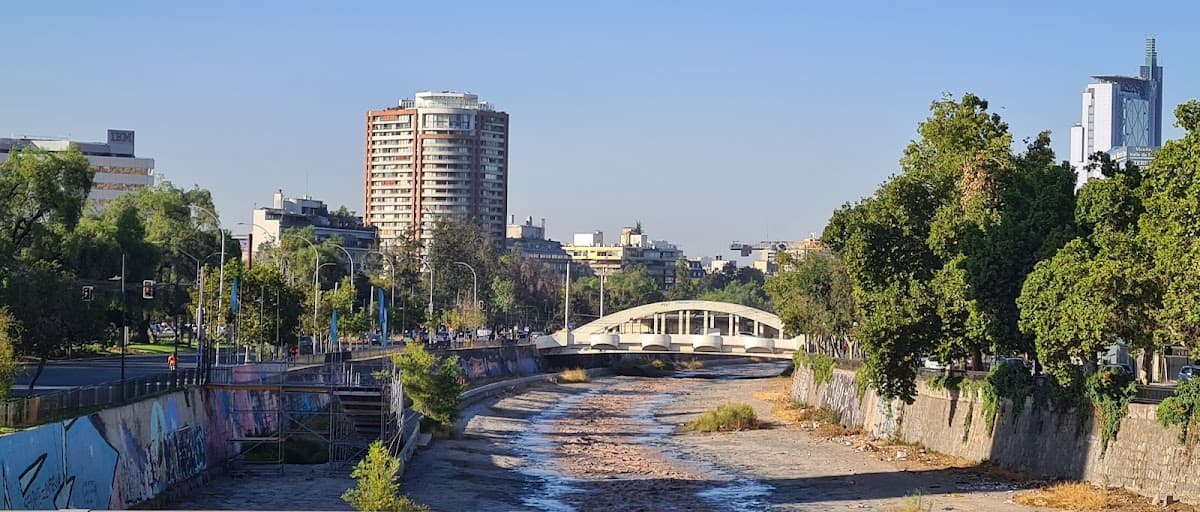
Providencia
Santiago's upscale business and entertainment epicenter
Providencia sits at the heart of Santiago like a well-dressed executive at a power lunch. This is where Chile's business elite work by day and play by night, creating a neighborhood that pulses with cosmopolitan energy. Glass towers house multinational corporations, while street-level cafés serve cortados to deal-makers discussing million-peso contracts. But here's what makes Providencia special: it never forgot how to have fun. Come evening, those same executives trade their suits for cocktail attire and head to rooftop bars with Andes views that'll make your Instagram followers weep with envy.
Culture & Context
EDUCATED, LIVABLE, WALKABLE
Providencia is Santiago's sweet spot. It's a full commune, not just a barrio, covering about 14 square kilometers east of downtown, and it runs the gamut from glass-tower office blocks along Avenida Providencia to quiet tree-lined residential streets two blocks away. The Mapocho River marks its northern edge, with Cerro San Cristóbal rising right behind it. That hill is basically the neighborhood's backyard, and locals actually use it that way. Runners, cyclists, families on Sunday afternoons. It doesn't feel like a park you visit; it feels like somewhere you belong.
Chileans from Providencia tend to be middle-class, educated, and a bit reserved at first. Don't mistake that for unfriendliness. It just takes one shared pisco sour to break the ice. The culture here is city-comfortable: good coffee matters, lunch is serious business, and dinner doesn't happen before 9 PM. That's not a restaurant choice; that's just how time works here.
Here's the thing: Providencia is where a lot of expats and digital nomads end up, and for good reason. It's genuinely livable. Safe enough to walk home late, connected enough to work from a café, and calm enough that you stop feeling like a tourist after about three days.
Local Customs
LUNCH IS MAIN MEAL
10% tip (propina) at restaurants is expected and widely practiced — Chilean law actually requires restaurants to suggest it on the bill. It's technically optional, but skipping it without a reason is considered rude.. Lunch (almuerzo) is the main meal of the day, not dinner.
The menú del día — a set two- or three-course lunch — is what locals eat, and it's a fraction of dinner prices at the same restaurants. Eat like a local, eat at noon.. Dinner happens late.
Restaurants in Providencia fill up after 9 PM. Showing up at 7 PM is fine, but you'll probably be the only table for a while.. Greetings involve a single kiss on the right cheek between people who know each other, and sometimes even between new acquaintances in social settings.
Handshakes are more formal/professional.. Chileans speak fast and drop the 's' off the ends of words. 'Más o menos' sounds like 'mah-o-meno.
' Don't panic. It gets easier after two or three days of listening.. The word 'taco' means traffic jam, not food.
Say 'tacos' in a food context and people will understand what you mean, but expect a small smile.. Demonstrations happen regularly in Santiago, especially on politically significant dates: March 29, May 1 and 21, September 11, and October 18. Most stay peaceful.
Avoid them regardless.. Sunday is genuinely slower in Providencia. Some small shops close or open late.
Plan for it.
Safety
VERY SAFE, STAY AWARE
Providencia is one of Santiago's safest communes and ranks third in quality-of-life studies across all Chilean cities with populations over 50,000. Walking home after midnight on the main streets isn't a cause for anxiety here.
But Santiago is still a real city. The usual rules apply: don't flash expensive gear on the metro, don't leave a laptop visible in a parked car, and keep a hand on your bag in crowded weekend markets. Petty theft (pickpocketing, bag-snatching) happens most in downtown Centro and Bellavista at night, less so in Providencia.
A specific thing to know: anarchist groups have placed incendiary devices in ATMs and metro stations throughout Santiago in recent years. This is more of a political reality than a day-to-day danger, but it's worth being aware of. Use ATMs inside bank branches rather than standalone street machines.
Protests are common on politically loaded dates: March 29, May 1 and 21, September 11, and October 18. They usually stay peaceful. Avoid the area around Plaza Baquedano (also called Plaza Italia / Plaza de la Dignidad) on those days, as that's the traditional flashpoint. Providencia itself sees spillover sometimes, but it's manageable if you just walk a few blocks away.
Getting Around
METRO & BIKES
Get a Bip! card on day one. Buy it at any metro station for about 1,593 CLP (~$1.78 USD) and load it with credit. Metro rides cost 800–890 CLP (~$0.85 USD) each, and there's a free transfer window between metro and bus within two hours. Metro Line 1 runs straight through Providencia east–west, with five stations in the commune: Baquedano, Salvador, Manuel Montt, Pedro de Valdivia, and Tobalaba. Line 6 also crosses through. Those five stops are your daily infrastructure.
Bikes are a legitimate option. Bike Santiago (operated by Itaú) runs docking stations throughout Providencia. Monthly subscription is about $8.50 USD, with unlimited trips up to 60 minutes. Good for short hops between stations when the metro feels like overkill.
From the airport (SCL): skip the taxi unless you have a lot of luggage and money to burn. The Centropuerto or Turbus airport buses run to Los Héroes metro station in the city center for about $2.87 USD. From there, Line 1 gets you to Providencia in under 15 minutes. If you do take a taxi, agree on the price before you get in, or use a licensed radio taxi via app (Cabify and inDrive both work well here). Expect to pay around $22 USD to central Providencia.
Rush hour on Line 1 (8–9 AM and 6–7:30 PM) is genuinely packed. Not pleasant. Ride outside those windows if you can.
Useful Phrases
Itineraries coming soon
We're working on adding amazing itineraries for Providencia. In the meantime, try the app to create your own!
Money-Saving Tips
- 1.Business lunch menus (menú ejecutivo) cost 8,000-12,000 pesos and include multiple courses
- 2.Happy hour at upscale bars runs 6-8 PM with 2-for-1 cocktails
- 3.Metro day passes cost 800 pesos and cover unlimited rides
- 4.Supermarket chains like Jumbo offer better prices than corner stores for snacks and water
- 5.Many restaurants add 10% service charge automatically - check your bill before tipping extra
Travel Tips
- •Air quality apps help you plan outdoor activities - Santiago's smog varies daily
- •Restaurants close between 3-7 PM, so plan lunch early or dinner late
- •ATMs charge high fees - withdraw larger amounts less frequently
- •Business cards matter here - locals exchange them frequently in professional settings
- •Learn basic Spanish numbers for prices - English isn't widely spoken outside hotels