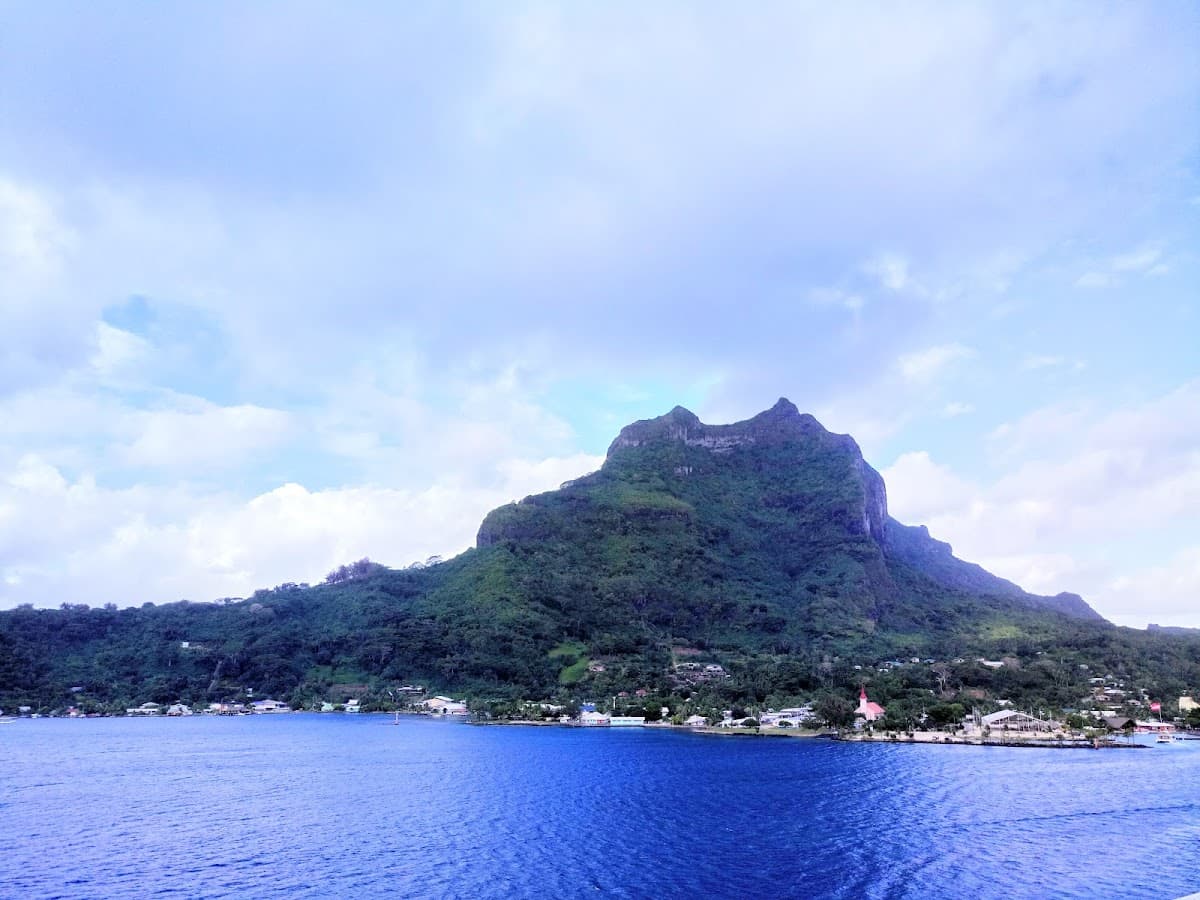
Vaitape
Bora Bora's gateway to overwater luxury and turquoise lagoons
Vaitape isn't much to look at from the ferry dock. A handful of shops, some concrete buildings, and what looks like any small Pacific town. But here's the thing — this unassuming village on Bora Bora's western shore is your gateway to some of the most expensive real estate on water. Those overwater bungalows you've been saving for? They're a 10-minute boat ride away. The turquoise lagoon that breaks Instagram? It starts right here at Vaitape's modest harbor. Most people rush through on their way to resort shuttles, missing the fact that this sleepy town holds the keys to experiencing Bora Bora like a local.
Local Knowledge
Culture & Context
Vaitape is the only real town on Bora Bora and the island's administrative center. The name itself carries old weight: "vaitape" refers to the place where the island's distinguished deceased were historically embalmed before their voyage to Rohotu No'ana'a, the Polynesian afterlife. King Tapoa II was reportedly the last monarch embalmed here. That history is long gone, but the town still plays a central role. It's where the ferries land, where the ATMs and pharmacy live, where the post office and gendarmerie sit side by side. French and Tahitian are the two official languages, though English gets you by fine at most shops and tour desks. Locals appreciate a few words of Tahitian far more than French. The island operates on a relaxed pace. Shops close early. Sundays are quiet, with services at the Protestant Temple at 10am drawing a genuine crowd. The roulottes (food trucks) set up along the Vaitape quay most evenings, and that's where you see the island's real social life. Here's the thing: most tourists arrive, take the resort shuttle, and never actually spend time in Vaitape. Their loss.
Safety
Vaitape and Bora Bora generally are safe destinations. Violent crime is rare. But a few practical things matter: dengue fever is present year-round, so bring repellent and use it at dusk. Stray dogs are common around the harbor area — they're mostly docile but can be startling. Scams are uncommon, but unsolicited tour offers near the pier are worth approaching with some skepticism. Stick to established operators for lagoon excursions and hikes. The Mt. Pahia hike is genuinely dangerous without a guide — the trail is unmarked, the terrain is steep, and the fires of previous years have altered sections of it significantly. Don't attempt it solo. If cycling the coastal road, be aware that there are no bike lanes and cars move faster than you'd expect. The road noise in Vaitape itself can be noticeable on Friday and Saturday nights — keep that in mind if you're a light sleeper choosing accommodation near the main road.
Getting Around
Getting to Vaitape is a two-step process. You fly into Bora Bora Airport on Motu Mute, a separate islet, then board a free 15-minute shuttle boat to the pier at Vaitape. Air Tahiti and Air Moana both run their own navettes (shuttle boats) directly to the Vaitape harbor. If your resort is on one of the outer motus, they'll have their own boat waiting. Confirm this before you book. Once you're on the main island, your best options are a bicycle ($20/day) or scooter ($69/day). Avis has an office right across from the Vaitape dock and another near Matira. Book ahead, especially on days when cruise ships are in port. The entire coastal road is about 32km (20 miles) — a comfortable loop by bicycle in two to three hours, or 45 minutes by scooter with stops. There are no dedicated bike lanes, so ride with some caution on the Vaitape-to-Matira stretch. Le Truck, the informal open-sided local bus, runs an irregular schedule during daylight hours and stops early evening. You can flag it down anywhere along the road and pay the driver directly (a few hundred XPF). Don't count on it for anything time-sensitive. Taxis exist but are expensive — around $25 from Vaitape to Matira, and that price doubles after 18:00. Avoid them unless you're stuck. For connectivity, buy a Vini Travel Card at the airport for the most reliable data coverage across the island.
Useful Phrases
Hello / Welcome. The standard Tahitian greeting. Use it when you walk into a shop or meet someone new and you'll get a genuine smile in return.
Thank you. Easily the most useful word to know. Locals notice and appreciate it far more than 'merci'.
Goodbye. Short, simple, and universally understood across the islands.
Cheers! Also used to mean good health. Raise your Hinano and say it.
Good / Fine. As in, 'Maitai 'oe?' means 'Are you well?' It doubles as a great response when someone asks how you're doing.
No problem / No worries. The island's unofficial motto. You'll hear it constantly.
House or home. Shows up everywhere — on signs, in directions, in guesthouse names. Knowing it helps you read the landscape.
Local Customs
- •Sunday is genuinely quiet. Many shops and supermarkets are closed, including the main supermarket in Vaitape. Stock up on Saturday.
- •Ask permission before photographing locals — particularly at the market or outside the temple. It's not aggressive to photograph without asking, but it is rude.
- •The roulottes set up along the Vaitape waterfront in the evenings. Get there early for the widest selection of freshly prepared plates — popular dishes sell out.
- •Tahitian is the preferred language at home; French is used in schools and business. English works fine in tourist areas. But in smaller shops away from the harbor, you may need a few French words.
- •Tipping is not customary in French Polynesia and is not expected at restaurants or for services. It won't offend anyone, but it's not the local norm.
- •Mosquitoes are present year-round and dengue fever exists on the islands. Bring repellent and use it, especially around dusk.
- •The coastal road around the main island has no dedicated bike lane. Traffic is generally light, but the Vaitape stretch and the road toward Matira can be busier. Stay alert.
- •Resort boat shuttles to Vaitape run on fixed schedules — check with your property. Missing the last boat means an expensive water taxi.
Itineraries coming soon
We're working on adding amazing itineraries for Vaitape. In the meantime, try the app to create your own!
Money-Saving Tips
- 1.Buy groceries at Champion supermarket in Vaitape — resort minibar prices are criminal
- 2.Book resort day passes through local tour operators instead of paying walk-in rates
- 3.Eat at roulottes (food trucks) near the ferry dock for authentic meals under $15
- 4.Rent bicycles instead of cars — the island is small and gas costs $8 per gallon
- 5.Bring reef-safe sunscreen from home — it costs $40 per bottle in Bora Bora
- 6.Download maps offline — international roaming charges will ruin your vacation budget
Travel Tips
- •Pack reef shoes — coral cuts heal slowly in tropical climates
- •Bring cash — many local businesses don't accept cards
- •Learn basic French phrases — English isn't widely spoken outside resorts
- •Book overwater bungalows well in advance — there are only about 100 on the entire island
- •Respect the lagoon — don't touch coral or stand on it while snorkeling
- •Time ferry arrivals carefully — the last boat to some resorts leaves at 5 PM
Frequently Asked Questions
Explore Vaitape
Ready to explore Vaitape?
Get a personalized itinerary in seconds with Takeoff.
Free on iOS. No credit card required.