Rangiroa
World's second-largest atoll with infinite blue lagoons
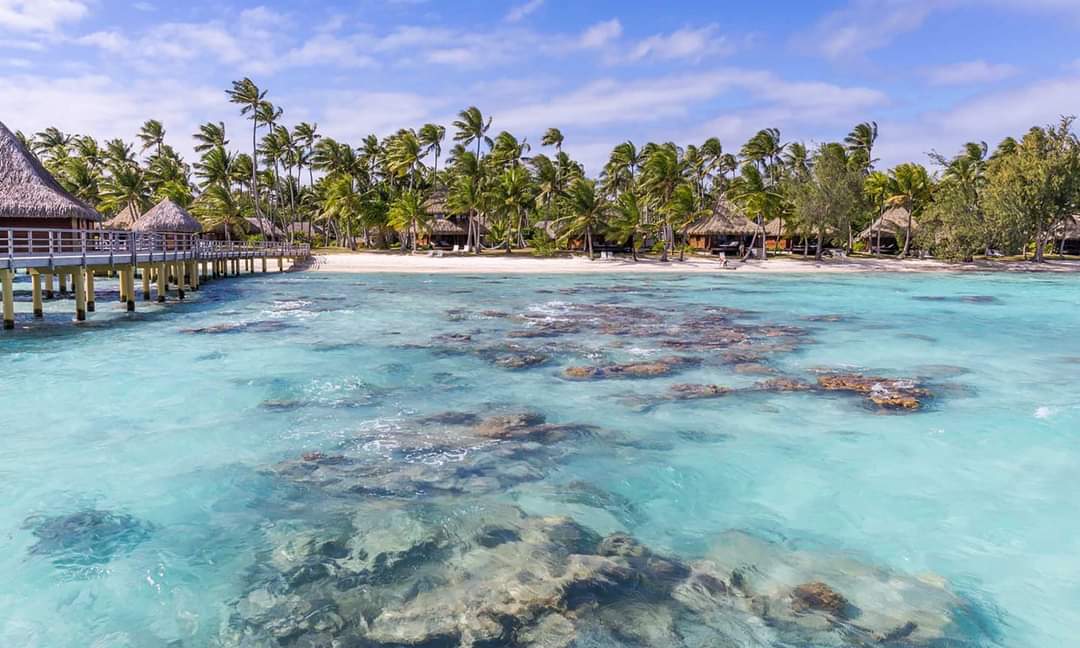
Rangiroa stretches across 1,640 square kilometers of Pacific Ocean, making it the world's second-largest atoll. But here's what the stats don't tell you: this ring of coral creates lagoons so vast and blue they feel infinite. The locals call it "Ra'iroa" — meaning "vast sky" — and you'll understand why the moment you arrive. This isn't your typical tropical island. There's no towering volcano or jungle-covered mountains. Just endless turquoise water, pink sand beaches, and some of the best diving on the planet. The main village of Avatoru has maybe 2,500 people, and that includes the neighboring settlement of Tiputa. You'll find luxury resorts here, sure, but also family-run pensions where you'll eat fish caught that morning. The lagoon is so big it has its own weather patterns, and dolphins regularly cruise through the passes between the ocean and lagoon.
Local Knowledge
Culture & Context
Rangiroa translates to "Endless Sky" in Tahitian, and that name earns its keep. This is the largest atoll in French Polynesia and one of the largest in the world: 415 tiny coral islets strung in a lopsided ring around a lagoon so massive that the entire island of Tahiti could fit inside it. About 2,500 people live here. That's it. On the ground it feels less like a tourist destination and more like a stretched-out village where you wave at everyone you pass, hitchhiking is totally normal, and the biggest daily decision is whether to bike east or west. Life runs on the water. The passes, the lagoon, the fish. The culture is low-key Polynesian, not a museum exhibit, so what you get is real life: families fishing, kids on bikes, roulottes (food trucks) setting up at dusk near the Tiputa Pass wharf. This is not Bora Bora. There are no cocktail bars with DJs and no shopping streets. And for a certain kind of traveler, that's exactly the point.
Safety
Rangiroa is genuinely one of the safest places you can travel. Crime is essentially nonexistent on an atoll with 2,500 people and one road. There has not been a recorded fatal shark attack in French Polynesia since 1834. The blacktip reef sharks you'll encounter in the Blue Lagoon are small and completely uninterested in you. The real risks are practical. Strong currents run through the passes (Tiputa Pass and Avatoru Pass) and can be genuinely dangerous for inexperienced swimmers. Always dive or snorkel with a guide at the passes; do not freelance it. Medical facilities on Rangiroa are minimal. The closest serious hospital is in Papeete. Buy comprehensive travel insurance before you go, and make sure it covers medical evacuation by air. This is not optional advice. Mosquitoes carry dengue fever in French Polynesia. Use repellent, especially around dusk. Wear long sleeves in the evenings if you're eating outside. The risk is real but manageable with basic precautions. Food choices are limited. If you're going to a remote pension on a motu, don't assume you can pop out for dinner. Half-board arrangements exist for good reason. Going hungry on a coral atoll is a genuinely possible outcome if you don't plan ahead.
Getting Around
Getting to Rangiroa means flying. Air Tahiti and Air Moana both run direct flights from Faa'a International Airport in Papeete, and the flight takes about an hour. There are 2-3 departures daily during high season, fewer in the off-season. Flights fill up, so book in advance. Island hoppers should look at the Air Tahiti Inter-Island Pass, which can save real money compared to booking each leg separately. Cruise ships (including Windstar) occasionally stop here, but you won't have much control over timing. Once on the atoll, the main road runs along the northern reef strip connecting the airport to Avatoru village. Bikes are the primary transport and most pensions provide them free of charge. A bike ride from one end of the developed area to the other takes about 30 minutes. Hitchhiking works reliably on this road. The few vehicles on the island (mostly trucks and scooters) will stop. Getting between Avatoru and Tiputa requires a short boat crossing over Tiputa Pass. A small community ferry runs throughout the day. It's cheap, quick, and the crossings themselves often produce dolphin sightings. There is no public bus. Car rentals exist but are rarely worth it given the single-road layout. For excursions to the Blue Lagoon, Reef Island, or outer motus, boat tours are the only option. Book these through your pension or directly with operators like 6 Passengers or Kaimana Excursions in Avatoru.
Useful Phrases
Hello / Welcome. The all-purpose Tahitian greeting. Use it when you walk into a pension, meet your dive guide, or flag down a hitchhike. Locals genuinely light up when visitors bother.
Good. As in 'Maita'i roa' (very good) or just a one-word answer when someone asks how you are. Doubles nicely as enthusiasm about fresh fish.
Thank you. The single most useful word you can learn. More appreciated than French 'merci,' more appreciated still than nothing.
Goodbye / See you later. Casual, friendly, used by pretty much everyone including kids. Works for waving at people from your bike.
A small coral islet within the lagoon. You'll hear this constantly. 'The Blue Lagoon is on a motu.' 'We picnic on a motu.' It's basically the unit of geography out here.
Cheers! Say it when someone pours you a glass of Vin de Tahiti rosé and you'll earn immediate approval.
Welcome. Often displayed on signs or said to arriving guests. Also a woman's name you'll encounter.
Local Customs
- •Cash is king. Remote atolls like Rangiroa have very few card terminals. There's reportedly only one ATM on the whole atoll, near the airport. Exchange money before you leave Papeete or withdraw at Faa'a International Airport.
- •Hitchhiking is normal and widely practiced. Stick out your hand on the main road and someone will stop. It's not desperation, it's just how people get around when you have one road and very few cars.
- •Most pensions run on a half-board or full-board basis, meaning breakfast and dinner are included in the nightly rate. This actually lowers the real cost of staying here, since eating independently is expensive and options are limited.
- •Mosquitoes are a real issue, especially at outdoor restaurants after dark. At places like Chez Rua in Avatoru, reviewers specifically recommend wearing mosquito-repellent bands around your ankles. Bring repellent.
- •Polynesian time is real. Lunch at a snack bar might take 40 minutes to arrive. The cook is probably also the waiter and possibly the dishwasher. Plan accordingly and don't stress.
- •Language: official languages are Tahitian and French. English is spoken at resorts and most dive shops but drops off fast at local snack bars. A few words of French go a long way. A few words of Tahitian go even further.
- •Reef sunscreen is strongly discouraged and may be banned. Bring reef-safe sunscreen. The coral here is genuinely extraordinary and everyone on the island takes that seriously.
Itineraries coming soon
We're working on adding amazing itineraries for Rangiroa. In the meantime, try the app to create your own!
Money-Saving Tips
- 1.Book accommodations with half-board meal plans to avoid inflated restaurant prices
- 2.Shop for snacks and drinks at Magasin Coop in Avatoru village rather than resort shops
- 3.Visit during shoulder season (April-May or October-November) for 30-40% lower accommodation rates
- 4.Choose lagoon tours that include multiple activities and lunch rather than booking separately
- 5.Rent bicycles instead of cars for transportation around the main villages
- 6.Stay at family-run pensions instead of luxury resorts for authentic experience at half the cost
- 7.Bring reef-safe sunscreen from home as it costs 3x more on the island
Travel Tips
- •Pack reef-safe sunscreen and bring extra — the sun reflects intensely off the lagoon water
- •Bring cash in CFP francs as credit cards aren't accepted everywhere and ATMs are limited
- •Book diving and lagoon tours immediately upon arrival as spots fill up quickly
- •Pack light layers for evening as trade winds can make it surprisingly cool after sunset
- •Bring underwater camera or waterproof phone case — the lagoon visibility is incredible
- •Learn basic French phrases as English isn't widely spoken outside main resort
- •Download offline maps as internet connectivity can be spotty outside village centers
- •Pack insect repellent for no-see-ums that come out at dawn and dusk
- •Bring sturdy water shoes for walking on coral beaches and lagoon floors
Frequently Asked Questions
Explore Rangiroa
Ready to explore Rangiroa?
Get a personalized itinerary in seconds with Takeoff.
Free on iOS. No credit card required.