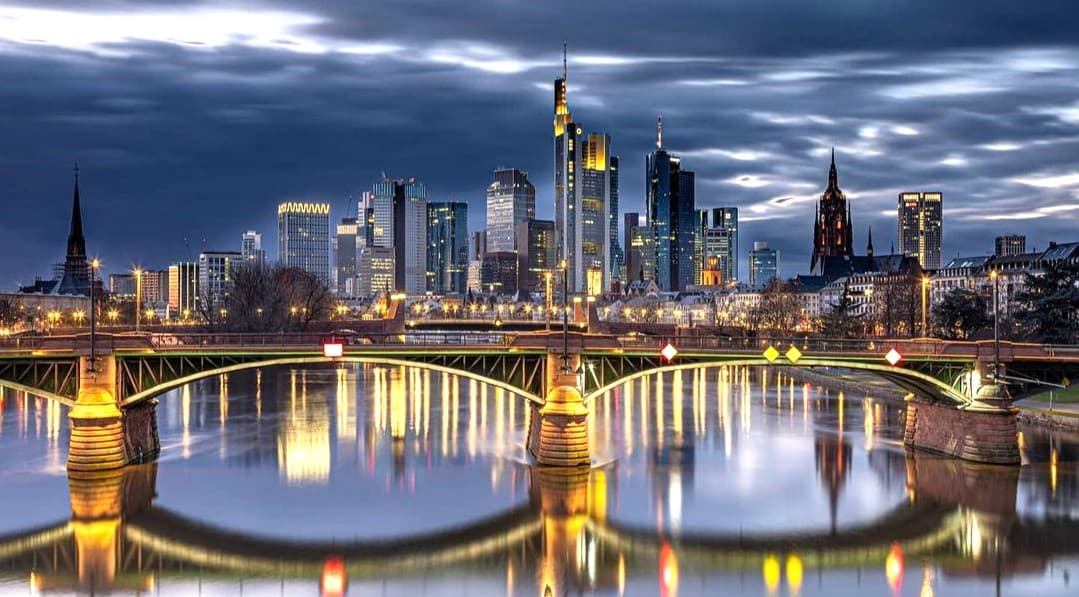
Frankfurt
Germany's Financial Heart with Medieval Charm
Frankfurt gets a bad rap as just a business hub or airport stopover. Look, the city does have more skyscrapers than anywhere else in Germany, earning it the nickname "Mainhattan." But scratch beneath that corporate surface and you'll find cobblestone squares where Goethe once walked, apple wine taverns that haven't changed in centuries, and some of Europe's best museums packed into a single riverside district. The contrast hits you immediately — medieval timber houses sitting in the shadows of glass towers, traditional Ebbelwoi pubs next to Michelin-starred restaurants. Frankfurt manages to be both Germany's financial powerhouse and a city that takes its cultural heritage seriously.
Local Knowledge
Culture & Context
Frankfurt has a split personality and makes no apologies for it. The skyline — Germany's only genuinely Manhattan-esque cluster of glass towers — belongs to the banks and the European Central Bank. But walk ten minutes south across the Eiserner Steg and you're in Sachsenhausen drinking sour apple wine from a ribbed glass called a Geripptes in a pub that hasn't changed its vibe since the 1970s. Both things are authentically Frankfurt. The city is Germany's most international, with 32% of its 779,000 residents holding foreign passports across 179 nationalities. English is widely spoken in business and hospitality, but locals genuinely appreciate it when you try even a word or two of German. Here's the thing about Frankfurters: they have a reputation among other Germans for being cold or businesslike, which is mostly unfair. Direct, yes. Blunt, sometimes. But that directness is not hostility — it's just how things work here. Don't expect a lot of small talk with your waiter. Do expect your food to arrive exactly when they said it would.
Safety
Frankfurt is genuinely safe by any reasonable comparison — pickpocketing is the main thing to watch for, not violent crime. The area that actually deserves caution is Bahnhofsviertel, specifically around Taunusstrasse, which has open drug use and a visible red-light district. During the day it's manageable and plenty of people walk through it without incident. After dark, stick to Kaiserstrasse (one block over) or just take the S-Bahn one stop to Hauptwache and bypass it entirely. Pickpocket hotspots include Zeil shopping street, Hauptbahnhof, and crowded Christmas or street markets — keep bags closed and zipped in front of you in these areas. On public transit, watch belongings during rush hours (7:30–9am and 4:30–6pm) when trains are packed. A few active scams: 'ticket helpers' at Hauptbahnhof S-Bahn machines who offer assistance then demand change or use skimmed cards; the 'gold ring' scam near Eiserner Steg; and petition-clipboard scammers on Kaiserstrasse. Just keep walking. For genuine emergencies: dial 112 (police, fire, ambulance). Non-emergency police: 110. Frankfurt's safest neighborhoods for evening walks are Westend, Sachsenhausen, and Nordend — well-lit, populated, and genuinely comfortable late at night.
Getting Around
Frankfurt's public transit runs on the RMV (Rhein-Main-Verkehrsverbund) network, which integrates U-Bahn (underground), S-Bahn (suburban rail), trams, and buses under one ticket system. Buy once, transfer as needed. As of January 2026, a single city ticket is €3.80 and a day ticket is €7.75. A group day ticket covering up to five people costs €14.80 — genuinely good value if you're traveling with even one other person. The Frankfurt Card (€13/day) gives unlimited transit plus up to 50% off museum entries. From the airport: S8 or S9 to Hauptbahnhof takes 10–15 minutes. Fast, reliable, runs every few minutes during peak hours. There are no turnstiles. The system operates on an honor basis with plainclothes inspectors who do random checks. Getting caught without a valid ticket is a €60 fine, no exceptions. Download the RMV app before you arrive — it handles live departures, journey planning, and mobile ticket purchases. Peak hours (7:30–9am and 4:30–6pm) pack the trains. Weekends see reduced frequency but remain reliable for city travel. Stand on the right side of escalators; left is for people walking. The Kurzstrecke (short-trip) ticket at around €2.20 covers up to two stops and is cheaper if you're just hopping a few stations — worth checking at the machine before buying a full single.
Useful Phrases
Frankfurt dialect for Apfelwein (apple wine). Order one of these and every local in the room will immediately like you more.
'Cheers' / 'Good health.' Use Prost for casual toasting with beer or wine; Zum Wohl is slightly more formal. Either works fine with apple wine.
When paying at a restaurant, this tells the server to keep the change. Much smoother than trying to calculate a tip out loud.
'Is this seat taken?' Essential for Frankfurt's table-sharing culture in busy restaurants.
Frankfurt's signature cold herb sauce made from exactly seven herbs. Served with boiled eggs and potatoes, or with beef. Locals call it 'Grie Soß' in dialect. Try it at least once.
Please / Thank you. Basic, but using them consistently — in shops, on trams, ordering coffee — signals that you're a considerate visitor rather than someone passing through.
Said before eating, equivalent to 'bon appétit.' Say it to your table companions — including strangers at a shared table — before you start eating. It matters.
Frankfurt's self-assigned nickname, combining 'Main' (the river) with 'Manhattan.' Locals use it with a mix of pride and irony. Dropping it in conversation reads as someone who's actually done their homework.
Local Customs
- •When you sit down at a restaurant, wait for the server to come to you. Flagging someone down from across the room is considered rude. And don't leave money on the table — hand it directly to the server and tell them the total you want to pay, tip included. Saying 'stimmt so' means 'keep the change.'
- •Always make eye contact when clinking glasses. Looking away during a 'Prost' is considered bad manners — some locals will tell you it brings bad luck. Take it seriously enough to be polite.
- •Frankfurt runs on the honor system for public transit — no turnstiles, no barriers, just random plainclothes inspectors. Getting caught without a valid ticket costs €60. Buy before you board, every time.
- •Germans separate their recycling seriously. Glass goes in color-coded bins (clear, green, brown). Plastic and packaging in the yellow bin. Paper in blue. At supermarkets, plastic bottles and glass with a Pfand symbol go into the machine by the entrance — you get a receipt for a deposit refund, typically 8–25 cents per bottle.
- •Sundays are genuinely quiet. Most shops are closed. Plan grocery runs for Saturday and treat Sunday like the locals do — a walk along the Main, brunch at a café, or the Palmengarten.
- •Punctuality matters. Showing up 10 minutes late to a dinner invitation or meeting without a heads-up is considered inconsiderate, not fashionably late.
- •Sharing a table with strangers (Tischgemeinschaft) is normal when a restaurant is full. Before you sit, point to the free seat and ask 'Ist hier noch frei?' Don't force conversation, but say 'Guten Appetit' when the food arrives.
Itineraries coming soon
We're working on adding amazing itineraries for Frankfurt. In the meantime, try the app to create your own!
Money-Saving Tips
- 1.Buy a Frankfurt Card for public transport plus museum discounts — it pays for itself if you visit 2+ attractions
- 2.Lunch specials at upscale restaurants cost half the dinner price for the same quality
- 3.Apple wine taverns in Sachsenhausen offer hearty meals for under €15, much cheaper than tourist areas
- 4.Many museums offer free entry on the last Saturday of each month
- 5.Shop at Kleinmarkthalle market for fresh food instead of expensive hotel breakfast
- 6.Book hotels during trade fair weeks months in advance or prices triple overnight
- 7.Happy hour at banking district bars runs 5-7pm with half-price cocktails
- 8.Day passes for public transport cost less than three single tickets
Travel Tips
- •Validate public transport tickets immediately or face €60 fines from plainclothes inspectors
- •Learn basic German greetings — Frankfurt locals appreciate the effort despite speaking English
- •Restaurants close between lunch and dinner (2-6pm) so plan meals accordingly
- •Tipping 10% is standard at restaurants, round up to nearest euro for casual service
- •Many shops close on Sundays except in tourist areas and train stations
- •The airport train (S8/S9) runs every 15 minutes to the city center for €4.95
- •Book apple wine tavern tables in advance on weekends — they fill up fast
- •Carry cash — many smaller establishments don't accept cards
- •Museum district offers 12 world-class museums within walking distance along the Main River
- •Avoid the Hauptbahnhof area late at night — it's not dangerous but can feel uncomfortable
Frequently Asked Questions
Explore Frankfurt
Ready to explore Frankfurt?
Get a personalized itinerary in seconds with Takeoff.
Free on iOS. No credit card required.