Faroe Islands
Nordic wilderness where grass roofs meet dramatic cliffs
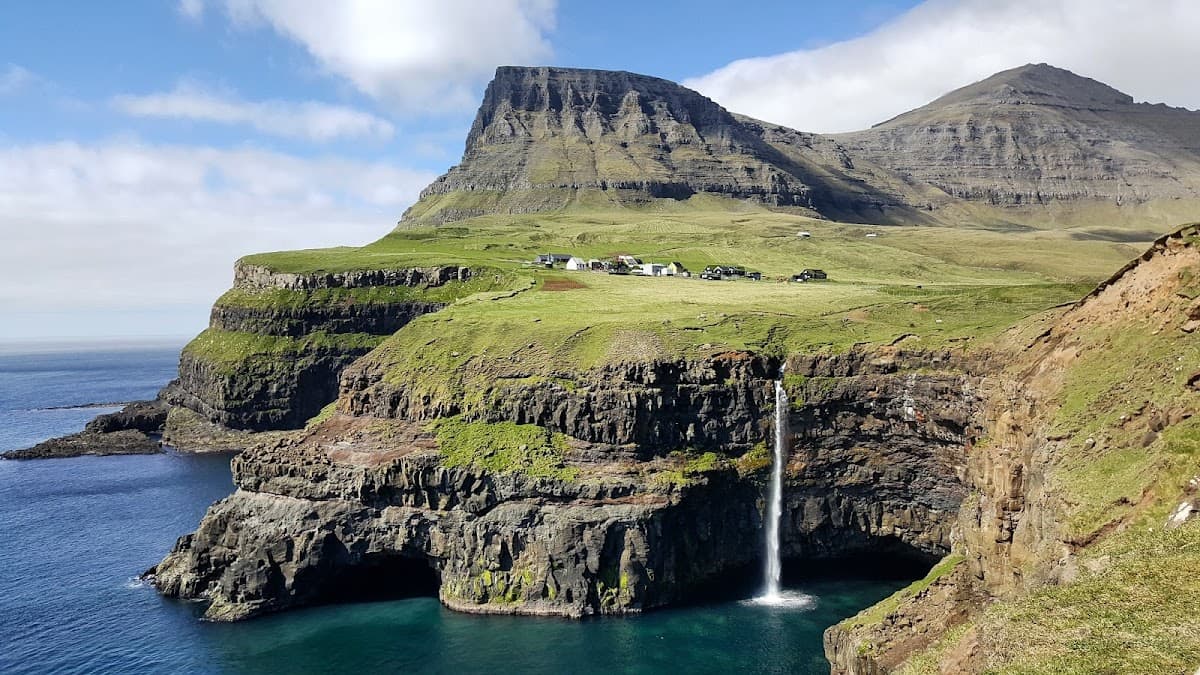
The Faroe Islands sit in the North Atlantic like 18 emerald stepping stones between Iceland and Norway. Grass grows on rooftops here. Sheep outnumber people 2-to-1. And the cliffs drop so dramatically into the ocean that you'll question whether you've stumbled into Middle Earth or just found Europe's best-kept secret.
This isn't your typical Nordic getaway. Sure, you'll find the hygge and minimalist design you'd expect, but the Faroes add their own wild twist. Villages of 50 people have their own football stadiums. Restaurants serve fermented lamb that's been hanging in wooden sheds for months. And the hiking trails lead to places so remote that your phone becomes a paperweight.
But here's what makes the Faroes special: they're still figuring out tourism. You won't fight crowds at Múlafossur Waterfall or wait in line for the perfect Instagram shot at Kallur lighthouse. You'll just walk up and have these places mostly to yourself.
Best Months
MAY – SEP
~13°C · moderate crowds
Culture & Context
The Faroe Islands are a self-governing territory within the Kingdom of Denmark, but the Faroese people are very much their own nationality with their own language, flag, culture, and customs.
Calling Faroese people "Danish" can be considered offensive. The islands have a strong Viking heritage — place names, customs, and the language itself trace back to Old Norse.
Tórshavn's Tinganes peninsula has been the seat of Faroese governance since around 825 AD, making it one of the world's oldest parliamentary sites. Traditional chain dancing (kvæði) accompanied by ancient ballads is still performed at festivals today. The controversial pilot whale hunt (grindadráp) is deeply embedded in Faroese culture; avoid criticizing it openly.
Wool is culturally significant — locals say "Ull er Føroya gull" (Wool is Faroe's gold). The islands are global leaders in sustainable tourism and have an annual "Closed for Maintenance" voluntourism week where visitors help maintain hiking trails.
Local Customs
Never call a Faroese person 'Danish' — they are Faroese and take their distinct identity seriously..
There is no right-to-roam law in the Faroe Islands. Most land is privately owned farmland.
Respect fences and signs, and ask landowners for permission before crossing their property.. Trespassing at photogenic spots like Saksun has become a serious local grievance — tourists photographing private homes without permission causes real tension. Be a better guest than Instagram demands..
Walk on marked paths, not across grass — that's the sheep's food, and farmers notice.. Greetings are typically informal with a handshake and direct eye contact. The Faroese are known for warm hospitality but also value privacy..
Grindadráp (the pilot whale hunt) is a deeply held cultural tradition. Avoid criticising it openly, even if you disagree with it personally.. The Faroe Islands have a 'Closed for Maintenance' voluntary tourism week each year — an opportunity to give back by helping with trail maintenance and cleanup..
Headlights must be on at all times while driving — it's the law. If a sheep is on the road, stop and wait. If you hit one, report it to police (call +298 351448) so the farmer can claim insurance..
Parking in Tórshavn is limited. Most spaces have a 2-hour restriction between 9am–6pm. You must display the time you parked on a disc in the windshield..
Sunday is a quiet day. Most supermarkets and many restaurants have limited hours or are closed entirely.
Safety
The Faroe Islands are one of the safest destinations in the world — crime is essentially non-existent.
The real risks here are environmental. Weather changes violently and without much warning; fog, wind, and sudden storms can turn a clear morning hike into a serious situation within minutes.
Always tell someone your intended hiking route before setting off. Carry a physical map, snacks, fully charged phone, and proper waterproof gear regardless of the season. Stick to cairns (rock piles) on trails — if you can't see them, you may have strayed.
Never start a hike in fog or darkness. Many cliff edges drop hundreds of meters with no barriers. Emergency number: 112.
For police (non-emergency, including sheep collisions): +298 351448. Serious injuries may require evacuation to Denmark or Iceland — the National Hospital (Landssjúkrahúsið) in Tórshavn handles emergencies but has limits. The Faroe Islands are NOT part of the EU, so the European Health Insurance Card (EHIC) does not apply.
Get comprehensive travel insurance that covers medical evacuation. Search and rescue capacity is limited and you may be billed for rescue costs. The annual grindadráp whale hunt (June–September) occasionally draws protests — there is an increased security presence during this period; avoid engaging in confrontational protest activity.
Getting Around
Getting around is surprisingly manageable for such a remote archipelago.
A rental car is the most flexible option and strongly recommended for serious exploration. Book 4–6 months in advance for summer travel — demand is very high.
Pick up at Vágar Airport on arrival. Headlights must be on at all times by law. Many roads are narrow and one-lane; be prepared to reverse significant distances.
Sheep wander freely onto roads — slow down. Four subsea tunnels connect many of the islands (toll applies; easiest to add to your rental bill). The world's first undersea roundabout — Eysturoyartunnilin — connects Streymoy and Eysturoy.
Note: some villages (Tjørnuvík, Múli) do not allow camper vans due to narrow roads. Public transport: Blue rural buses (Bygdaleiðir) connect villages across the islands. Free red city buses run in Tórshavn, Klaksvík, and a few other municipalities.
A 4-day travel card (500 DKK) covers most bus and ferry routes (excluding Mykines). Ferry to Mykines: runs daily May–August, 3x/week in April and September, not at all in winter — 60 DKK each way, book early and have a backup plan for cancellations. Airport bus from Vágar to Tórshavn: 90 DKK.
Helicopter: subsidized for residents only; tourist sightseeing flights occasionally available through Atlantic Airways in peak season. International access: Atlantic Airways flies direct from Copenhagen, Edinburgh, Bergen, Oslo, Reykjavik, and Paris to Vágar Airport (FAE). The ferry Norröna (Smyril Line) connects the islands to Denmark, Iceland, and the Shetlands by sea.
Useful Phrases
Itineraries coming soon
We're working on adding amazing itineraries for Faroe Islands. In the meantime, try the app to create your own!
Money-Saving Tips
- 1.Buy groceries at Bonus or SMS supermarkets - they're 30% cheaper than tourist-oriented shops in Tórshavn
- 2.Fill up your rental car at unmanned stations outside villages - gas is €0.20 per liter cheaper than in town
- 3.Pack lunch for day hikes - restaurant meals cost €25-35 minimum, but hiking fuel only costs what you bring
- 4.Stay in village guesthouses instead of hotels - you'll save €100+ per night and get better local insights
- 5.Buy alcohol at the airport duty-free - a beer at restaurants costs €8-10 versus €3 at the store
- 6.Use the Faroe Islands tourist card for discounts on ferries between islands - saves 20% on transportation
- 7.Cook your own meals when possible - ingredients cost half what prepared food does, and many accommodations have kitchens
Travel Tips
- •Download offline maps before you go - cell service disappears in valleys and tunnels, which is most places
- •Pack waterproof everything - rain gear, camera protection, and dry bags for electronics are essential
- •Bring layers you can add/remove quickly - weather changes every 20 minutes and you'll be constantly adjusting
- •Learn to pronounce Tórshavn correctly (TORS-hown) - locals appreciate the effort and you'll get better directions
- •Always tell someone your hiking plans - mountain rescue is volunteer-based and weather can trap you quickly
- •Keep your rental car's gas tank above half - stations are sparse and some close unexpectedly
- •Respect the 'right to roam' law - you can hike anywhere, but close gates behind you and don't disturb sheep
- •Bring a good headlamp - even summer nights get dark in tunnels and cloud cover blocks all light
- •Pack seasickness medication even if you're not taking ferries - the drive through mountain passes can be nauseating
Frequently Asked Questions
Explore Faroe Islands
BUILD YOUR
FAROE ISLANDS PLAN
Insider picks, smart timing, and a plan ready when you are.
Start Planning