Piran
Slovenia's Venetian-influenced coastal jewel on the Adriatic Sea
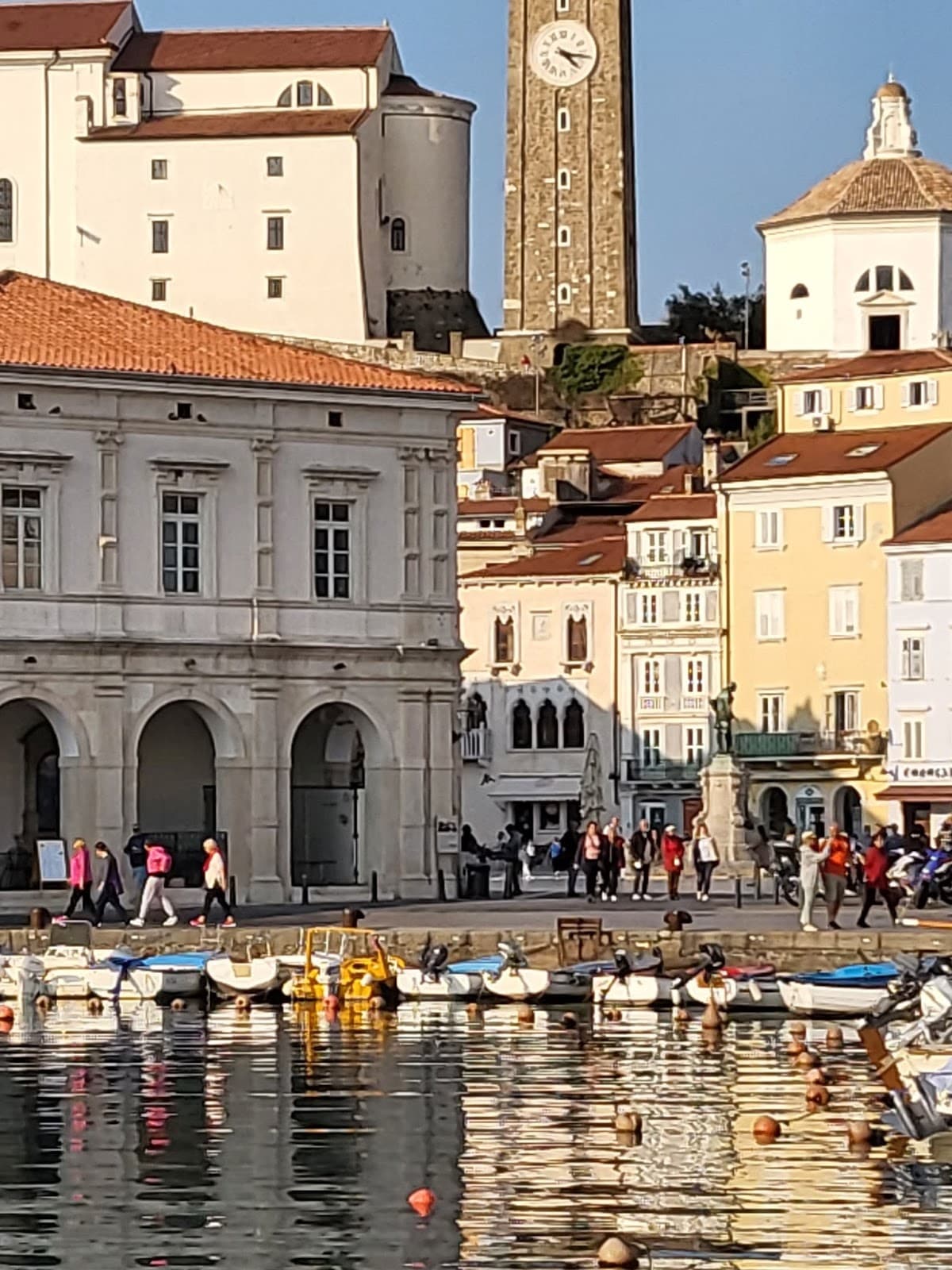
Piran looks like someone lifted a piece of Venice and dropped it on Slovenia's coast. This tiny peninsula town packs centuries of Venetian architecture into just a few winding streets, all perched above the brilliant blue Adriatic. The campanile of St. George's Church watches over Tartini Square, where locals sip morning coffee at outdoor cafes while tourists crane their necks at the Gothic windows and red-tiled roofs. But here's what makes Piran special — it's Venice without the crowds, the overpriced everything, or the cruise ship chaos. You can actually hear the waves lapping against the medieval walls.
Best Months
MAY – SEP
~26°C · high crowds
Culture & Context
VENETIAN HEARTBEAT LIVES ON
Piran spent over 500 years under the Republic of Venice. That's not just architectural trivia. It fundamentally shaped the food, the dialect, the street layout, even the attitude toward time.
The old town is car-free and built on a narrow peninsula, so life here moves at a speed the rest of Europe mostly forgot. Italian is a co-official language on Slovenia's coast, which means menus, street signs, and conversations can flip between Slovenian and Italian mid-sentence. The town is the birthplace of Baroque composer and violinist Giuseppe Tartini (1692-1770), and locals take that seriously.
You'll see his statue in the main square, his face on local products, and his name on everything from the main festival to the theater. There's genuine civic pride here, not the curated-for-tourists kind. The vibe is openly Mediterranean.
People sit for hours over a single coffee, conversations happen in doorways, and strangers say hello on the promenade. Don't mistake the relaxed pace for disinterest. It's just how life works on this part of the coast.
Local Customs
SLOW COFFEE, ITALIAN BLEND
Tipping isn't mandatory but rounding up or leaving 10% at a sit-down restaurant is appreciated and becoming more common.. The pace of service in cafes and restaurants is genuinely slow by northern European standards. Don't try to rush it.
Order a second coffee and accept the rhythm.. Italian is a co-official language on the coast. Many locals switch fluidly between Slovenian and Italian.
Don't be surprised if you're greeted in Italian first.. The old town is car-free. If you're driving, you park outside (at Fornace garage, for example) and either walk or take the free shuttle.
Don't try to drive in anyway.. Seafood here reflects Italian-Istrian influence. You'll find very little traditional Slovenian fare like sausages.
Pizza places are everywhere. Expect fresh fish, calamari, risotto, and pasta.. Watch for unofficial 'parking attendants' around Piran who collect fees before you reach the official booth.
Only pay at official machines or manned booths.. Salt from the nearby Sečovlje Salina is a serious local product, not a novelty. The fleur de sel from this area is sold and used by local chefs.
Buy some.. Shops and some restaurants close for a midday break, especially outside peak season. Plan accordingly.
Safety
GENUINELY VERY SAFE
Piran is genuinely one of the safest places you could visit in Europe. Violent crime is rare to the point of being a non-issue. Walk anywhere at night without concern.
The narrow medieval streets do get disorienting after dark, but that's a navigation problem, not a safety one. The main things to actually watch for: unofficial parking attendants near the parking areas outside town who try to collect fees before you reach the official booth. Only pay at marked machines or official staffed booths.
In peak summer (July-August), don't leave bags or valuables unattended on the rocky swimming platforms along the promenade. It's not a high-theft zone but common sense applies when it's crowded. Tap water is safe and excellent throughout Slovenia.
The emergency number is 112. English is widely understood by police and emergency services.
Getting Around
CAR-FREE PENINSULA WANDERING
The old town is car-free, full stop. Park at the Fornace parking garage on the edge of the historic center and take the free shuttle bus into town, or walk the 10-15 minutes. Don't attempt to drive in.
Buses connect Piran to Ljubljana (about 2 hours, roughly €8-9 one way) and run several times daily from Ljubljana Central Bus Station, dropping off at Piran Bus Station near the marina. If you buy tickets online, note that the buses don't accept electronic tickets. Print them or get them stamped at the station.
From Trieste in Italy, Piran is only about 40km away. GoOpti shared transfers are popular for airport runs. A seasonal ferry to Venice also operates from Piran on select summer dates, taking roughly 2.
5 hours at around €85-95 return. Regional buses connect Piran to nearby Portorož and Koper for a few euros. Within the old town itself, everything is on foot.
The whole town fits inside a 15-minute walk.
Useful Phrases
Money-Saving Tips
- 1.Park outside the old town walls to avoid €25+ daily hotel parking fees
- 2.Buy groceries at Mercator supermarket in Portorož — prices are 30% lower than tourist shops in Piran
- 3.Eat lunch at local konobas (taverns) instead of waterfront restaurants to save €10-15 per meal
- 4.Book accommodations directly with property owners to skip booking platform fees
- 5.Take the bus to Ljubljana (€8) instead of private transfers (€80+)
- 6.Buy wine directly from producers in nearby villages — bottles cost €8-12 vs €25+ in restaurants
Travel Tips
- •Bring comfortable walking shoes — the medieval streets are all cobblestone and can be slippery when wet
- •Download offline maps — GPS can be spotty in the narrow old town alleys
- •Learn a few Italian phrases — many older locals speak Italian better than English
- •Pack layers — sea breezes make evenings cool even in summer
- •Book restaurant reservations in advance during summer — most places are tiny
- •Bring a reusable water bottle — public fountains are scattered throughout the old town
- •Check tide schedules if staying in waterfront accommodations — high tides can flood some ground-floor areas