Arcachon
Culture & Context
OYSTERS & BELLE ÉPOQUE
OYSTERS & BELLE ÉPOQUE
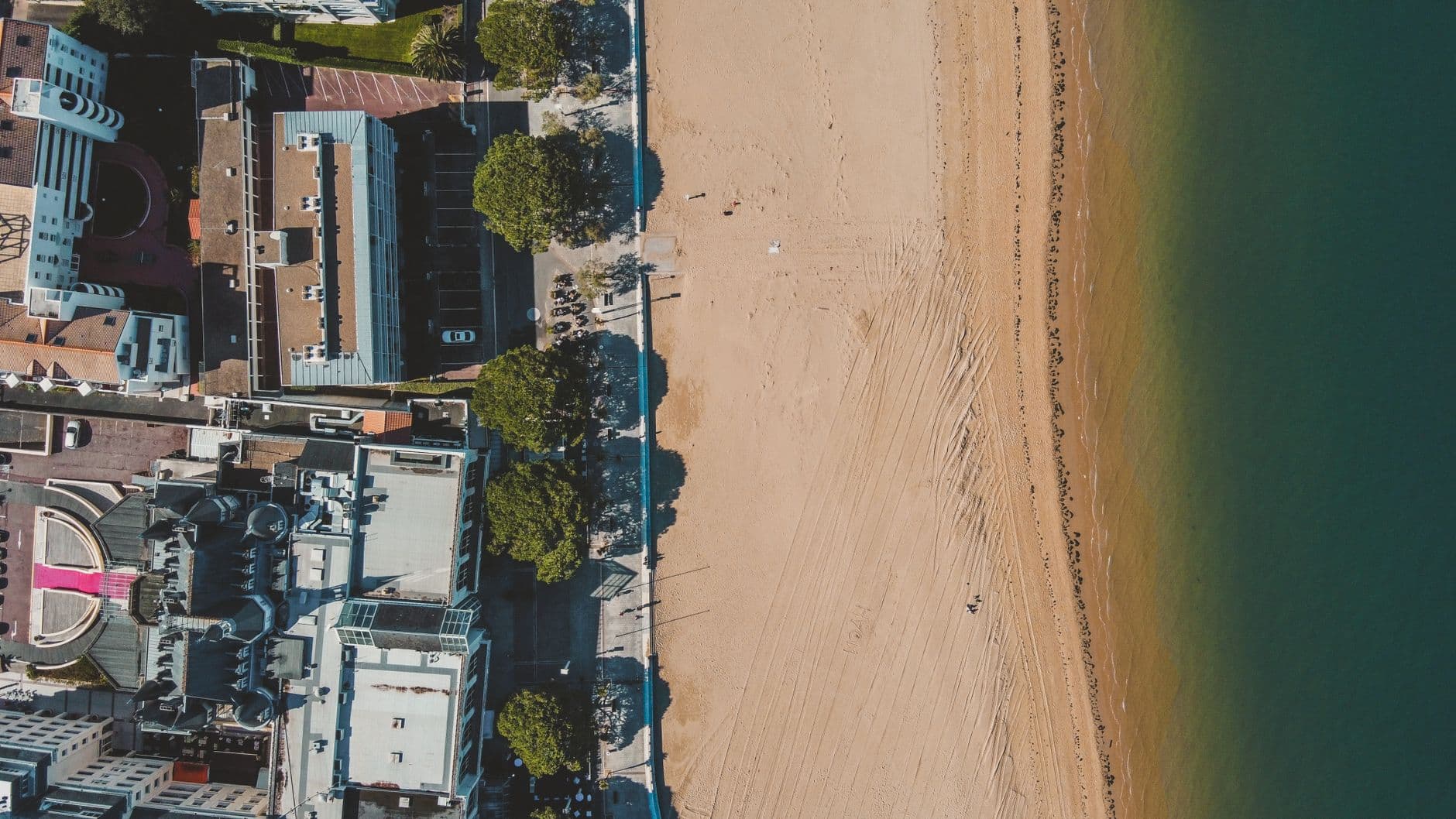
Arcachon sits on the Atlantic coast of southwestern France, about 50km west of Bordeaux. It started as a tuberculosis resort in the 1860s — the Pereire brothers extended the railway from Bordeaux and built an entire hilltop neighborhood with curved streets designed to shield patients from sea winds. That neighborhood, the Ville d'Hiver, is now one of the most architecturally striking districts in France, with 300 eclectic villas in neo-Gothic, Moorish, and colonial styles.
But Arcachon's real identity is the bay. The Bassin d'Arcachon is a tidal lagoon producing 8,000–10,000 tonnes of Pacific oysters per year across 26 farms. Eating oysters at a wooden cabane ostréicole (oyster shack) with your feet practically in the water, a glass of local Entre-Deux-Mers white wine in hand — this is the ritual everyone comes for. Locals don't treat oysters as a luxury. They're fast food here, sold at the market, eaten at breakfast, and ordered at the port without ceremony.
The town is also famous for the Dune du Pilat — at 107 metres, the tallest sand dune in Europe — which rises dramatically from a pine forest just south of town. And the whole place is organized into four poetically named "quartiers" after the seasons: Ville d'Été (summer), Ville d'Hiver (winter), Ville de Printemps (spring), and Ville d'Automne (autumn). It's a resort town that actually earned its reputation rather than just having one slapped on it.
Local Customs
OYSTERS WITH EVERYTHING
Eat oysters the local way: raw, with buttered rye bread, a squeeze of lemon or splash of mignonette (vinegar and shallots), and a chilled glass of white wine. The local twist is adding pâté de campagne alongside — it sounds odd but actually works. Don't drain the liquid from the shell; if the oysters are fresh (and they will be here), you want it..
Crépinettes at Christmas: During the holiday season, Arcachon locals traditionally eat oysters paired with crépinettes — small flat sausages from Gironde. You'll see this combination everywhere in December at markets and family tables.. The foulard jaune (yellow scarf) is the symbol of Arcachon.
Worn during the Fête Patronale on March 25 and the Fêtes de la Mer in August, it honors fishermen lost at sea. Visitors are welcome to wear one. The city flag uses black, white, and yellow for the same reason..
Lunch is sacred. Even in a tourist town, most proper restaurants still do a formule déjeuner (set lunch menu) from noon to 2pm. This is almost always the best value and quality — a two or three-course meal for €15–25, with wine.
Restaurants that stay open all afternoon for à la carte are generally tourist traps.. Gujan-Mestras, not Arcachon, is the oyster capital. Locals will tell you the best oysters come from the seven ports of Gujan-Mestras, especially the Port de Larros.
If you're serious about oysters, go there — Les Petites Folies at Port de Larros is a local favorite.. Book early for August. The Fêtes de la Mer (August 14-15) and major summer concerts sell out months in advance.
Hotel prices triple in July and August compared to shoulder season.
Safety
GENERALLY RELAXED
GENERALLY RELAXED
Arcachon is a small, affluent French seaside resort with significantly lower crime rates than French cities. Violent crime is essentially a non-issue for tourists. The main risks are standard petty theft at crowded summer markets and on the beach — don't leave valuables in your car or unattended on the sand during peak July-August.
The Ville d'Été waterfront and the beach areas can get extremely crowded in summer. Keep bags close at the market and on the jetties. The town itself is well-lit and feels safe to walk at night. Note that France's national terror alert remains at "Urgence Attentat" (highest level) as of 2026 — this affects public events and tourist sites nationwide, so expect bag checks at festivals and concerts at the Théâtre Olympia.
One practical note: thefts from cars parked near beaches are common along this stretch of the Atlantic coast, so leave nothing visible in your vehicle. The Dune du Pilat parking lots are a known target in summer.
Getting Around
TRAIN, BIKE & BOAT
TRAIN, BIKE & BOAT
Getting there: The TER train from Bordeaux Saint-Jean takes around 50 minutes on line L41, running daily with frequent services. From Paris, TGV to Biganos-Facture takes about 3 hours, then connect to the TER for Arcachon. There's no direct airport in Arcachon — Bordeaux-Mérignac (BOD) is the closest, about 60km away.
Getting around the bay: This is where it gets fun. Arcachon has roughly 315km of cycle paths ringing the basin. Cycling is genuinely the best way to explore — you can reach oyster villages, Cap Ferret, and the dune without ever getting in a car. Bike rentals are easy to find near the station.
Ferries: In summer, a sea bus (bateau-bus) runs between the Petit Port d'Arcachon, Jetée Thiers, and Jetée du Moulleau for just €2 a trip. Traditional wooden pinasse boats cross to Cap Ferret in about 30 minutes from the central jetties. The TransBassin shuttle connects Arcachon with Cap Ferret and Andernos-les-Bains. Book ferry tickets in advance for the July-August peak.
Buses: The Baïa network and ého! shuttles connect Arcachon to La Teste-de-Buch, Gujan-Mestras, and Le Teich. Tickets are very cheap — a single journey is €1.30, a monthly pass is €30. Within Arcachon itself, the town is walkable, though the Ville d'Hiver sits uphill and you'll want to take the elevator from Place du 8 Mai to reach it.
Car: Parking in summer is a nightmare and expensive. Skip it if you can.
Useful Phrases
Where to Stay in Arcachon
5 recommended properties