Ciutat Vella (Old Town)
Barcelona's historic medieval heart with Gothic architecture and culture
Barcelona's Ciutat Vella isn't just old — it's ancient. We're talking Roman foundations, medieval walls, and Gothic cathedrals that have watched over the Mediterranean for a thousand years. This is where Barcelona began, and honestly? It still feels like the city's beating heart.
The Gothic Quarter (Barri Gòtic) forms the core, with its maze of stone streets that haven't changed much since the 14th century. But Ciutat Vella stretches beyond that famous neighborhood to include El Born, the Raval, and La Barceloneta — each with its own personality. You'll find world-class museums next to hole-in-the-wall tapas bars, street art covering Roman walls, and locals who've lived here for generations sharing sidewalks with wide-eyed tourists.
Look, it gets crowded. The narrow streets weren't designed for tour groups, and summer afternoons can feel like a human traffic jam. But catch Plaça del Rei at sunrise, or duck into a quiet corner bar on Carrer dels Banys Nous, and you'll understand why this place has captivated visitors since medieval pilgrims first walked these stones.
Culture & Context
BILINGUAL & SARDONIC
Valencia is a genuinely bilingual city — Spanish (Castellano) and Valencian (a dialect of Catalan closely related to it) are both official languages. You'll see Valencian on street signs, metro announcements, menus, and official documents. About 35% of residents have Valencian as their mother tongue, and almost everyone in the city is fully bilingual. Spanish gets you everywhere; a few words of Valencian gets you real warmth.
Meal culture runs later than most visitors expect. Lunch is the main meal of the day, eaten between 2–4pm — this is when the menú del día operates and when locals eat paella (almost never at dinner; ordering paella at 8pm in a tourist restaurant is fine, but you'll get yesterday's rice). Dinner starts at 9pm at the earliest, often 10pm. Eating alone is completely normal, especially at lunch.
Siesta hours (roughly 2–5pm) still mean some smaller shops close mid-afternoon. Don't plan admin tasks for this window.
Greetings: two cheek kisses (starting right cheek) among friends and acquaintances; handshakes in formal settings. Valencians are warm but directness is appreciated — don't mistake bluntness for rudeness.
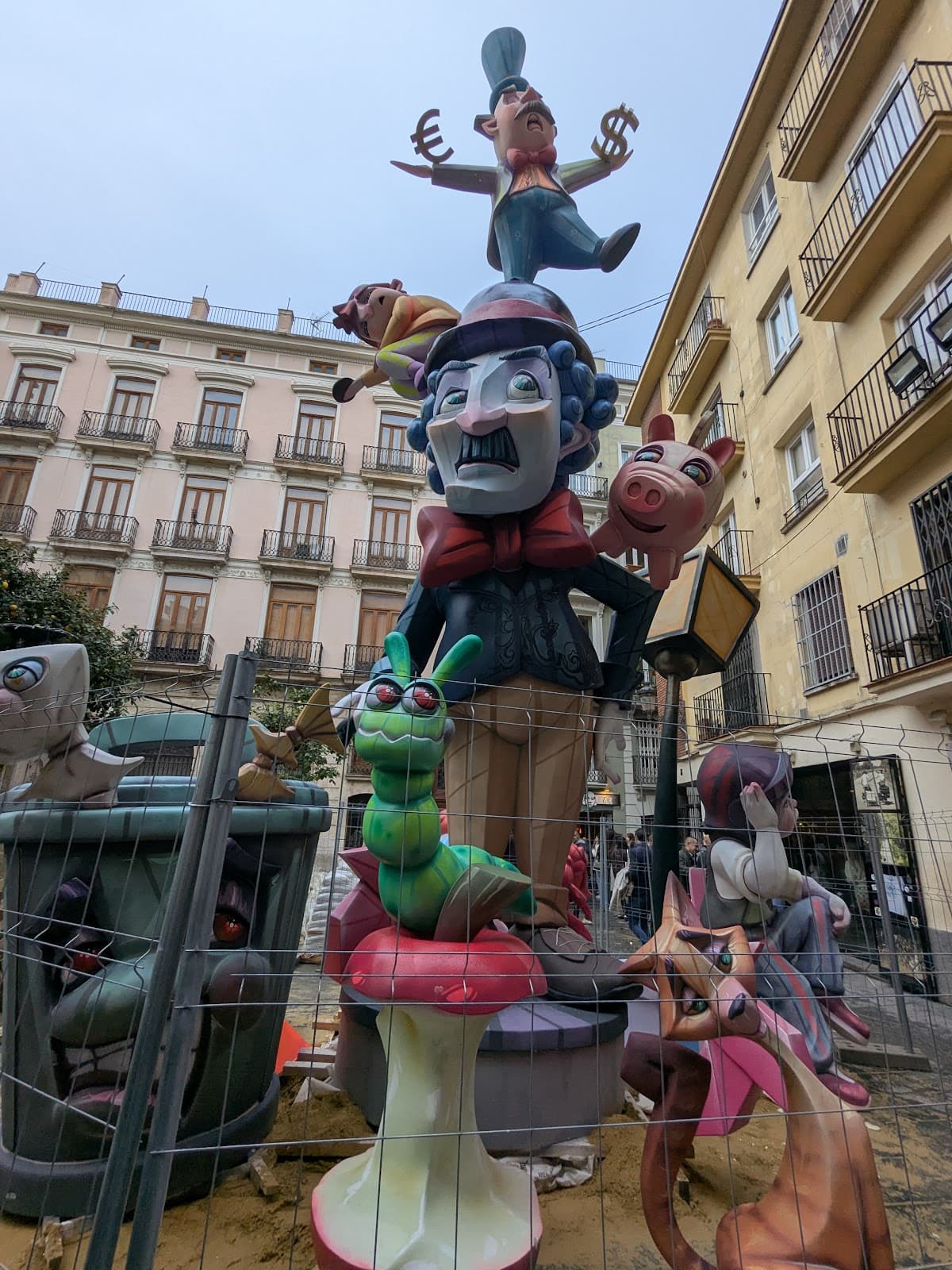
Las Fallas is not just a party — it's the defining cultural event of Valencian identity. The satirical monuments comment on politics and society, the Mascletà is a precision percussion performance (not random noise), and the Cremà on March 19 is genuinely emotional for locals. Treat it with the respect you'd give a national cultural event, not just a fireworks show.
Tipping is not built into Valencian restaurant culture. The price on the menu is what you pay, with no added taxes or service charges. Small change as a thank-you for good service is appreciated but never expected.
Local Customs
PAELLA AT LUNCH ONLY
Paella is a lunchtime dish — locals almost never eat it for dinner. The best, freshest paella is served at beach restaurants along Malvarrosa at lunch. Ordering it for dinner isn't wrong, but it's a tell..
The almuerzo is a mid-morning ritual (around 10:30–11am): a hearty sandwich, a drink, and a coffee for €6–9. It's a social institution, not just a snack — you'll see tables of friends and colleagues doing this daily.. Meals run late.
Lunch kicks off at 2pm, dinner rarely before 9pm. Restaurants that open at 6pm are catering to tourists. Locals eating at 7pm is unusual..
Two cheek kisses (right cheek first) is the standard greeting among friends and new acquaintances — don't go in for a handshake with someone being informal, and don't be surprised if you get kissed hello by someone you just met.. Valencian and Spanish are both used on the street. Attempting even one or two words of Valencian (Bon dia, Gràcies) earns immediate goodwill — locals are genuinely surprised and delighted when visitors make the effort..
Drinking alcohol on the street is illegal in most of Valencia except at licensed cafés and bars. During Las Fallas this is loosely enforced in practice, but be aware of the rule.. On the first Sunday of each month, IVAM, the City History Museum, and the Silk Museum are free after 3pm — no need to pay full ticket price if your timing works..
The Tribunal de les Aigües (Water Tribunal) has met every Thursday at noon outside the Cathedral since the 10th century to settle irrigation disputes — it's a UNESCO heritage event open to the public and still fully functional.. Bus lines have 'Paradas Violeta' — safety stops for women after 10:30pm where drivers stop closer to your destination on request. Ask the driver.
Safety
WATCH FOR PICKPOCKETS
Valencia consistently ranks as one of Spain's safest major cities, with a crime index of just 31.5 and a reported 4.5% fall in overall crime in 2024. Violent crime against tourists is extremely rare. The realistic risks are all petty theft and situational awareness, not personal safety.
Main watchouts: - Pickpocketing is the #1 issue. It clusters around Mercado Central, Plaza de la Virgen, crowded metro stations (especially at rush hour), Malvarrosa beach (unattended bags while swimming), and during Las Fallas when hundreds of thousands of visitors pack the streets. Keep your bag zipped and in front of you. Don't put your phone on a café table near the street edge — quick snatch thefts happen. - El Carmen's narrow side alleys empty out completely once the shops close. The main plazas and lit streets are fine late at night with tourist police visible, but deserted alleyways after 2am are worth avoiding. - Avoid unlicensed taxis approaching you outside bars and clubs. - Watch for overpriced or off-meter taxis — confirm the meter is running before you move. - Rental scams exist: never transfer money before seeing a flat in person and confirming the person signing has the legal right to rent it.
Emergency numbers: 112 (ambulance, police, fire — works everywhere in the EU). Also useful: 091 (National Police), 092 (Local Police). Cabify and Free Now apps track your journey for added security at night.
EMT buses offer 'Paradas Violeta' — female safety stops where drivers will stop closer to your destination after 10:30pm if requested. Valencia is widely considered one of Spain's safest cities for solo female travellers.
Getting Around
WALKABLE OLD TOWN
Ciutat Vella itself is best explored entirely on foot — crossing the old town at its widest point takes under 20 minutes (less than 2km). Most streets inside the walls are pedestrianized. You genuinely don't need transport to see the Cathedral, Mercado Central, La Lonja, El Carmen, or the Torres de Serranos.
For getting further afield:
Metro: 6 lines covering the city. The nearest stations to Ciutat Vella are just outside the old walls — Àngel Guimerà, Xàtiva, Colón, and Alameda. Zone A single ticket: €1.50. Airport (line 3 or 5): ~15 minutes, €4.80 one-way. Extended hours run during major events like Las Fallas.
Bus (EMT): Comprehensive city coverage, running 6am–10:30pm. Single ticket from driver: €2.00 (have exact change). Night buses (búho routes) run until 2am weekdays, 3:30am weekends — useful after late dinners or El Carmen bar-hopping.
Tram: Lines 4, 6, and 8 connect the city to Malvarrosa beach — the metro doesn't go there, so this is your beach connection.
Bikes (Valenbisi): City bike-share. €13/week + €3 card. Over 160km of bike lanes make this genuinely useful. The Turia Gardens riverbed park running through the city is a 9km car-free cycling paradise.
Taxis and rideshare: Official white taxis have a green light on top — always confirm the meter is running. Cabify is more popular than Uber in Valencia and widely used; Free Now also works for official taxis with fixed or metered fares. Avoid unlicensed drivers approaching you outside busy venues.
Valencia Tourist Card: €15/24h, €20/48h, €25/72h. Covers unlimited public transport (metro, bus, tram, including airport) plus free entry to 14 municipal museums — good value if you're hitting multiple sites.
Airport: Valencia Airport (VLC) is about 25 minutes from the city centre by metro or 20 minutes by taxi (~€25 flat). During Las Fallas, many streets close to traffic — plan accordingly and leave extra time.
Useful Phrases
Money-Saving Tips
- 1.Many Gothic Quarter churches charge €3-5 entrance fees, but attending evening vespers is usually free and more atmospheric anyway
- 2.Skip the expensive tourist menus on Las Ramblas — walk two blocks into the Gothic Quarter for authentic tapas at half the price
- 3.The Articket BCN museum pass (€35) includes Picasso Museum and saves money if you're visiting 3+ museums
- 4.Happy hour at most bars runs 6-8 PM with €3-4 beers instead of the usual €5-6
- 5.Street performers on Las Ramblas expect tips, but watching is free — just don't take photos without dropping coins
- 6.Many hotels offer free walking tours of the Gothic Quarter — check at reception instead of booking paid tours
- 7.Mercado de la Boquería has tourist-priced stalls near the entrance, but vendors in the back charge local prices for the same jamón
Travel Tips
- •Download the Citymapper app — GPS works better than paper maps in the winding Gothic Quarter streets
- •Wear comfortable walking shoes with good grip — medieval stones get slippery when wet
- •Restaurants close 4-8 PM for siesta, but bars and cafés stay open for drinks and light snacks
- •Keep your bag zipped and in front of you on Las Ramblas — pickpockets work the crowds, especially near street performers
- •Many shops close on Sunday afternoons and Monday mornings — plan museum visits for these times instead
- •The cathedral is free to visit for prayer but charges €7 for tourist entry — attend morning mass to see it without the fee
- •Carry cash — many small tapas bars and traditional restaurants don't accept cards under €10
- •Book dinner reservations for 9 PM or later to eat when locals do, or go early at 7 PM before the evening rush
Frequently Asked Questions
BUILD YOUR
CIUTAT VELLA (OLD TOWN) PLAN
Insider picks, smart timing, and a plan ready when you are.
Start Planning