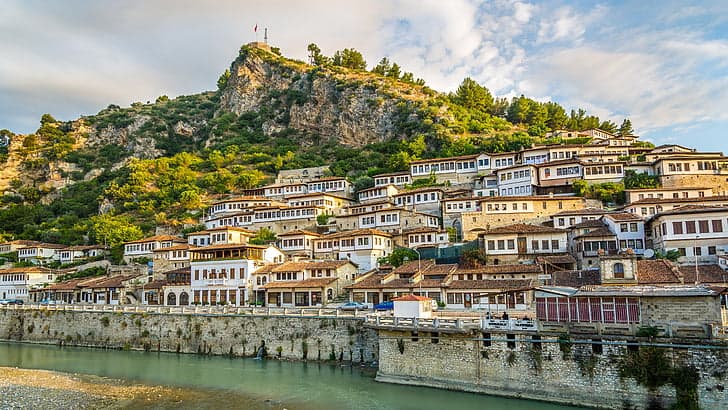
Berat
Albania's thousand windows reveal Ottoman architectural treasures
Look, Berat isn't trying to be the next Dubrovnik. And that's exactly why you should go. This UNESCO World Heritage city climbs up a hillside in central Albania like a living museum, its white Ottoman houses stacked so densely they've earned the nickname "City of a Thousand Windows." The Osum River cuts through the center, separating the historic Mangalem quarter from Gorica across the water. Here's what makes Berat special: it's still a working city where families live in 500-year-old houses, not a sanitized tourist attraction. You can climb to the 13th-century castle for sunset views, taste wine at Cobo Winery, and eat dinner for under €10. But don't expect Instagram-perfect infrastructure – the roads are bumpy, some restaurants close randomly, and English isn't widely spoken. That's part of the charm.
Best Months
APR · MAY · JUN · SEP · OCT
~26°C · moderate crowds
Culture & Context
THOUSAND WINDOWS, LIVING HISTORY
Berat sits in central Albania along the Osum River and has been a UNESCO World Heritage Site since 2008. The town earned its nickname "City of a Thousand Windows" (or more precisely, "City of One Over the Other Windows") from the stacked Ottoman houses on the hillside, each with rows of large windows that catch the light. This place has been continuously inhabited since the 4th century BC.
Illyrians started it, Byzantines expanded it, Ottomans shaped most of what you see today. But here's the thing: Berat isn't just a museum piece. People actually live inside the castle walls.
The medieval city housed both a Muslim quarter (Mangalem) and a Christian quarter (Gorica) side by side for centuries, which is rare in the Balkans and still palpable today. During Albania's communist period (1944–1992), religion was banned and many churches were destroyed, yet Berat's icons and religious art somehow survived. That history gives the Onufri Museum its weight.
Albania is not part of the Schengen Area, which means time spent here doesn't eat into your Schengen 90-day allowance. Useful if you're doing a longer Europe trip.
Local Customs
XHIRO & BESA CODE
The xhiro is the big one. Every evening at sunset, Albanians flood the pedestrian streets for a slow communal walk and it's social ritual, not exercise. In Berat, Bulevardi Republika is the spot.
Just join in, buy a gelato, and don't be in a rush.. Besa is the ancient Albanian code of hospitality. It means something close to 'sacred promise to protect a guest.
' You'll feel it immediately. Strangers will walk you to where you're going. People will invite you to share their meal.
It's not performance for tourists — it's just how things work here.. Raki is the house drink of Albania. It's a grape (or mulberry, or plum) brandy and it gets offered as a welcome drink constantly.
Declining is fine, but accepting earns you points. Say Gëzuar when you clink glasses.. Head gestures can confuse you.
In traditional areas, some Albanians shake their head to mean yes and nod to mean no — an Ottoman-era holdover. Watch for the spoken word alongside the gesture, especially when ordering food.. Dress modestly at religious sites — shoulders and knees covered.
This applies to mosques especially. The castle area has both mosques and churches within a few hundred meters of each other, so it's worth being prepared.. Coffee is serious business.
Ordering a kafe turke or espresso at a street bar and standing at the counter like the locals is the move. Sit-down service at a café table costs more and signals tourist. An espresso runs around €1 standing up..
Tipping is appreciated but not expected. Ten percent is generous and goes a long way given local salaries.
Safety
GENUINELY VERY SAFE
Berat is genuinely safe. Violent crime against tourists is extremely rare here, and the city is consistently rated one of the safer urban destinations in the Balkans. The cultural concept of Besa (a sacred obligation to protect guests) translates into real-world hospitality that makes solo travel, including solo female travel, comfortable.
Albania's overall intentional homicide rate hit a record low in 2023. The US State Department currently lists Albania at Level 2 ("exercise increased caution") — the same rating as France and Italy. In April 2026 the US Embassy issued a precautionary notice about possible Iran-linked threats to venues including tourist sites, not tied to any specific confirmed incident in Albania.
Tourism continues at normal volume with no advisories to cancel trips. The actual practical concerns in Berat are: unofficial "guides" who approach near the castle entrance (a polite "no thank you" handles it), and occasional overcharging on restaurant bills (check the math before paying). Road safety is Albania's real risk.
Driving at night in mountain areas or on secondary roads requires caution. If you're renting a car, drive defensively and avoid mountain roads after dark. Don't drink tap water.
Emergency numbers: 112 (general), 129 (police), 127 (ambulance).
Getting Around
BUS FROM TIRANA
Berat has no airport. Fly into Tirana Rinas International Airport (TIA), then travel south by bus or car (about 2 hours on a decent road). Buses from Tirana's South Bus Terminal run every 30 minutes between 6:30am and 5:30pm, costing 400–500 lek (roughly €4–5).
Albanian bus schedules are approximate at best — they fill up and leave on demand rather than on the dot, so arrive a few minutes early. From Saranda (Albanian Riviera), two buses daily at roughly 8am and 2:30pm, but check ahead since schedules shift. A rental car is the best call if you want to reach Osumi Canyon, Bogova Waterfall, Tomorri National Park, or the wineries around Berat — public transport to these doesn't reliably exist.
Inside Berat itself, everything in the historic center is walkable, but the castle climb is steep. Wear shoes you're okay with cobblestones in. Taxis within town are cheap — agree on a price before getting in, since meters aren't always used.
Useful Phrases
Berat Itineraries

Things to Do in Berat
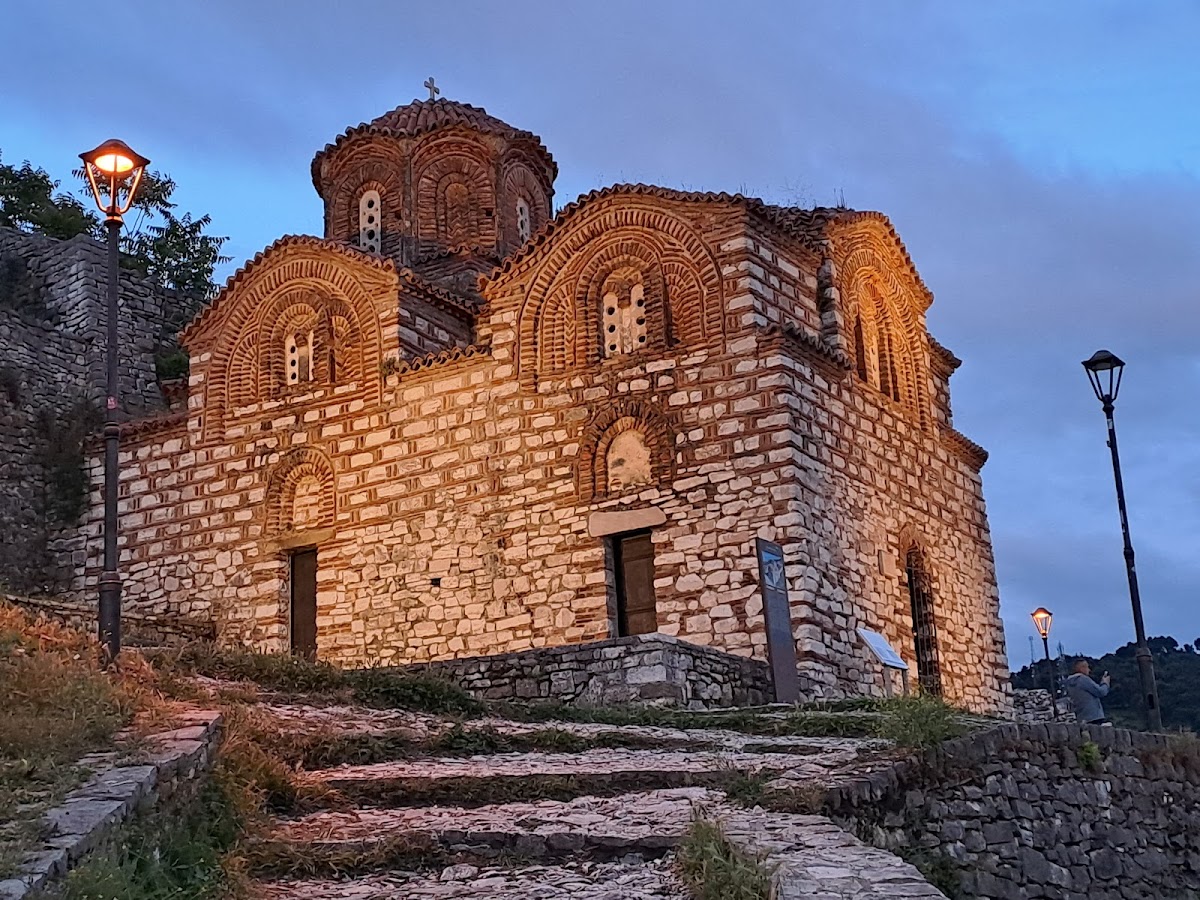
Berat Castle
120 min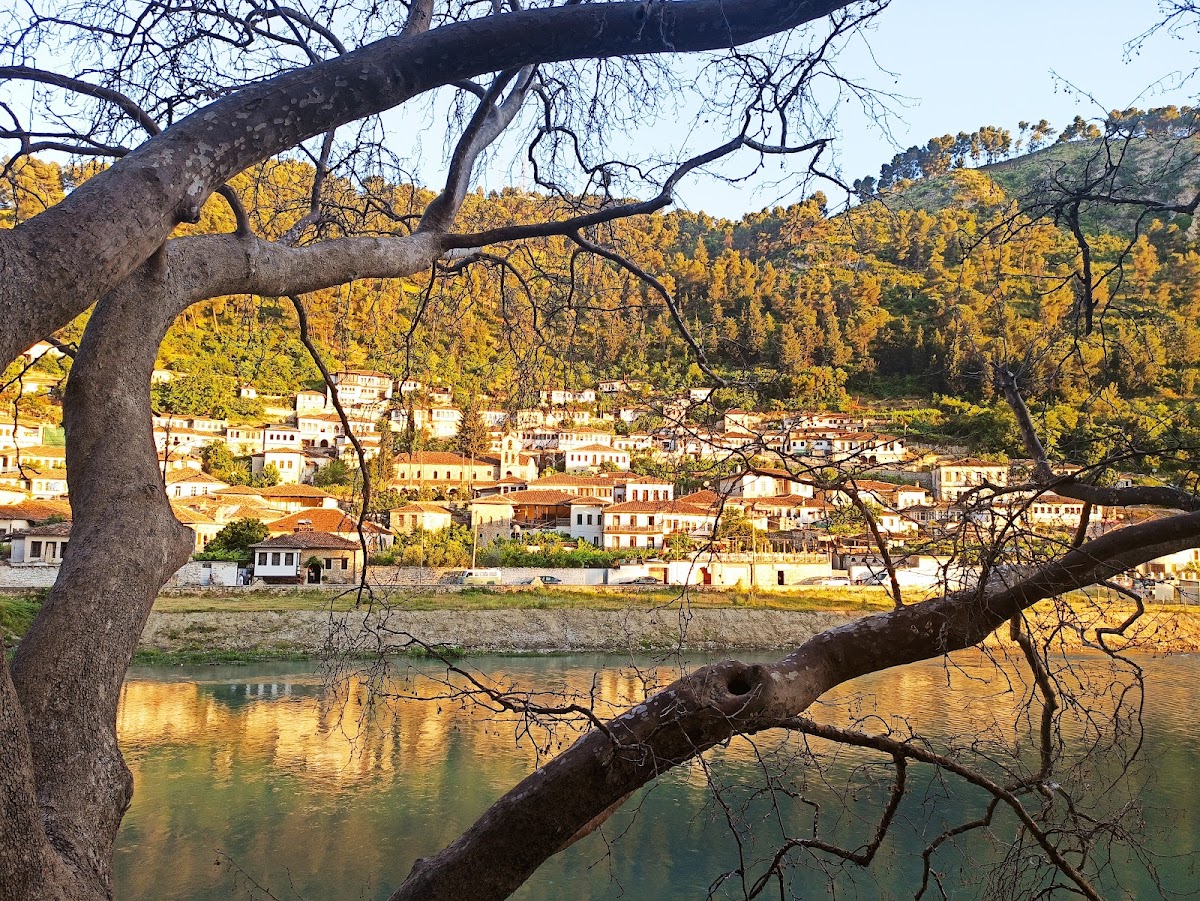
Quarter Of Gorica
90 min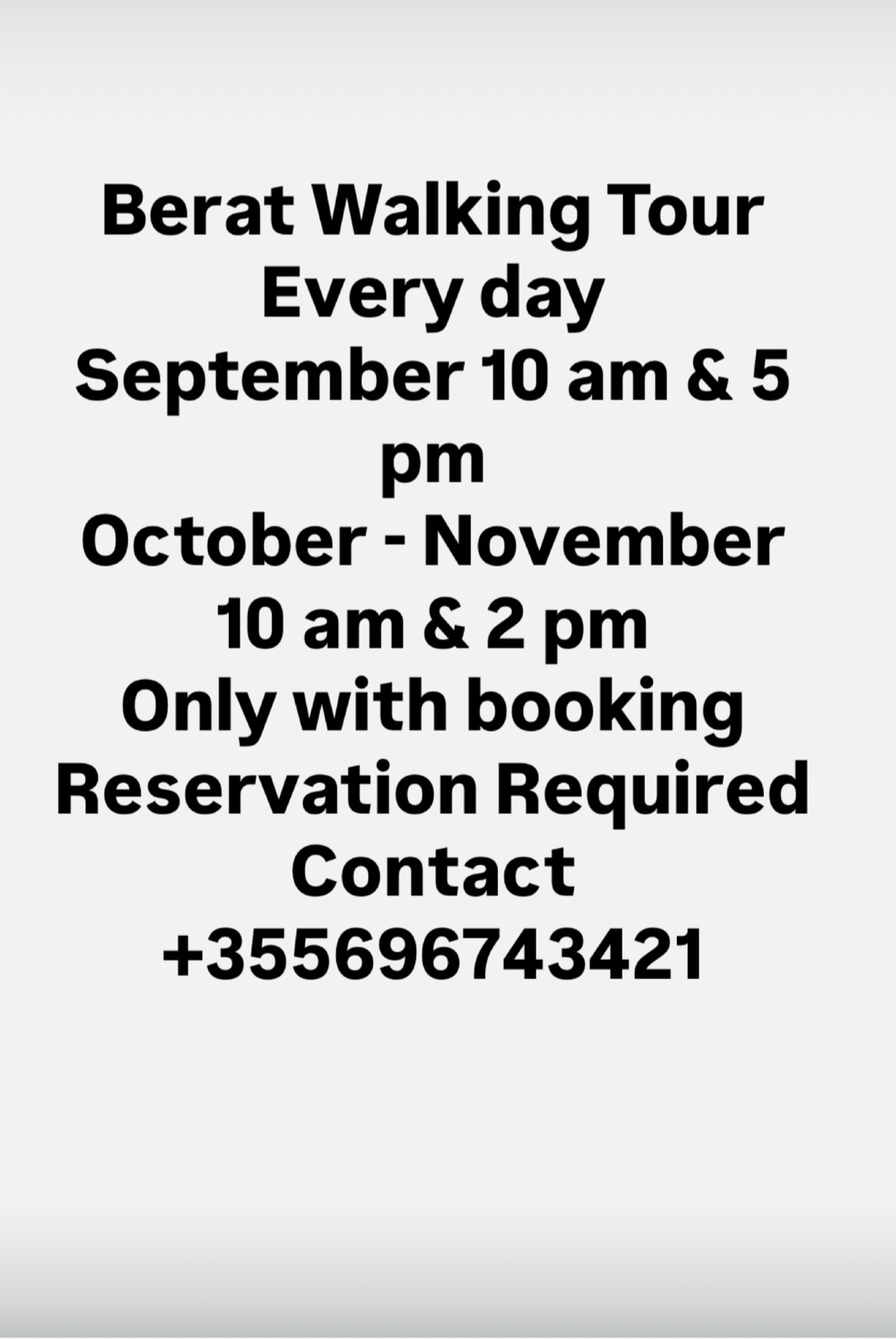
Free Walking Tour Berat
120 minMoney-Saving Tips
- 1.Eat lunch at local tavernas for €5-8 instead of tourist restaurants charging €15+
- 2.Buy wine directly from Cobo Winery (€8-12 per bottle) rather than hotel shops (€20+)
- 3.Stay in family-run guesthouses (€25-40) instead of international hotels (€60+)
- 4.Take local minibuses between neighborhoods (€0.50) instead of taxis (€3-5)
- 5.Visit free attractions like the castle grounds and historic quarters before paying for museums
- 6.Shop at the Wednesday market for fresh produce and local honey at local prices
Travel Tips
- •Learn basic Albanian greetings – locals appreciate the effort and English isn't widely spoken
- •Carry cash – many restaurants and guesthouses don't accept cards
- •Wear comfortable walking shoes with good grip for cobblestone streets
- •Book accommodation early during Orthodox Easter and summer months
- •Try local wines like Shesh i Zi and Kallmet – they're excellent and unknown outside Albania
- •Respect photography rules at religious sites – some churches prohibit cameras inside
- •Pack layers – mountain weather can change quickly even in summer
- •Download offline maps – cell service can be spotty in the castle area