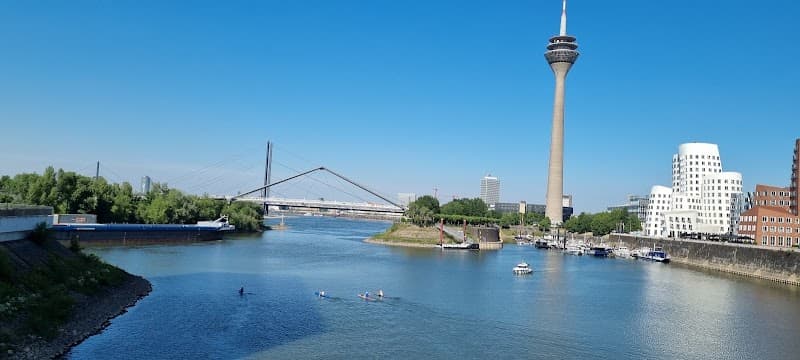
Düsseldorf
Germany's fashion capital with Japanese flair
Look, Düsseldorf isn't what you'd expect from a German city. Sure, there's beer and bratwurst, but you're just as likely to find yourself slurping authentic tonkotsu ramen or browsing €2,000 handbags on Königsallee. This Rhine River city somehow became both Germany's fashion capital and home to Europe's largest Japanese community. The result? A surprisingly cosmopolitan blend that feels more Milan than Munich. You'll find Michelin-starred restaurants next to traditional brewhouses, luxury boutiques alongside art galleries, and businesspeople in sharp suits mingling with creative types in Flingern. It's expensive, yes, but there's a reason this compact city punches above its weight in style and substance.
Best Months
APR – SEP
~21°C · moderate crowds
Culture & Context
FASHION, ALTBIER, LITTLE TOKYO
Düsseldorf doesn't try to be Berlin, and it's better for it. This is Germany's fashion and advertising capital, sitting fat and confident on the Rhine. It also happens to host Europe's largest Japanese community. Around 15,000 Japanese nationals live here, backed by 410+ Japanese companies, which means the "Little Tokyo" district near Immermannstraße has authentic ramen shops, izakayas, and Japanese supermarkets you won't find anywhere else on the continent.
The other thing that defines the city's personality is Altbier. It's a copper-colored, top-fermented ale that Düsseldorfers have been drinking for centuries, and they are deeply protective of it. Order a Kölsch (Cologne's beer) anywhere in the Altstadt and watch the room freeze. The rivalry with Cologne, just 45 minutes south by train, is real and runs deep. Cologne calls Düsseldorf's beer "alt" (old) as an insult. Düsseldorf considers that a compliment.
And then there's Karneval. The Rosenmontag parade before Shrove Tuesday draws up to a million visitors. The city transforms completely — floats, costumes, candy being hurled at crowds. It's chaotic and genuinely fun, not a sanitized tourist performance. Plan months ahead if you want accommodation during that week.
Local Customs
ALTBIER COASTER PROTOCOL
The Köbes (servers in traditional blue aprons) will keep bringing you Altbier without being asked. The only way to stop the flow is to place your coaster on top of your empty glass. Your bill is tracked by pencil marks the Köbes makes on your coaster each time he drops off a new glass..
Never order a Kölsch (Cologne's beer) in a Düsseldorf pub. It's not technically illegal, but you will get a look. Some places simply won't serve it..
Altbier is served in small 0.25L glasses called Becher. Locals drink them fast and fresh — the Köbes keeps them coming.
Embrace the pace.. Twice a year (January and October), a few breweries like Uerige produce 'Sticke' — a stronger, hoppier secret-recipe Altbier. If you see it on offer, order it.
It sells out quickly.. The Radschläger (cartwheel gymnasts) is an old Düsseldorf street tradition. Kids still do spontaneous cartwheels around the Altstadt for tips.
It's the city's official symbol — there's even a statue of it.. Karneval (late February/early March) is treated like a second religion. The Rosenmontag parade alone pulls up to a million people.
If you're there for it, showing up in costume is expected, not optional.. Validate your transit ticket before boarding. Inspectors are regular and fines are steep — around €60 for fare evasion.
Safety
VERY SAFE, WATCH PICKPOCKETS
Düsseldorf is a genuinely safe city. Most neighborhoods, including the Altstadt at night, are fine. Two areas need some awareness: the Hauptbahnhof and its immediate surroundings can attract petty crime after dark, and the Altstadt gets very crowded on weekends and during events, which increases pickpocket risk in the usual ways. Keep your phone off tables in bars, don't leave bags on chair backs, and stay aware in packed U-Bahn carriages during peak hours.
The city is considered safe for solo female travelers. Standard city-night precautions apply: stick to well-lit streets, use licensed taxis or apps for late rides, keep an eye on drinks in busy bars.
Emergency number in Germany: 112 (fire/medical), 110 (police).
Getting Around
WALKABLE & EXCELLENT TRANSIT
All public transport in Düsseldorf runs through Rheinbahn, which combines U-Bahn, trams, S-Bahn suburban trains, and buses under one ticketing system. A single ride costs €3.20. The Deutschland Ticket (€63/month) covers all local transport across Germany and is worth getting if you're staying longer or planning day trips to Cologne, which is only 45 minutes by train.
For visitors, the DüsseldorfCard is solid value — it bundles free unlimited public transport with discounts at around 70–80 attractions and comes in 24, 48, 72, and 96-hour versions. The Plus version also covers the wider Rhine-Ruhr region, meaning free trains to Cologne, Bonn, Dortmund, and Essen.
The airport (DUS) is connected to the city via the SkyTrain monorail (runs 3:45am–0:45am, every 5–7 minutes) to the Düsseldorf Flughafen rail station, then regular trains into the Hauptbahnhof. Budget about 15–20 minutes city center to airport.
The Altstadt and Stadtmitte are walkable once you're there. The city center is flat, which makes cycling a genuinely good option even in rain — locals ride year-round. For late nights, validated taxis or ride-shares are safer than walking alone in areas near the Hauptbahnhof after midnight. Always stamp your transit ticket before boarding — inspectors appear regularly and fines start at €60.
Useful Phrases
Düsseldorf Itineraries
Money-Saving Tips
- 1.Buy groceries at Rewe or Edeka instead of eating out for every meal - a simple lunch costs €15-20 at restaurants
- 2.Get a day pass for public transport (€8.80) rather than individual tickets if you're making more than 3 trips
- 3.Happy hour at many bars runs 5-7 PM with half-price drinks - perfect for pre-dinner cocktails
- 4.The Japanese quarter has excellent lunch specials - ramen sets with gyoza cost €12-15 vs €25+ at dinner
- 5.Free museum entry on certain days - Kunstsammlung NRW is free the first Wednesday evening each month
- 6.Shop at weekend markets like Carlsplatz for fresh produce and local specialties at better prices than tourist areas
- 7.Book hotels outside Stadtmitte and take the U-Bahn - you'll save €30-50 per night and it's only 10 minutes to downtown
Travel Tips
- •Learn to say 'Altbier bitte' - it's the local beer and ordering anything else marks you as a tourist
- •The Japanese quarter is authentic, not a theme park - respect the businesses and don't treat it like Disneyland
- •Königsallee shops close early on Saturdays and stay closed Sundays - plan your luxury shopping accordingly
- •Tipping is 5-10% and you round up to the nearest euro - don't leave cash on the table, tell the server the total you want to pay
- •Business dress code applies in many restaurants and bars - pack at least one smart outfit
- •The Rhine can flood in spring - check water levels before booking riverside accommodations
- •German punctuality is real - arrive exactly on time for reservations, not early or late
- •Download the Rheinbahn app for easy public transport tickets and real-time schedules
Frequently Asked Questions
Explore Düsseldorf
BUILD YOUR DÜSSELDORF PLAN
Insider picks, smart timing, and a plan ready when you are.