Desert Hot Springs
California's natural hot springs wellness retreat destination
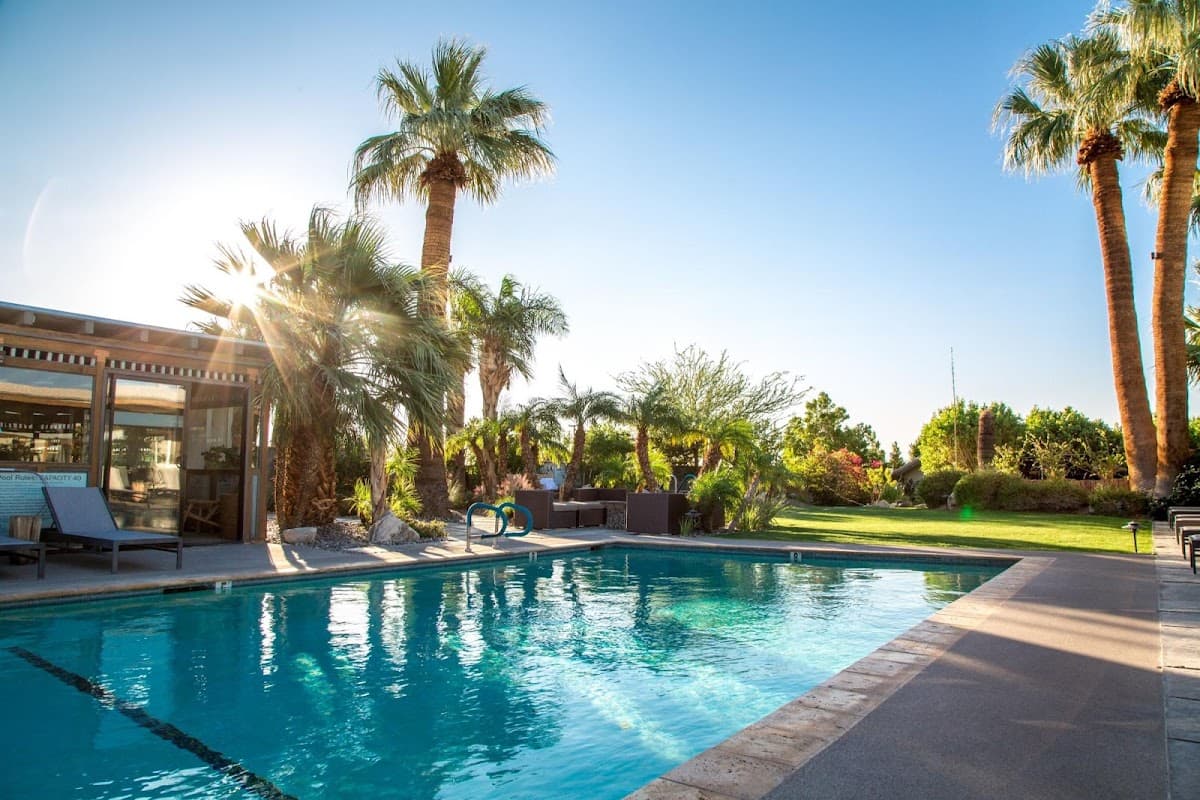
Desert Hot Springs sits quietly in the shadow of the San Bernardino Mountains, about 20 minutes north of Palm Springs. But here's what makes it special: this little desert city sits on top of one of the world's largest natural hot springs aquifers. The mineral-rich waters bubble up from deep underground, feeding dozens of spas and resorts that have turned this place into California's unofficial wellness capital.
The town splits into two distinct personalities. North Desert Hot Springs feels more residential and affordable, with local joints and smaller hot springs hotels. South of Interstate 10, you'll find the luxury resorts and high-end spas that draw wellness seekers from LA and beyond. The desert landscape stretches in every direction, punctuated by date palm groves and the occasional Joshua tree.
Most people come here to unplug. The hot springs naturally contain lithium, magnesium, and other minerals that locals swear help with everything from arthritis to stress. Whether the science backs that up or not, there's something undeniably relaxing about soaking in 104-degree water while staring at the desert stars.
Best Months
JAN · FEB · MAR · APR · OCT · NOV · DEC
~26°C · high crowds
Culture & Context
Desert Hot Springs is a city in mid-transformation.
A decade ago it was a struggling desert town of retired veterans and low-income housing. Then in 2014 it became the first Southern California city to legalize medical cannabis — and that single move fundamentally changed its trajectory.
Property values climbed, cannabis tax revenue funded a new city hall (2019) and library (2021), and a younger, more artistic crowd followed the money. The result is a genuinely interesting collision of old and new: aging snowbirds and retired vets alongside young artists, wellness tourists, and cannabis entrepreneurs. About 39% of the population speaks Spanish as a primary or secondary language, reflecting a large Hispanic community, and the city sits in Riverside County.
Geographically it's separated from Palm Springs by a desert ridge — same valley, completely different class dynamics and price points. Palm Springs is polished and expensive; DHS is rough-hewn and real. The hot springs themselves are geologically remarkable: a rare dual aquifer system created by the Mission Creek Branch of the San Andreas Fault separates hot and cold water aquifers, producing the mineral-rich geothermal water that feeds more than 20 natural mineral spring lodgings — more spa resorts per capita than anywhere else in the Coachella Valley.
Local Customs
Silence is spa etiquette.
At mineral spring resorts, keeping your voice low (or silent entirely) near the pools is expected. Phones are strongly frowned upon poolside.
Locals take this seriously.. Cannabis consumption is normalized and legal, but consume only in designated areas or on property that explicitly allows it. Do NOT drive under the influence — desert roads and impairment are a dangerous combination..
Temperature rotation is standard at multi-pool resorts. Locals cycle from hot pools (100–104°F) to cooler pools or cold showers in between. Stay in any single hot pool no longer than 15–20 minutes..
Tipping at spas is expected at 20% for massage and body treatments. Day pass attendants are generally not tipped but the resort restaurant/bar staff should be.. Hydrate constantly.
The desert air is extremely dry and the hot pools accelerate dehydration fast. Locals carry a water bottle everywhere, including poolside.. Respect the heat calendar.
DHS summer temperatures regularly exceed 110°F. Most locals and regular visitors plan trips October through April — the sweet spot. July and August are brutal and most snowbirds are long gone..
Cabot's Pueblo Museum is a local institution, not just a tourist trap. The story of Cabot Yerxa building a 35-room Hopi-inspired adobe by hand starting in the 1940s resonates with the city's DIY, artisan spirit. Locals are proud of it..
The city's cannabis history is part of civic identity, not a punchline. DHS residents take genuine pride in being the first Southern California city to legalize medical cannabis in 2014, crediting it with reversing economic decline and funding city improvements.
Safety
Desert Hot Springs earns a D+ crime grade from CrimeGrade.org, ranking in the 26th percentile for safety — meaning it's less safe than 74% of US cities.
The crime rate runs at about 33.
79 per 1,000 residents annually. That said, context matters: the resort zones are well-maintained and the vast majority of visitors staying at established spa properties report no issues. The northwest part of the city is generally considered the safest by locals.
Avoid wandering unfamiliar residential streets after dark, especially in the southeastern areas. Property crime (burglary, vehicle theft) is the bigger concern than violent crime. Natural hazards are also real: undeveloped geothermal springs can exceed 180°F — severe burn territory.
Stick to regulated resort pools. Unstable geothermal ground near unmarked areas is another hazard. Extreme heat is the most reliable summer danger — temperatures above 110°F are routine June through September.
Drink water constantly, never hike alone in summer, and always tell someone where you're going if heading into the desert. The Mission Creek Branch of the San Andreas Fault runs directly under the city, making earthquake preparedness sensible. Flash flooding can occur with heavy winter rains — the city distributes sandbags at Fire Station 37 on Pearson Blvd ahead of forecast storms.
Getting Around
A car is essentially mandatory.
Desert Hot Springs has a walk score of 34 and a transit score of 27 — this is a car-dependent desert city, full stop. Palm Springs International Airport (PSP) is the closest major airport, about 20–27 minutes south by car.
Ontario International Airport (ONT) is about 75 miles west. Uber and Lyft operate in the area but can be slow on availability and pricey for longer desert runs. For airport arrivals, Desert Rent-A-Car offers delivery and shuttle pickup directly from PSP without the terminal queues.
Car rentals average $63/day from city locations, or around $40–48/day for economy/compact options — roughly 10% cheaper than airport pick-up. Gas runs about $3.82/gallon.
SunBus (SunLine Transit) operates regional bus routes connecting DHS to Palm Springs and other Coachella Valley cities, but routes are limited and schedules infrequent — workable for resort-to-downtown Palm Springs trips but not for spontaneous desert exploring. Rideshare from DHS to downtown Palm Springs runs roughly 20 minutes by car. Joshua Tree National Park is about 31 miles north.
Los Angeles is approximately 167km (2 hours) west via I-10.
Useful Phrases
Desert Hot Springs Itineraries
Money-Saving Tips
- 1.Visit Sunday through Thursday for significantly lower hotel rates – weekends can cost 50% more
- 2.Many hotels include hot springs access in the room rate, saving $30-50 per day compared to day-use fees
- 3.Book spa treatments during off-peak hours (before 11 AM or after 4 PM) for 15-20% discounts
- 4.Stay north of Interstate 10 for more affordable accommodations while still accessing natural hot springs
- 5.Pack snacks and drinks – resort food and beverage prices run 2-3x higher than off-property options
- 6.Summer months (June-September) offer hotel discounts up to 60% off peak rates, just prepare for extreme heat
Travel Tips
- •Bring flip-flops or water shoes – pool decks get extremely hot, even in winter months
- •Stay hydrated – the dry desert air and hot mineral water can dehydrate you quickly
- •Many clothing-optional resorts require advance reservations and have age restrictions – check policies before booking
- •Download offline maps – cell service can be spotty in some areas of the desert
- •Pack layers – desert temperatures can swing 40+ degrees between day and night
- •Book spa treatments when you make your hotel reservation – popular times fill up weeks in advance
- •Respect quiet hours at wellness-focused properties – most enforce silence policies around pools after 10 PM
Frequently Asked Questions
Explore Desert Hot Springs
BUILD YOUR
DESERT HOT SPRINGS PLAN
Insider picks, smart timing, and a plan ready when you are.
Start Planning