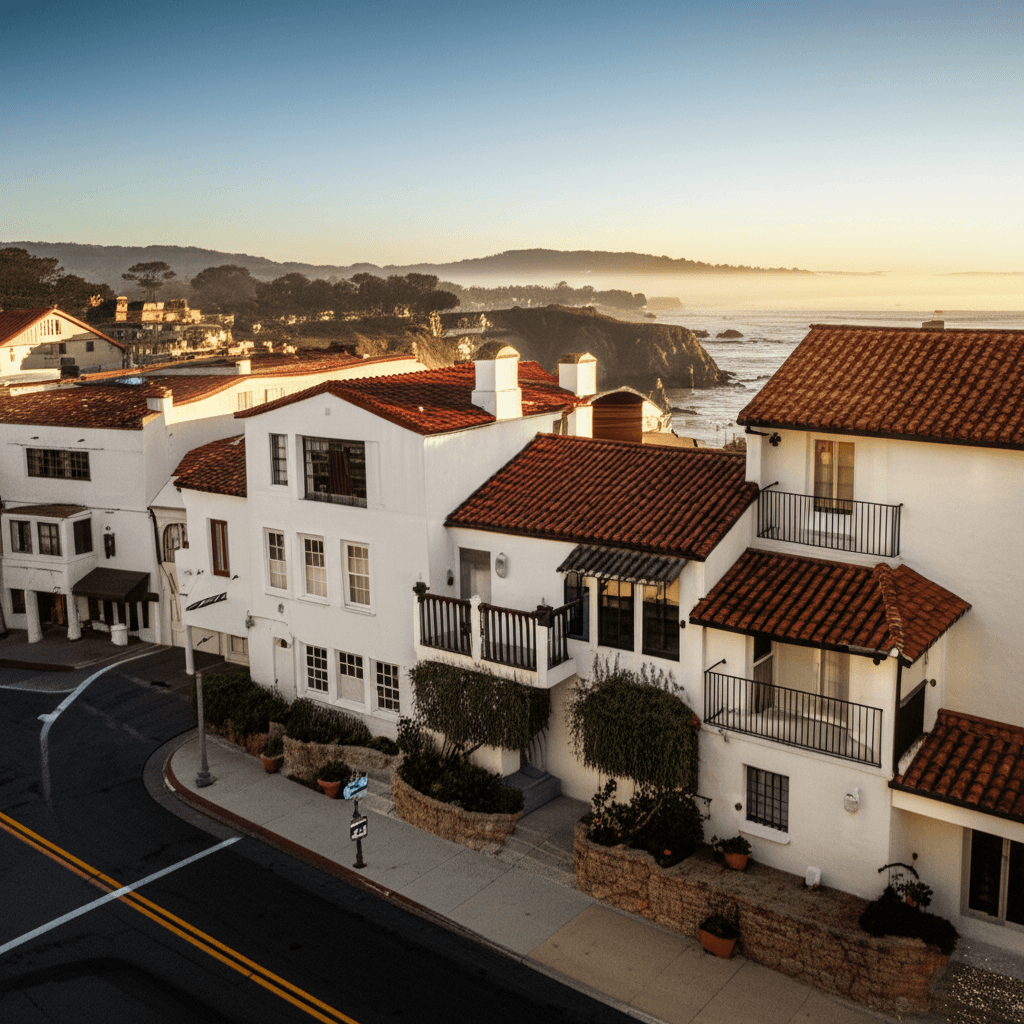
Carmel-by-the-Sea
Storybook village where art meets ocean
Carmel-by-the-Sea feels like someone shrunk a European fairy tale and dropped it on the California coast. This one-square-mile village has no street addresses, no chain stores, and no streetlights — just crooked stone cottages that look like they were built by hobbits with excellent taste. You'll find world-class art galleries next to dog-friendly cafes, all within walking distance of a beach that rivals Big Sur's drama without the crowds. But here's the thing: Carmel isn't just pretty to look at. It's where Clint Eastwood served as mayor, where Robinson Jeffers built his stone tower by hand, and where you can still buy groceries at a market that's been family-owned since 1929.
Best Months
APR – OCT
~22°C · moderate crowds
Culture & Context
ARTISTS' COLONY, NO CHAINS
Carmel started as an artists' colony in the early 1900s. After the 1906 San Francisco earthquake, displaced artists, writers, and musicians landed here and never really left. By 1910, 60 percent of the houses were occupied by people working in the arts.
Jack London and Upton Sinclair passed through. Clint Eastwood was mayor from 1986–88 and famously repealed the ordinance banning ice cream cones on public streets. Doris Day made it a pet-friendly town through the Cypress Inn.
The town still functions on that ethos — no chains, no street numbers, no fast food, and over 80 art galleries in one square mile. It's not performing quaintness. That's genuinely what it is.
The median age is in the late 60s, most residents are retired professionals, and the population hovers around 3,000–4,500 depending on the source. The culture skews serious about arts, food, wine, and dogs — in roughly that order. Budget travelers will find it challenging.
A mid-range dinner easily runs $60–80 per person with wine. Hotel rooms during peak season regularly top $300–500 a night. The upside is that walking the streets, the beach, and Devendorf Park costs nothing.
Local Customs
NO ADDRESSES, DOGS WELCOME
No street addresses anywhere in town. Homes and businesses go by names or descriptions — 'the blue cottage on Torres near 5th.' GPS will approximate.
Use cross streets. Everyone picks up mail at the central post office, which residents genuinely credit for maintaining a small-town feel.. No chain restaurants allowed.
Zero. The ordinance has been in place for decades. What you get instead is 60-plus independently owned restaurants in one square mile.
Bruno's Market and Deli (for tri-tip sandwiches), Dametra Café (Mediterranean with live music), La Bicyclette (wood-fired pizza in a wood-beamed room), and Barmel (dive bar with $5 well drinks during happy hour) are all locals-approve picks.. No street lights outside downtown. Once you leave the commercial strip, it gets genuinely dark.
Bring a flashlight if you're walking back to a hotel or inn after dinner. This is intentional — the town values its night sky.. No sidewalks in the residential neighborhoods.
Outside downtown, you're walking on uneven terrain. Which brings us to: high heels require a permit. Not a joke.
The 1963 ordinance banning heels taller than 2 inches without a permit is still technically on the books. You can get a free permit at City Hall with a photo ID — many visitors do it just for the novelty. No one has ever actually been cited..
Dogs are everywhere and welcome everywhere. Many hotels, restaurants, and galleries explicitly allow dogs on premises. Carmel Beach is off-leash.
Doris Day co-owned the Cypress Inn and helped establish Carmel's reputation as one of the most dog-friendly towns in the country. If you're traveling with a dog, this is genuinely one of the best places you can bring them.. No styrofoam, no plastic straws, no single-use cup lids.
Carmel was the first city on the Monterey Peninsula to ban them. Don't be surprised when your coffee comes in a paper cup with no lid option.. The Farmers Market runs Thursdays.
It's small — you can cover it in an hour — but there are good flower stands, pastry and coffee vendors, and a little park nearby with a pond. Good spot to pick up breakfast before a beach walk.. During Monterey Car Week (August 7–16), hotel prices spike dramatically and parking becomes a genuine ordeal.
Either plan around it or plan for it — but do not show up assuming you'll find a room last minute.
Safety
VERY SAFE, WATCH STEPS
Carmel is genuinely one of the safer places in California. Crime is low, streets are walkable, and the town is small enough that anything out of place gets noticed fast. The main practical hazards are physical, not criminal: uneven cobblestone streets and wooden pavers catch heels and distracted walkers.
Outside downtown, there are no sidewalks and no street lights after dark — bring a flashlight if you're walking back from dinner anywhere off the main strip. Carmel Beach has cold water and strong currents year-round. Don't swim unless you know what you're doing.
The surf can be deceptively powerful. Point Lobos trails are well-marked but some are rocky — wear actual walking shoes, not flip-flops.
Getting Around
PARK ONCE, WALK EVERYWHERE
There is no meaningful public transit once you're in the village. The Monterey-Salinas Transit (MST) runs a few buses — the 22/23 Ocean and Junipero Express passes through downtown on Ocean Avenue and can get you from Monterey to Carmel — but you can't depend on it to get around once you're there. The village itself is one square mile, so park once and walk everywhere. That works for the downtown area.
For anything beyond the village (Point Lobos, Carmel Valley wineries, Big Sur), you need a car. Ride shares exist but are more expensive than in a city, and surge pricing during Car Week is brutal. Closest airport is Monterey Regional (MRY), reachable via connections through SFO or SJC. From San Francisco, it's about a 2-hour drive south on Highway 1 or US-101. From LA, budget 5.5–6 hours.
Parking is tight on weekends. The Sunset North Lot on 8th between Mission and San Carlos is a useful overflow lot. Do not park in the Sunset Center main lot unless you have business there — you will be ticketed. During Car Week in August, the peninsula-wide traffic turns simple drives into extended ordeals. Plan accordingly.
Useful Phrases
Money-Saving Tips
- 1.Visit during shoulder seasons (April-May, September-October) for 40% lower hotel rates
- 2.Park at the Sunset Center lot on San Carlos Street - it's free for 2 hours vs $2/hour downtown
- 3.Many art galleries offer free wine tastings during monthly Art Walk events
- 4.Buy groceries at Nielsen Bros Market instead of eating every meal out - sandwiches cost $12 vs $25 restaurant lunches
- 5.Carmel Beach, Carmel River State Beach, and most hiking trails are completely free
- 6.Happy hour at Mission Ranch (4-6 PM) offers $2 off all cocktails and wine
- 7.The Carmel Library offers free WiFi and restrooms - useful for budget travelers
- 8.Picnic supplies from Cottage of Sweets cost half what hotel room service charges
Travel Tips
- •Bring layers - morning fog burns off to reveal warm afternoons, then returns by evening
- •Download offline maps - cell service gets spotty along Highway 1 south of town
- •Book restaurants ahead, especially on weekends - many close by 9 PM
- •Pack comfortable walking shoes with good grip - cobblestone streets get slippery when wet
- •Bring a dog if you have one - Carmel is incredibly dog-friendly with water bowls everywhere
- •Check Point Lobos reserve hours before driving there - they close gates when parking fills up
- •Carry cash - some small galleries and shops don't accept cards
- •Time beach visits for low tide to access tide pools and more walking space
Frequently Asked Questions
Explore Carmel-by-the-Sea
BUILD YOUR CARMEL-BY-THE-SEA PLAN
Insider picks, smart timing, and a plan ready when you are.