Avignon
Medieval Papal City in the Heart of Provence
Avignon sits behind towering medieval walls like a fortress guarding the secrets of Provence. This is where popes once ruled Christianity from a Gothic palace that still dominates the skyline. Today, the city pulses with theater festivals, wine bars tucked into ancient cellars, and markets overflowing with lavender honey and sun-warmed tomatoes.
The Palais des Papes looms over narrow cobblestone streets where buskers play beneath plane trees. But Avignon isn't stuck in the past. Contemporary art galleries hide behind limestone facades, and innovative chefs transform traditional Provençal ingredients in restaurants that wouldn't look out of place in Paris.
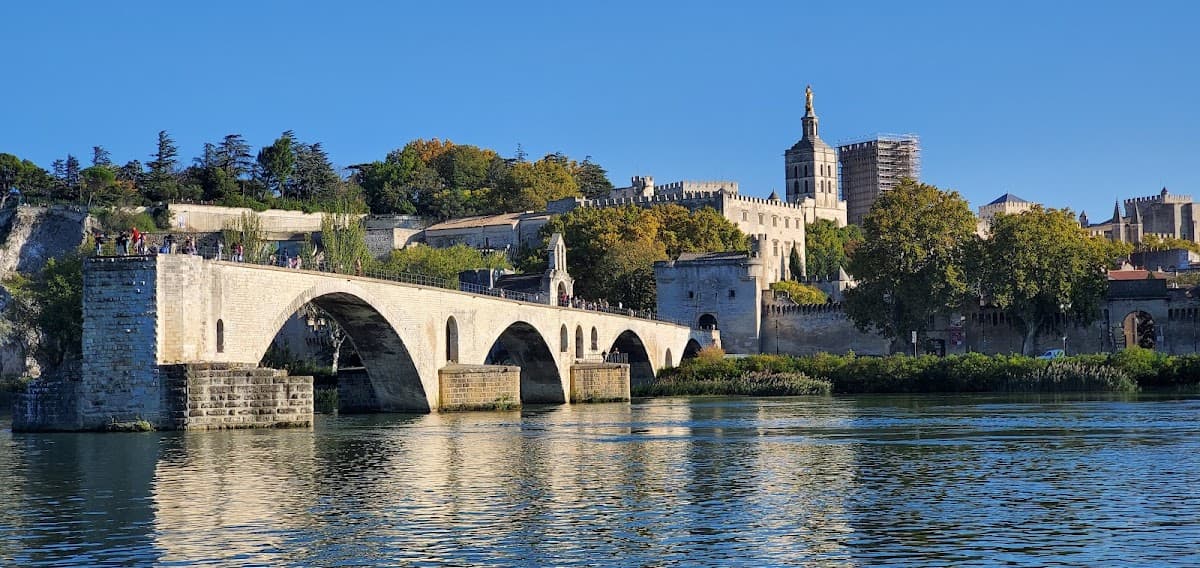
The Rhône River curves around the city walls, and that famous broken bridge - Pont d'Avignon - juts halfway across the water like an unfinished thought. Beyond the ramparts, lavender fields stretch toward the Alpilles mountains, and vineyard-covered hills roll toward Châteauneuf-du-Pape.
Best Months
APR · MAY · JUN · SEP · OCT
~24°C · moderate crowds
Culture & Context
PAPAL LEGACY, FESTIVAL STAGE
Avignon's identity is inseparable from two things: the 14th-century papacy and the annual theatre festival. When the Catholic Church fractured in the 1300s, Avignon became the seat of the popes for nearly 70 years, which is why a city of 90,000 people has a palace the size of a small town at its center. That papal legacy left the city with extraordinary stone buildings, a density of ecclesiastical architecture, and a certain weight of history that you feel walking the streets.
The festival, founded in 1947 by director Jean Vilar with the radical idea that theatre should be accessible to everyone, became the city's second identity. Every July the whole place pivots. Restaurant hours shift, streets become stages, and local life adapts around the invasion of artists and audiences.
More than 75% of festival attendees come from outside the region. For locals, the festival is both a source of genuine civic pride and, honestly, a bit of a disruption to ordinary life. Outside of July, Avignon is a real provincial French city with its own rhythms — markets, café terraces, pétanque in the squares, and not much urgency about anything.
The Mistral wind, blowing cold and dry from the north, is a cultural fixture. Locals have a word for the uncomfortable sticky heat too (ça pègue) and a whole vocabulary inherited from Occitan, the medieval language of southern France spoken by troubadours. English is spoken reasonably well in festival-adjacent areas but drops off fast the moment you go off-script.
Make the effort with French and people warm up considerably.
Local Customs
BONJOUR ALWAYS, TRUST CHEF
Always say 'Bonjour' when entering a shop, bakery, or café, and 'Au revoir' when leaving. This is not optional social nicety — it's baseline courtesy. Skipping it marks you immediately as a rude outsider..
At the market (Les Halles covered market on Place Pie is the main one), never touch the fruit and vegetables yourself. Point at what you want; the vendor selects and bags it. Grabbing produce is frowned upon..
Lunch is serious. Most restaurants serve between noon and 2pm. Turn up at 2:15pm and many kitchens are closed.
Dinner rarely starts before 7:30–8pm. Do not expect to eat at 6pm.. Tipping is not obligatory in France — service is included in the bill.
But leaving a euro or two at a café or rounding up a restaurant bill is appreciated. For genuinely good service, 5–10% is polite.. Don't customize your order extensively.
Asking for substitutions or alterations to a restaurant menu is considered bad form. The chef has made choices; trust them.. Don't split the bill at restaurants unless the server suggests it.
It creates logistical awkwardness the French find baffling.. During July festival season, book restaurants well in advance, especially around Place de l'Horloge and Rue des Teinturiers. Walk-ins at peak dinner time are a gamble..
The Mistral wind blows hard and cold out of the north, even in spring. It can go from sunny and warm to biting in an hour. Pack a layer regardless of the forecast..
Barbecues and campfires are banned in July and August due to forest fire risk. The Île de la Barthelasse and surrounding areas are serious about this.
Safety
WATCH PICKPOCKETS, STAY WALLED
Avignon is generally safe for tourists, with violent crime being rare in the historic center. The overwhelming majority of visitors walk around at night without incident. That said, a few things are worth knowing.
Pickpocketing is the main concern, concentrated around the Palais des Papes, Place de l'Horloge, and the main train station. Use a cross-body bag with the zipper facing your body, and keep your phone in your pocket — not in your hand as you wander. The southern and southeastern parts of the city, along the Charles de Gaulle ring road, are rougher.
Stick inside the city walls and there's nothing specific to worry about. During July, the massive festival crowds (150,000+ people in a compact medieval city) create ideal conditions for petty theft — stay aware in tight spaces. Tap water is safe to drink throughout France; refill your bottle freely.
Emergency numbers: 112 for all emergencies, 15 for medical (SAMU), 17 for police. Pharmacies are everywhere, identified by green cross signs, and pharmacists can advise on minor issues. In summer, the Provence heat is real — regularly above 35°C.
Drink water constantly, wear sunscreen, and take breaks indoors during peak afternoon heat (2–4pm). Car rental: never leave anything visible in a parked car.
Getting Around
WALKABLE, TGV CONNECTED
Getting to Avignon is easy. The TGV station (Avignon TGV) is 5km outside the city center on the Paris-Marseille high-speed line. Paris takes around 2h40.
From the TGV station, take the shuttle train (Navette Tram-Train) to Avignon Centre station — it runs frequently and takes about 5–7 minutes. The Centre station is right outside the old city walls, half a kilometer from the Palais des Papes. Bus lines 10 and 14 also connect the TGV station to the center.
Once you're inside the walls, Avignon is walkable. Seriously — the whole historic core takes about 20 minutes to cross on foot. For getting around without walking, the ORIZO network runs the buses.
The CityZen electric shuttle is free, loops through the historic center every 10–15 minutes, and is the easiest way to hop between neighborhoods. Regular bus tickets cost €1.50.
Bike rental is available via Vélopop (self-service), and cycling along the Rhône or around the Île de la Barthelasse is genuinely good. The seasonal ferry to the Île de la Barthelasse runs from near the Pont Saint-Bénézet. For day trips — Arles, Nîmes, L'Isle-sur-la-Sorgue, Orange — trains and buses from Avignon Centre handle most routes.
For Gordes, Roussillon, and Luberon villages, you need a car; public transport is too infrequent to make it practical. Taxis have a reputation for overcharging. If the meter shows the letter 'D', you're being charged the higher night rate, which only applies between 7pm and 7am.
Useful Phrases
Where to Stay in Avignon
4 recommended properties
La Mirande
ultra-luxury · 18th-century French aristocratic townhouse. Formal but not stiff. Feels more like staying in someone's grand private home than a hotel — one that happens to border the largest Gothic palace in the world. · 20/10
La Divine Comédie
luxury · Maximalist art-lover's mansion. Think wealthy collector's home meets intimate maison d'hôtes — bold colours, heavy antiques, inherited curiosities, and an owner who knows every piece's provenance. Intimate and personal, not corporate. The five suites read like travel journals: one channels a Grand Tour adventurer, another evokes Tutankhamun's Egypt, a third is all Venetian blue. · 19.7/10
Le Prieuré
luxury · Medieval heritage meets understated Provençal elegance. Think clean contemporary furnishings against centuries-old exposed stone, a wisteria-draped garden that feels more Tuscany than tourist trap, and a pool framed by century-old plane trees. Unhurried and genuinely quiet. · 19.4/10
Mas de Capelou
upscale · Rustic-chic Provençal farmhouse. Historic stone exterior, modern boutique interiors with Nespresso machines, Bluetooth speakers, and bathrobes. No reception desk — the hosts (Valérie and team) are present but unobtrusive. · 19.3/10
Itineraries coming soon
We're working on adding amazing itineraries for Avignon. In the meantime, try the app to create your own!
Money-Saving Tips
- 1.Buy groceries at Monoprix on Rue de la République instead of tourist shops - prices drop 30% for the same Provençal products
- 2.The Avignon City Pass (€22) includes papal palace entry plus public transport, paying for itself if you visit 2+ attractions
- 3.Lunch menus at Michelin restaurants cost half the dinner price - L'Essential serves the same quality for €18 vs €45 at night
- 4.Free wine tastings happen at Cave Demazet on Saturdays - no purchase required, just bring your palate
- 5.Park at Ile Piot garage overnight (€18/24hrs) instead of street parking (€2/hr from 9AM-7PM) - saves money after 9 hours
Travel Tips
- •Download the Avignon Festival app in July - shows free street performances and last-minute ticket availability
- •The papal palace audio guide in English costs €2 extra but transforms confusing empty rooms into vivid history
- •Wear comfortable walking shoes - those medieval cobblestones destroy feet in heels or thin soles
- •Mistral winds can gust up to 100 km/h - pack a windbreaker even in summer
- •Restaurant kitchens close 2-7 PM - plan lunch before 2 PM or wait until evening service starts
- •The tourist office on Cours Jean Jaurès offers free city maps with hidden gems marked by locals
- •Book accommodations 6 months ahead for July festival season - everything fills up and prices skyrocket