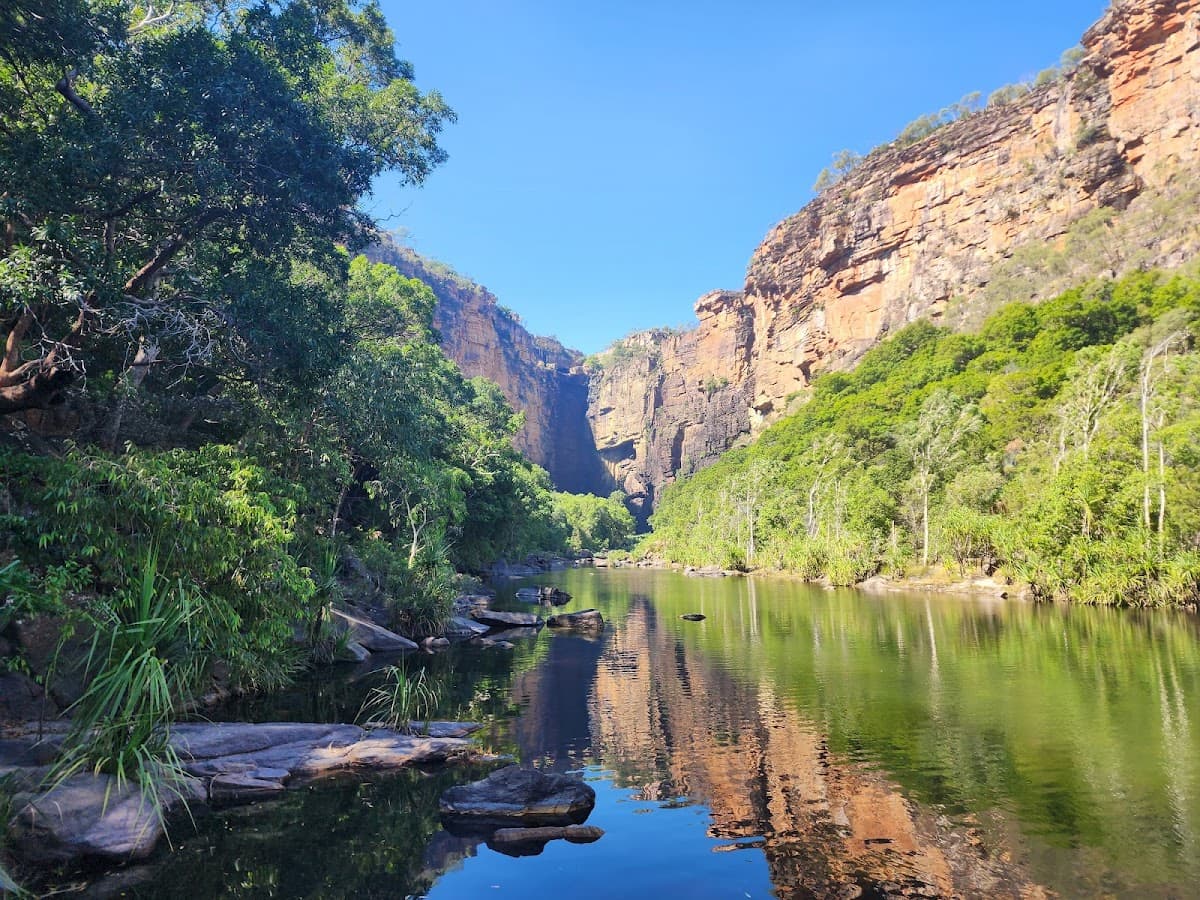
Kakadu National Park
Ancient Aboriginal culture meets diverse Australian wilderness
Kakadu National Park sprawls across 20,000 square kilometers of Australia's Top End, making it roughly the size of Slovenia. But size isn't what makes this place extraordinary. It's the 65,000-year-old Aboriginal rock art galleries scattered across sandstone escarpments, the saltwater crocodiles sunning themselves on Yellow Water billabongs, and the fact that you can drive for hours without seeing another soul. This is Australia at its most raw and ancient, where Bininj/Mungguy people have maintained an unbroken connection to country for millennia. The park holds one-third of Australia's bird species, seasonal wetlands that transform with the monsoons, and art sites that predate Stonehenge by 60,000 years. And here's the thing about Kakadu - it's not trying to impress you with Instagram moments. It earns your respect slowly, through quiet mornings watching jabirus hunt and afternoons deciphering x-ray art that tells stories older than written language.
Itineraries coming soon
We're working on adding amazing itineraries for Kakadu National Park. In the meantime, try the app to create your own!
Money-Saving Tips
- 1.Buy your park pass online before arriving - some entry stations don't have reliable card readers
- 2.Fuel up in Darwin or Katherine before entering the park - petrol stations in Jabiru charge premium prices
- 3.Pack plenty of food from Darwin supermarkets - grocery options inside the park are limited and expensive
- 4.Consider camping over hotels to save $150+ per night, plus you'll be closer to the best sunrise and sunset spots
- 5.Book Yellow Water cruises directly with the operator rather than through tour companies to avoid markup fees
- 6.Download offline maps before entering - mobile data is patchy and expensive roaming charges add up quickly
Travel Tips
- •Start your day at 5:30am - the light is magic and you'll avoid the heat and crowds at popular rock art sites
- •Always tell someone your hiking plans - mobile coverage is non-existent in many areas of the park
- •Pack a powerful torch for exploring rock art galleries - many of the best paintings are in shadowed caves
- •Respect crocodile warning signs - saltwater crocs are present in all waterways and can travel overland
- •Book Yellow Water cruises for early morning or late afternoon when wildlife is most active
- •Check road conditions daily during wet season - tracks can become impassable within hours
- •Carry extra water beyond what you think you need - the Top End heat is deceptively draining
- •Learn basic Aboriginal cultural protocols before visiting rock art sites - this is sacred country
- •Download the Kakadu app for detailed trail maps and cultural information that works offline
Frequently Asked Questions
Explore Kakadu National Park
Ready to explore Kakadu National Park?
Get a personalized itinerary in seconds with Takeoff.
Free on iOS. No credit card required.