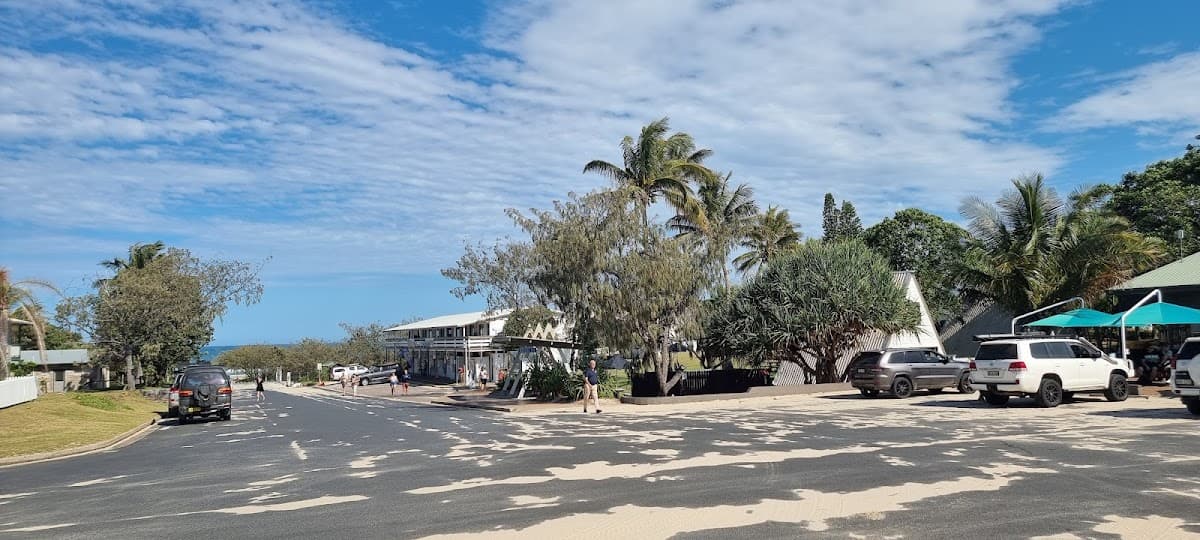
Fraser Island
World's Largest Sand Island Wilderness Paradise
Fraser Island – or K'gari, as the Butchulla people have always known it – sits off Queensland's coast like a 123-kilometer stretch of impossibility. Here's the thing: it's the world's largest sand island, but somehow supports ancient rainforests that grow directly from sand dunes. You'll drive on beaches that double as highways, swim in crystal-clear freshwater lakes perched 100 meters above sea level, and spot dingoes padding along Seventy-Five Mile Beach at dawn. This isn't your typical island getaway. It's wilder, stranger, and completely car-dependent. But that's exactly what makes it extraordinary.
Best Months
APR – SEP
~24°C · moderate crowds
Culture & Context
INDIGENOUS PARADISE RESTORED
K'gari (pronounced "GAH-ree" or "Gurri") is the official name of what most maps still label Fraser Island. The name comes from the Butchulla people who've called this place home for at least 5,000 years, possibly 50,000. It means "paradise.
" The name was formally restored in 2023, and locals take that seriously. Calling it just "Fraser" around Butchulla-led rangers or tour guides is a bit like walking into someone's home and refusing to learn their name. Don't be that person.
The island is a UNESCO World Heritage Site partly for its natural wonders, but equally for the depth of Indigenous connection woven into every creek, sand blow, and headland. The Butchulla people believe they've lived on K'gari since the Dreaming. Places like Wanggoolba Creek and Tukkee Wurroo (Indian Head) carry spiritual and archaeological weight that no tour brochure can adequately convey.
As of August 2025, both Kingfisher Bay Resort and K'gari Beach Resort are now managed by 1834 Hotels, which promises upgraded eco-friendly practices. The island gets between 400,000 and 500,000 visitors a year. That pressure is real and visible, especially in summer.
Local Customs
RESPECT K'GARI NAME
Use the name K'gari. Rangers, Butchulla guides, and locals appreciate it. The island's traditional name was restored in 2023 and matters enormously to the Traditional Custodians..
Dingoes are called wongari in Butchulla language. Do not approach them, photograph from a distance of at least 20 metres, and never ever feed them. Fines run up to $2,670 on the spot, with a maximum of $27,538.
In January 2026, a serious dingo incident on Eastern Beach led to a controversial cull, and heightened dingo activity alerts were still in place on the eastern beach through May 2026. The dingo situation is genuinely complex and politically charged.. Never swim in the ocean off K'gari's beaches.
Strong currents, sharks, and marine stingers make it legitimately dangerous. Freshwater lakes like Lake McKenzie (Boorangoora), Lake Wabby, and Eli Creek are your swimming holes.. Bring all your food and supplies from the mainland.
Shops exist at Eurong, Happy Valley, Kingfisher, Cathedrals on Fraser, and Orchid Beach, but prices are inflated to cover transport costs. Alcohol in particular will give you sticker shock.. Plan all beach driving around the tides.
75 Mile Beach is a registered national highway with an 80km/h speed limit. High tide makes sections impassable. Conditions change fast..
Open fires are prohibited almost everywhere on the island, except communal fire rings at Dundubara and Waddy Point, and you must bring your own clean milled timber.. Heritage sites, shell middens, and scarred trees across the island are of deep significance to the Butchulla people. Stick to marked tracks and never disturb archaeological sites.
Safety
DINGOES: DISTANCE REQUIRED
Dingoes (wongari) are the headline safety issue and it's serious. In January 2026, a 19-year-old Canadian visitor died on Eastern Beach in circumstances involving a pack of approximately ten dingoes, which sparked a major public debate and a controversial cull of six animals. Heightened dingo activity alerts were still active on the K'gari eastern beach through at least May 2026. The Butchulla Aboriginal Corporation has been vocal that human non-compliance — primarily improper food storage and deliberate feeding — is the root cause of escalating conflict. The rules are non-negotiable: maintain 20 metres distance, never feed dingoes (maximum fine AUD $27,538), lock all food in hard containers inside your vehicle at night (not in your tent), and never walk alone at night. Children must be supervised at all times.
Ocean swimming is not recommended anywhere on K'gari due to strong rip currents, sharks (including great whites and tiger sharks), and summer marine stingers. Stick to Lake McKenzie, Lake Wabby, and Eli Creek.
Several tracks and areas have active closures in 2026: Moon Point Road is partially closed through June 2026, Cornwells Road partially closed through September 2026, the Tukkee Wurroo (Indian Head) walking track remains closed through November 2026, and infrastructure upgrades at Waddy Point and Central Station run April through November 2026. Check the Queensland Parks conditions report before every visit — it updates regularly and genuinely matters.
Medical facilities are minimal. There is no hospital. A permanent paramedic is stationed at Happy Valley, and emergency helipads are located at Eurong, Happy Valley, Orchid Beach, and Kingfisher Bay. The nearest full medical care is Hervey Bay on the mainland. Be prepared.
Getting Around
4WD BARGE ONLY
Getting to K'gari means taking a barge. There are two departure points. The quickest is Inskip Point near Rainbow Beach, where the Manta Ray Barge crosses to Hook Point in about 10-15 minutes. Note: Inskip Point is notorious for vehicles getting bogged near the barge queue — arrive with your tyre pressures already reduced. The other option is River Heads (17km south of Hervey Bay), where the Fraser Venture runs to Wanggoolba Creek near Kingfisher Bay Resort in about 30-40 minutes. Return barge fares generally run AUD $80-$155 for a vehicle and passengers. Book ahead, especially around Easter, Labour Day long weekends, and school holidays when wait times can stretch to 1-2 hours.
Once on the island, you must have a 4WD. There are no sealed roads. 75 Mile Beach on the eastern shore is the main "highway" with a posted speed limit of 80km/h — and rangers enforce it. Inland sand tracks connect the east and west coasts but turn boggy after rain. Deflate your tyres to around 20psi for soft sand, re-inflate before driving on harder surfaces.
Air Fraser Island operates daily flights from Hervey Bay Airport and Sunshine Coast Airport if you'd rather skip the barge entirely. There is exactly one taxi on the island (a 4WD, obviously). Book it well in advance through Fraser Island Taxi Service (+61 7 4127 9188) and they'll quote you a price and pick you up anywhere.
Useful Phrases
Itineraries coming soon
We're working on adding amazing itineraries for Fraser Island. In the meantime, try the app to create your own!
Money-Saving Tips
- 1.Buy groceries and supplies in Hervey Bay or Rainbow Beach before taking the barge – island prices are double mainland costs
- 2.Camping permits cost $6.75 per person per night, significantly cheaper than resort accommodation at $300+ per night
- 3.4WD rental companies offer better weekly rates – a 7-day rental often costs only slightly more than 4 days
- 4.Vehicle barge costs are fixed, so traveling with friends to split fuel and barge fees makes economic sense
- 5.Bring your own firewood – the island store charges $25 for a small bundle that costs $8 on the mainland
- 6.Pack a comprehensive first aid kit and basic mechanical tools – emergency services and repairs are expensive and slow
Travel Tips
- •Lower tire pressure to 18-20 PSI before driving on sand – this prevents getting bogged and protects your vehicle
- •Always travel with at least two vehicles when possible – getting stuck alone on Fraser can be dangerous
- •Dingoes are wild animals, not pets – never feed them, store all food in metal boxes, and keep children close
- •Creek crossings can change rapidly with tides and rain – check conditions before attempting and have an exit strategy
- •Mobile phone coverage is patchy at best – download offline maps and inform someone of your travel plans
- •Pack insect repellent and long sleeves – march flies and mosquitoes can be relentless in warmer months
- •Bring a satellite communicator or EPIRB for emergencies – help can be hours away in remote areas
- •Time beach driving with tides – soft sand at high tide makes driving much more difficult
Frequently Asked Questions
Explore Fraser Island
BUILD YOUR FRASER ISLAND PLAN
Insider picks, smart timing, and a plan ready when you are.