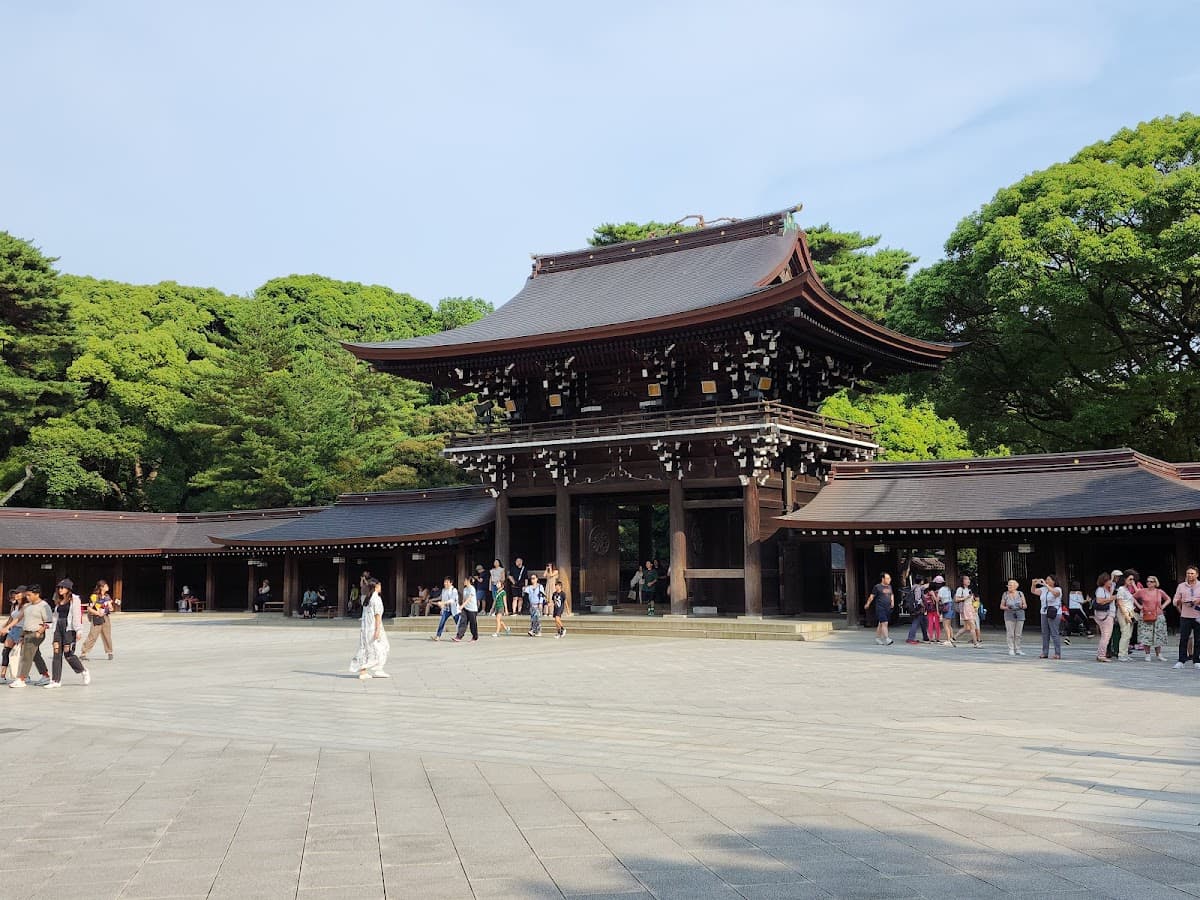
Meiji Shrine
Tokyo's tranquil sanctuary amid urban chaos
Step through the towering torii gate on Omotesando Avenue, and Tokyo's chaos melts away. Here in Shibuya, just minutes from the world's busiest pedestrian crossing, lies Meiji Shrine — 175 acres of ancient forest surrounding Japan's most important modern shrine. Built in 1920 to honor Emperor Meiji and Empress Shoken, this sacred space draws millions of visitors who come to pray, reflect, and escape the city's relentless energy. The shrine sits within Yoyogi Park's borders, but feels like another world entirely. You'll walk gravel paths beneath 100,000 trees, many donated from across Japan when the shrine was built. But here's what makes Meiji Shrine special: it's not just a tourist site. Real Tokyo residents come here for New Year's prayers, wedding ceremonies, and quiet moments before work. The contrast hits you immediately — one minute you're dodging crowds in Harajuku, the next you're watching monks in white robes perform ancient rituals.
Money-Saving Tips
- 1.Entry to Meiji Shrine is completely free — one of Tokyo's best free attractions
- 2.The Treasure House charges ¥1,000 for adults, but the main shrine experience costs nothing
- 3.Bring ¥5 coins for offerings at the shrine — considered lucky in Japanese culture
- 4.Skip expensive drinks inside — bring your own water bottle and refill at fountains
- 5.Combine with free activities in Yoyogi Park to make a full day without spending extra
- 6.Ema (prayer plaques) cost ¥500 if you want to write a wish and hang it with thousands of others
Travel Tips
- •Download a translation app — many signs are Japanese-only, especially deeper in the forest
- •Wear layers — the forest stays cool even on hot days due to dense tree cover
- •Bring hand sanitizer — the purification ritual involves shared water basins
- •Visit during weekday mornings for the most authentic, peaceful experience
- •Learn basic Shinto etiquette beforehand — locals appreciate respectful behavior at sacred sites
- •Check the shrine calendar for festivals — some ceremonies are closed to tourists
- •Carry cash — nearby food vendors and souvenir shops rarely accept cards
- •Use the restrooms before entering the forest — facilities are limited inside the shrine grounds
Frequently Asked Questions
BUILD YOUR
MEIJI SHRINE PLAN
Insider picks, smart timing, and a plan ready when you are.
Start Planning