i Khas
Mughal hunting-party luxury meets genuine wildlife camp. Intimate, very quiet, and deliberately low-tech in the best sense — no TVs in tents, but a resident barber who gives open-air shaves under the trees. The cream-and-teak palette keeps things warm without being fussy.
The batman (butler) can book your train tickets from Delhi to Sawai Madhopur and accompanies guests — worth doing instead of flying to Jaipur and driving
Why It Matters
One of the world's best-positioned luxury camps for Bengal tiger sightings, with twice-daily guided safaris into Ranthambore. The only all-inclusive Aman property. Just 13 tents, each serviced by a dedicated batman (butler). The step-well pool is modelled on Rajasthan's ancient baoris. UNESCO-listed Ranthambore Fort is inside the national park itself.
Aman-i-Khás is a 13-tent tented camp sitting right on the boundary of Ranthambore National Park — one of India's most productive places to spot wild Bengal tigers. The place is unapologetically built around the wildlife experience: twice-daily jeep safaris into the park are the main event. Back at camp, Mughal-inspired cream canvas pavilions spread across four hectares of forested ground, each a proper dwelling with soaring ceilings, free-standing bathtubs, and private sun decks. It is the only Aman property operating on a full all-inclusive formula — all meals and non-alcoholic drinks are included in the rate.
Where You'll Stay
3 room types available
Grand Tented Pool Pavilion
The largest accommodation at camp, at 256 sqm, with a temperature-controlled outdoor pool — not just a plunge pool — and an enclosed open-air deck. Elegantly appointed interior with the same Mughal-inspired cream and teak palette. This is the camp's top-tier option for those who want total immersion without leaving their private enclave.
King-size or twin beds · 256 sqm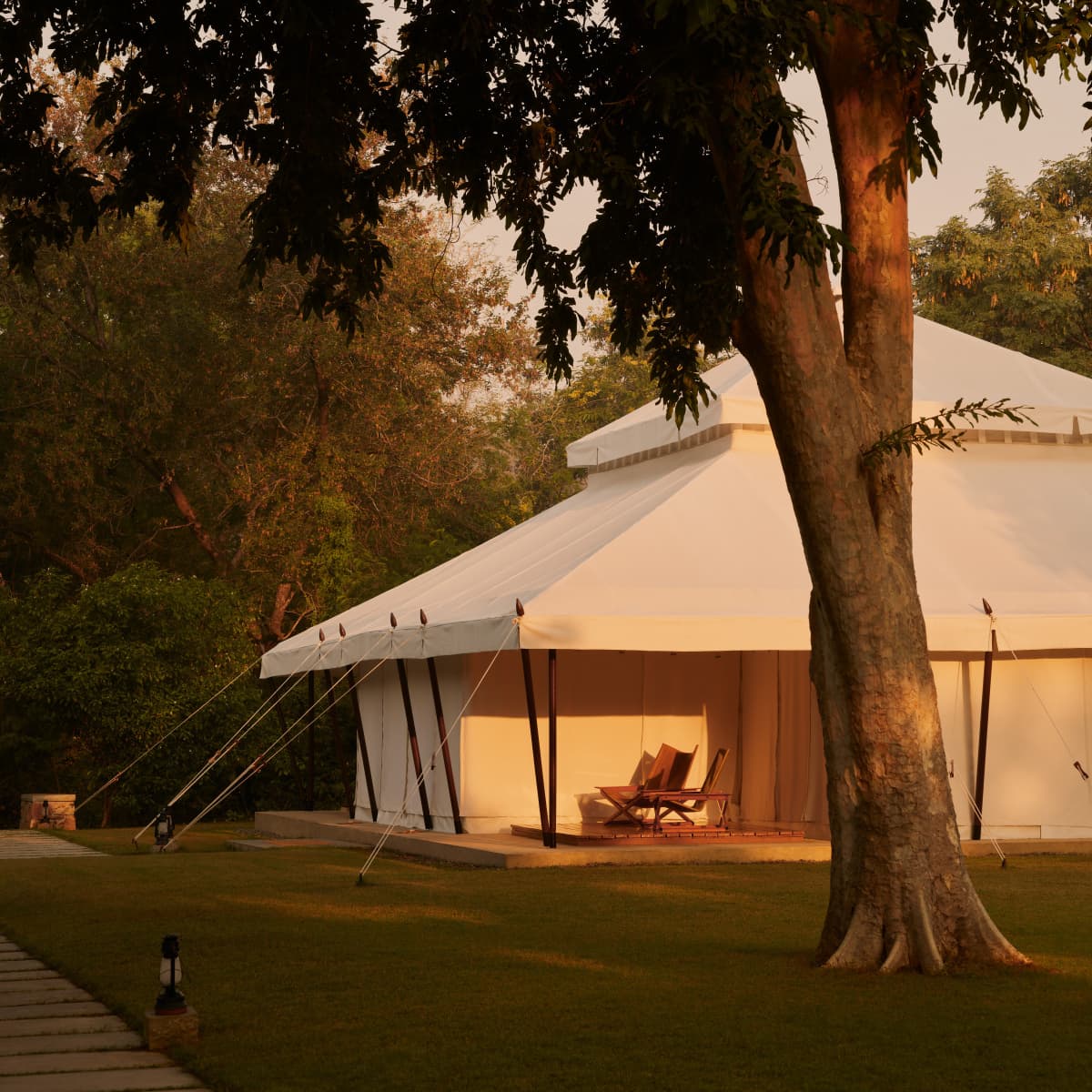
Tented Pavilion
Ten of these pavilions anchor the camp, positioned well apart from each other so you genuinely cannot hear your neighbours. The soaring 6-metre canvas ceilings make the space feel bigger than the numbers suggest. Inside: a king or twin bedroom, living area with an oversized daybed perfect for afternoon naps, separate dining area, twin writing desks, and a bathroom with a free-standing bathtub and shower. Outdoor sun deck faces the landscape and is ideal for morning birdwatching over tea.
King-size or twin beds · 108 sqmTented Pool Pavilion
The step up in space here is significant — 164 sqm versus 108 sqm — but the real upgrade is the private outdoor deck with a 3x3m plunge pool. Good for cooling off mid-afternoon after a morning safari, or sitting out under stars at night. Interior layout mirrors the Tented Pavilion: soaring bedroom, daybed living area, dining nook, walk-in shower and free-standing bathtub. Serviced by a private batman.
King-size or twin beds · 164 sqmThe Property
Eat & Drink
4 venues on property
Restaurant
Spa & Wellness
Treatment Menu
On Property
How you'll actually spend your days.
Picnic hampers prepared by the kitchen for lunches in extraordinary settings — inside the National Park on safari, or at one of the ancient forts. Private bush dinners can also be arranged in secluded spots.
Guided bird-watching sessions in the lush Banas riverbed, with an expert guide identifying the diverse birdlife of Rajasthan including kingfishers and migratory species.
Twice-daily safaris (morning and late afternoon) into Ranthambore National Park in open-top 4x4 vehicles with expert wildlife guides. The park was once the Maharaja of Jaipur's private hunting ground and has been a wildlife sanctuary since 1955. Around 40 Bengal tigers live here — it is one of the world's most reliable places to spot them in the wild. Guides also track leopards, sloth bears, hyenas, sambar deer, langurs, and kingfishers.
Camel-cart rides through villages on the park's outskirts — a quieter, slower way to experience the agricultural landscape and local life surrounding Ranthambore.
A leisurely upstream cruise on one of the region's few perennial rivers with a naturalist guide. The goal: gharial (critically endangered thin-snouted crocodile up to 6ft long), water turtles, and diverse birdlife. Ends at a lookout point where lunch is served. Can be combined with the Khandar Fort Trek for a full-day rural Rajasthan immersion.
A 90-minute drive to this ruined fort perched 300m above the plains. Guests hike the narrow goat track to the cliff edge to explore a millennium of history — palaces, temples, ancient stepwells — before lunch in this dramatic location. Shepherds still graze flocks within the ruins.
Ride through the terrain of Rajasthan on Marwari horses — a rare breed from the Marwar region prized by the Rajput royals for their intelligence and stamina. Guides share the breed's history and the broader story of this landscape.
Join a camp chef in the lakeside location for a home-style cooking demonstration and learn to make a local dish cooked in a charcoal-lit clay oven. The kitchen garden tour runs daily — chefs hand-pick ingredients each morning and welcome curious guests.
A UNESCO World Heritage Site within the national park, one of India's oldest forts protected by sheer cliffs on three sides and dotted with Jain and Hindu temples. Guides accompany guests with a picnic lunch to follow in a secluded spot.
Men can get a traditional Indian open-air shave by Roop, the camp's resident barber, under a tree in a secluded part of the camp. Meanwhile, local women demonstrate henna art — the delicate temporary patterns applied in the Indian bridal tradition.
Amenities & Practical Info
The details that matter for planning.
The camp's main social living room — a well-stocked tented lounge with comfortable seating, library, and tea service. The place to debrief after safaris or wait for the evening fire pit to light up.
The central gathering point of the camp — nightly log fires, curved stone seating with forest views, and the natural backdrop of Rajasthan's night sky. Post-dinner social hub.
In-tent WiFi across all tented pavilions.
All-inclusive daily breakfast, lunch, and dinner for two guests per tent, plus non-alcoholic beverages. The only Aman property operating on this formula.
Beneath the forest canopy, a gym equipped with modern training equipment made in collaboration with local artisans and fitness instructors. An open-air yoga and movement space is adjacent.
All tents have air conditioning, ceiling fans, and heating — practical given the wide seasonal temperature range (below 10°C in winter nights, above 37°C in summer).
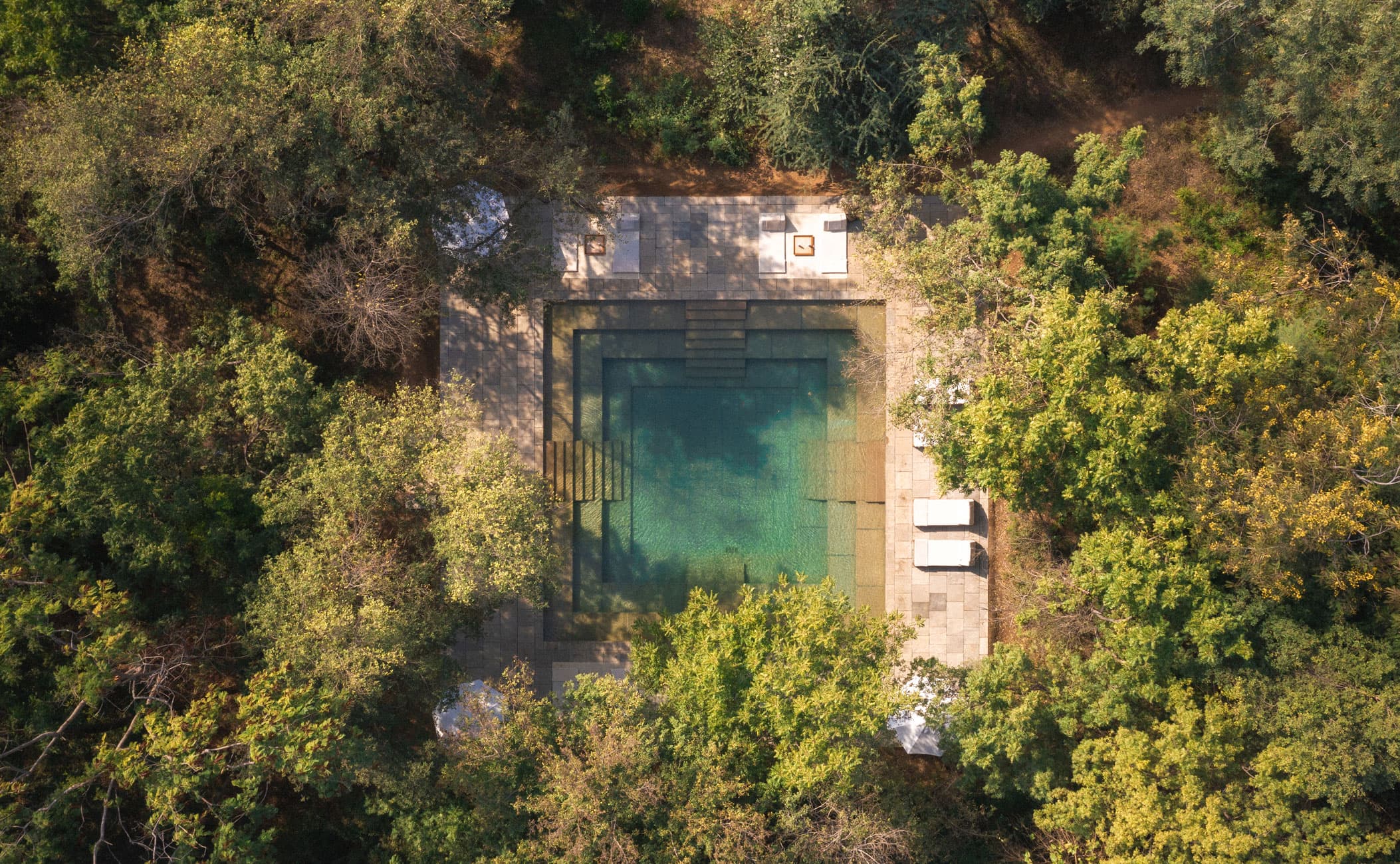
A full-size pool modelled on Rajasthan's ancient baoris (step-wells), surrounded by a lounger-lined terrace under tree canopy. Pool service offered throughout the day.
A lush garden tended by dedicated gardeners supplying the Dining Tent's menus with fresh fruit, vegetables, and herbs. Chefs harvest daily and invite guests to tour the garden.
A croquet lawn on the camp grounds, particularly popular with families.
Complimentary laundry service of four pieces per tent per night, included in the room rate.
Each tent is assigned a dedicated batman (butler) available 24 hours. They handle all logistics, assist throughout the stay, and escort guests on arrival from Sawai Madhopur station.
BUILD YOUR AMAN I KHAS PLAN
Rooms, dining, spa, and resort experiences — organized into one trip plan.
Start Planning