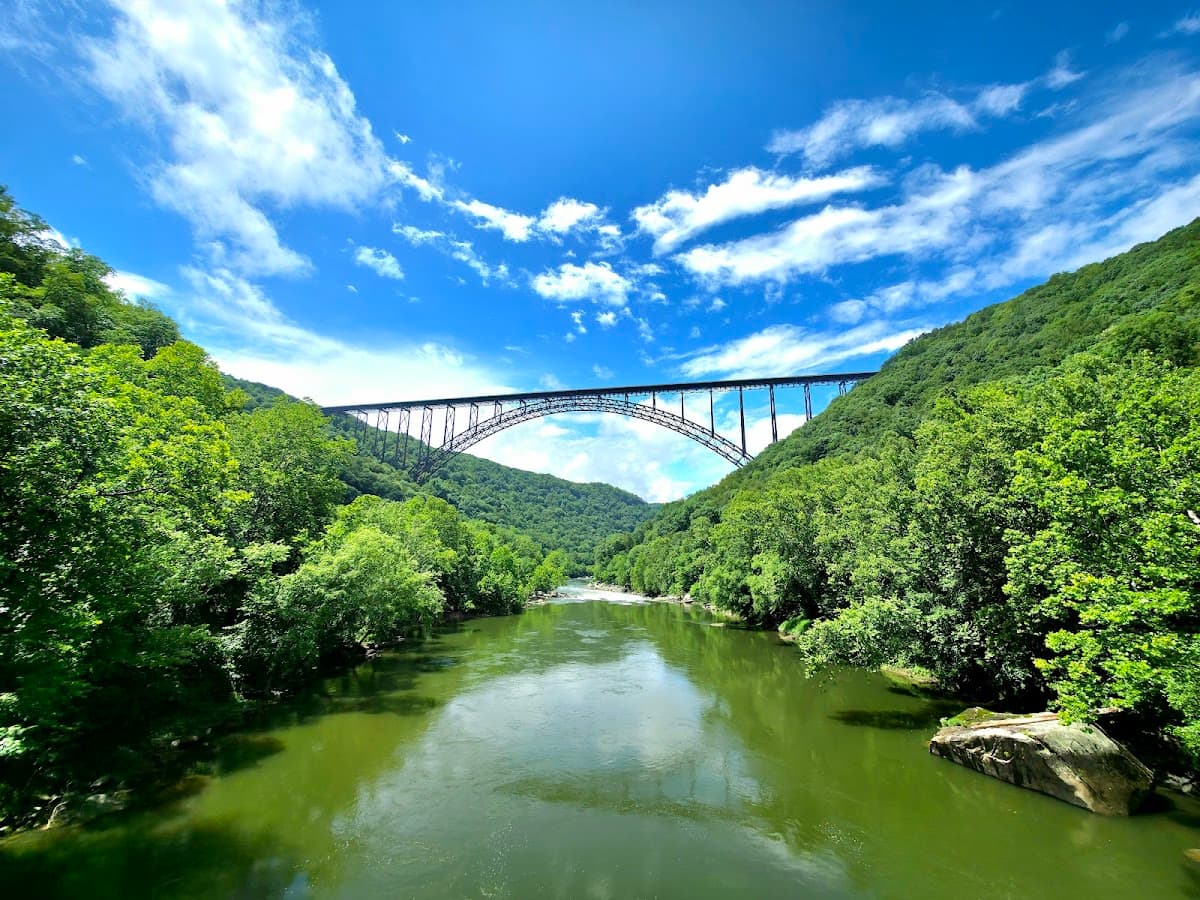
New River Gorge
World-class climbing and whitewater in West Virginia wilderness
New River Gorge isn't your typical vacation spot. This slice of West Virginia wilderness serves up some of the best rock climbing and whitewater rafting on the East Coast, all without the crowds you'd find at more famous destinations. The New River (which is actually one of the oldest rivers in North America) cuts a dramatic 1,000-foot gorge through the Appalachian Mountains, creating a playground for anyone who loves getting their adrenaline pumping outdoors. You'll find over 1,400 climbing routes here, Class III-V rapids, and hiking trails that lead to views most people only see in magazines. And here's the best part - you can do all this without breaking the bank.
Local Knowledge
Culture & Context
New River Gorge became America's 63rd national park in December 2020, but locals have been living here for generations, long before the tourists showed up with their GoPros. The gorge sits in the heart of Appalachia, and coal mining shaped everything here. You'll see that history in the ruins scattered across the trails, the town layouts, and the people. This isn't a polished resort region. It's a working-class outdoor adventure destination that's slowly figuring out what it wants to be. Fayetteville has the shops and craft breweries; the gorge itself has the raw geology. The two don't always feel like the same place.
Safety
Ticks are the most underestimated hazard here. WVU researchers flagged in early 2026 that tick populations are growing due to milder winters and expanding ranges. Lyme disease is the most common tick-borne illness in West Virginia. A newer threat is alpha-gal syndrome, a red meat allergy triggered by lone star tick bites, which is being diagnosed with increasing frequency. Do full-body tick checks every evening after time outdoors. Black bears are present throughout the park. They're generally avoidant of people, but store all food in your car or a bear canister and don't leave anything fragrant in a tent overnight. Two venomous snakes (timber rattlesnake and northern copperhead) live in the park. Stay on marked trails and don't reach under rocks or into brush. Rain is common and the forecast can flip fast. Wet rocks and roots on the trails get genuinely slippery, particularly on steeper routes like the Kaymoor Miners Trail with its 821 steps. Poison ivy is abundant. If you don't recognize it by sight, look it up before you arrive.
Getting Around
A car is not optional here. The park runs 53 miles along the New River and the four main areas are not connected by a single road. Driving between river entrances can take close to an hour on winding backroads. The nearest airport is West Virginia International Yeager Airport in Charleston, about an hour from the visitor center. It has direct flights from Washington D.C., Atlanta, Chicago, Charlotte, Orlando, Tampa, and Myrtle Beach. By car: roughly 5 hours from D.C., 4 from Charlotte, and 3.5 from Pittsburgh. Amtrak's Cardinal train stops in Hinton three days a week, arriving from Washington D.C. It's a legitimate option if you're staying in the southern section. Don't assume GPS will behave inside the gorge. Download offline maps before you leave cell range. And set your navigation to avoid tolls: sections of I-64 and I-77 near the park charge cash-only tolls that many apps route you through without warning.
Useful Phrases
What locals call the New River. If you say 'the New River' in full every time, you'll stand out.
West Virginia's tourism slogan, borrowed from the John Denver song. Locals use it with genuine pride, not irony.
The local CVB rallying call, but you'll hear it genuinely used by outfitters and residents to mean get out there and do something.
The fall window when the Summersville Dam releases water into the Gauley River, creating Class IV-V rapids. Serious rafters plan their whole year around it.
Everyone in Fayette County knows exactly what this means. It's the third Saturday in October. BASE jumpers, rappellers, 50,000 visitors. No explanation needed once you're local.
Local Customs
- •Locals call the New River simply 'the New.' Say you're going rafting on the New and people will nod. Say 'New River' and you'll sound like a tourist.
- •Do a full tick check after every single hike. West Virginia University researchers warned in early 2026 that tick populations are increasing, with Lyme disease and the emerging alpha-gal syndrome (a tick-triggered red meat allergy) both on the rise. This is not a maybe situation.
- •Black bears live in the park. You are a guest in their house. Store food properly at camp, never leave snacks in your car overnight, and don't walk up to one for a photo.
- •The timber rattlesnake and northern copperhead are both venomous and both live here. Stay on marked trails. Don't flip over rocks or logs with your hands.
- •Poison ivy is genuinely everywhere. If you don't know what it looks like, learn before you go. When in doubt, don't touch anything leafy.
- •Wave or nod at hikers and trail users going the other direction. It's expected. Not doing it is rude.
- •Download your maps before you enter the gorge. Cell service drops fast and the trails are not simple to navigate on a blank phone screen.
- •Watch your cash on the way in. Tolls on I-64 and I-77 approaching the southern park entrances are cash only. A lot of GPS apps route you through them without warning.
Itineraries coming soon
We're working on adding amazing itineraries for New River Gorge. In the meantime, try the app to create your own!
Money-Saving Tips
- 1.Camping at Babcock State Park costs $25/night versus $100+ for hotels in Fayetteville
- 2.Pack your own lunches - trail food adds up fast when you're eating out daily
- 3.Buy a National Parks Pass for $80 if visiting other parks this year - New River Gorge is free but the pass covers other destinations
- 4.Rent climbing gear in Fayetteville rather than flying with it - saves baggage fees
- 5.Visit during shoulder seasons (April-May, September) for lower accommodation rates
- 6.Stock up on groceries in Charleston before heading to the gorge - prices are higher in small towns
- 7.Many climbing areas are free to access - no need to pay for guided trips if you have experience
Travel Tips
- •Download offline maps - cell service is spotty in the gorge
- •Bring a headlamp even for day trips - some approach hikes start before sunrise
- •Pack layers - temperatures can swing 20 degrees between river level and rim
- •Carry more water than you think you need - humidity is brutal in summer
- •Check weather before heading out - afternoon thunderstorms roll in fast
- •Tell someone your climbing plans - rescue can take hours in remote areas
- •Bring cash - some local businesses don't accept cards
- •Pack bug spray from April through October - ticks and mosquitoes are aggressive
Frequently Asked Questions
Explore New River Gorge
Ready to explore New River Gorge?
Get a personalized itinerary in seconds with Takeoff.
Free on iOS. No credit card required.