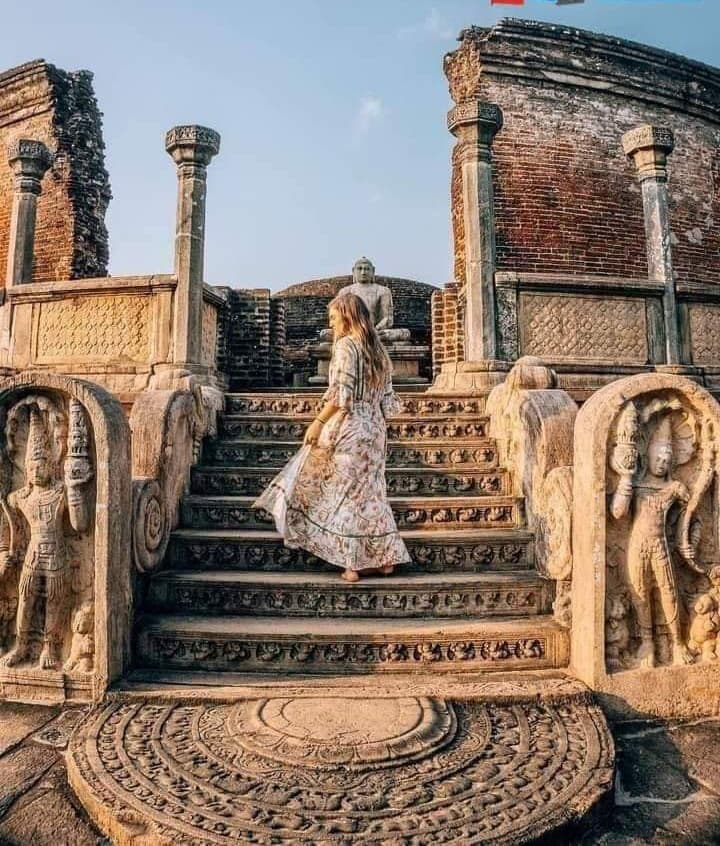
Polonnaruwa
Sri Lanka's medieval capital of Buddhist splendor
Polonnaruwa hits different than the tourist crowds at Sigiriya. This UNESCO World Heritage site was Sri Lanka's medieval capital for three centuries, and walking through it feels like stepping into a time machine. Massive stone Buddhas carved from granite. Royal palace ruins that once housed kings. Lotus-shaped pools where monks bathed 800 years ago.
The archaeological park sprawls across 15 square kilometers, but don't let that intimidate you. Most visitors stick to the main circuit, which you can cover in half a day by bicycle. The real magic happens when you're standing alone in front of the 14-meter reclining Buddha at Gal Vihara, carved so perfectly that monks still leave offerings at its feet.
Here's what makes Polonnaruwa special: it's massive but manageable, ancient but accessible, and spiritual without being overwhelming. Plus, you'll have most of it to yourself.
Itineraries coming soon
We're working on adding amazing itineraries for Polonnaruwa. In the meantime, try the app to create your own!
Money-Saving Tips
- 1.Entry tickets cost $30 for foreigners but are valid for the entire day - arrive early to maximize value
- 2.Bicycle rental at 500 rupees beats hiring a tuk-tuk for site-hopping around the archaeological park
- 3.Pack lunch and water from Polonnaruwa town - food stalls inside the site charge tourist prices
- 4.Stay overnight in town to split the entry fee across two days of exploration
- 5.Combine with Minneriya National Park for package deals - many guesthouses offer combined tickets for $60
- 6.Public buses from Colombo cost 400 rupees vs $80-100 for private drivers - save money if you don't mind the journey time
Travel Tips
- •Start at 7 AM when gates open to beat the heat and catch perfect morning light on stone carvings
- •Rent a bicycle at the entrance - the archaeological park is too spread out to walk comfortably
- •Bring a lock for your bike so you can explore temple interiors on foot
- •Wear covered shoulders and long pants - temple dress codes are strictly enforced
- •Download offline maps - mobile coverage is spotty inside the archaeological park
- •Visit the museum after seeing the ruins, not before - context makes more sense once you've walked the sites
- •Avoid weekends when Sri Lankan school groups crowd the popular monuments
- •Pack plenty of water and snacks - shade is limited between monuments
- •Hire a local guide at the entrance for 2000 rupees if you want detailed historical explanations
- •Check sunset timing - the gates close at 6 PM sharp regardless of season
Frequently Asked Questions
Explore Polonnaruwa
Ready to explore Polonnaruwa?
Get a personalized itinerary in seconds with Takeoff.
Free on iOS. No credit card required.