Salvador
Brazil's Afro-Brazilian soul with colonial splendor and carnival spirit
Salvador pulses with a rhythm you won't find anywhere else in Brazil. This is where African culture crashed into Portuguese colonialism and created something entirely new — a city where candomblé ceremonies happen blocks from baroque churches, where acarajé vendors work corners that have seen 500 years of history.
The cobblestoned Pelourinho district feels like stepping into a colonial painting, but with live samba spilling from doorways. Meanwhile, modern Salvador sprawls along endless beaches where locals play football at sunset and tourists nurse caipirinhas.
Look, Salvador isn't Rio's polished cousin. The streets can be rough, the poverty is real, and you'll sweat through your clothes by noon. But that's exactly why it matters. This city shows you Brazil's true soul — complex, beautiful, and unapologetically authentic.
Best Months
JAN · FEB · MAR · APR · MAY · AUG · SEP · OCT · DEC
~30°C · moderate crowds
Culture & Context
MAPUCHE MEETS EUROPEAN
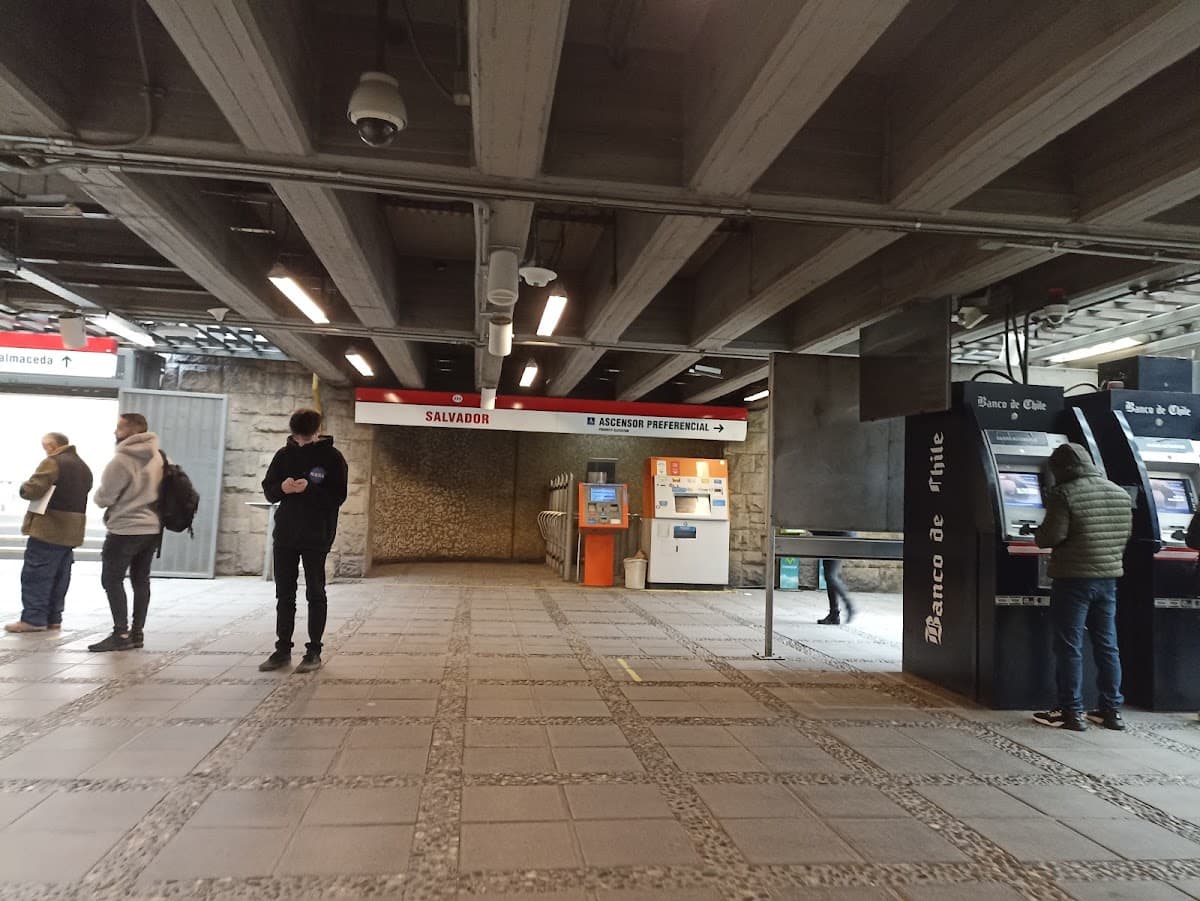
Salvador is the metro station sitting beneath Parque Balmaceda in Providencia, Santiago, Chile. Named for the Hospital del Salvador and the avenue that carries the same name, this node sits at the western edge of Providencia — the neighborhood the city calls home when it wants to feel middle-class, functional, and honestly pretty pleasant. Providencia covers 14 km² with around 120,000 residents.
It's where expats land, where offices line the boulevard, and where the restaurants are actually good without being exclusively for tourists. The Salvador station itself opened in March 1977 as the eastern terminus of Line 1. Today it's surrounded by a cluster of institutions — the Centro Cultural de España is 240 metres northeast, Clínica Santa María is just west, and the French Embassy is a short walk away.
Head south from the station and you eventually hit Barrio Italia, the neighborhood everyone now describes as Santiago's Williamsburg. Chileans combine Mapuche indigenous heritage with Spanish colonial history and a heavy European immigrant influence from the 19th and 20th centuries. They're generally more reserved than other Latin Americans on first contact, but warm up quickly once you make the effort — especially over a pisco sour or a glass of Carménère.
The propina sugerida (suggested tip) at restaurants is usually 10%, displayed on the bill. You're not obligated, but leaving nothing reads as rude rather than frugal.
Local Customs
LUNCH IS EVERYTHING
Lunch is the main meal of the day, typically between 1pm and 3pm. The menú del día (set lunch) is how locals eat affordably — soup, main, dessert, and a drink for under 4,000 CLP. Dinner at restaurants often doesn't start until 8pm or later..
Tipping is called propina and it's typically 10%, shown as a line item on your bill. You explicitly have to accept or decline it — the waiter will ask. Declining is okay but leaving nothing is considered impolite..
Chileans are generally reserved in public. Don't expect strangers to strike up conversations. But if you make the first move — even badly in Spanish — they'll usually respond warmly..
Protests (marchas) happen regularly in Santiago, especially around Plaza Italia (Baquedano) and La Moneda on dates like March 29, May 1, September 11, and October 18. Don't get curious and walk toward them.. Avoid calling the micros (city buses) 'buses' — locals always say micro.
Same goes for traffic jams: it's a taco, not a congestión. Blend in with vocabulary.. Carry cash for markets and smaller restaurants.
Card terminals don't exist everywhere. ATMs are plentiful but fees add up, so withdraw larger amounts less frequently.. Chileans are seismically aware — earthquakes happen.
If you feel a tremor, stay calm, follow locals' lead, and stay away from windows and shelves. Serious ones are announced with sirens. It sounds more alarming than it usually is.
Safety
WATCH YOUR PHONE
Santiago is one of South America's safer capitals but that bar isn't as high as it sounds, and crime has risen since 2019. The US State Department currently advises 'Level 2: Exercise Increased Caution.' The Providencia and Salvador area sits in the safer eastern zone of the city.
Petty theft — pickpocketing, phone snatching, distraction scams — is the main tourist problem. Violent crime exists but rarely targets tourists who stay in the right neighborhoods. Here's what actually matters: never half-pull your phone out of your pocket on the street; moped riders have been known to grab phones from people standing at crosswalks.
Wear backpacks on your front on the metro during rush hour — crowded trains and platforms are prime pickpocket territory. Use Uber, Cabify, or DiDi after dark rather than flagging street taxis; unofficial taxis run tourist scams including rigged meters and overcharging. Avoid downtown Santiago (Plaza de Armas, Mercado Central, Estación Central) after dark.
Bellavista nightlife is safe enough in the early evening but gets riskier late at night — keep your phone off the table and be aware of your surroundings at 2 AM. Watch out for distraction scams: someone spills something on you while an accomplice grabs your bag. Protests happen on predictable dates (March 29, May 1, September 11, October 18) — if you see a march forming, walk the other direction.
The metro is efficient and generally fine, but closes by 11 PM on weekdays. Chile sits on the Pacific Ring of Fire; earthquakes happen. Learn the basic drill: stay away from windows, don't run into the street during a tremor, follow local cues.
Getting Around
METRO & BIP CARD
The Bip! card is non-negotiable for getting around Santiago. Buy one at any metro station for 1,550 CLP ($1.
70 USD) and load it from 1,000 CLP upward. Metro rides cost 640–800 CLP depending on peak hours. Free bus transfers within a two-hour window using the same card.
The metro runs six lines covering the whole city; the Salvador station is on Line 1 (the main east-west artery), making virtually every major neighborhood accessible in under 20 minutes. Metro runs roughly 6 AM to 10:30–11 PM on weekdays, slightly later on weekends. After hours, Uber and Cabify are your safe options — both have GPS tracking and driver ID, which matters.
Never hail an unofficial cab at night. The airport bus (Centropuerto or Turbus) costs $2.87 USD to reach Los Héroes metro station in the city center — use it instead of the taxi gauntlet at the arrivals exit.
The city is increasingly bike-friendly with the Bike Santiago (Itaú) system — monthly subscription around $8.50 USD for unlimited 60-minute trips, good for short hops when the metro feels excessive. Driving in the city is a calculated headache: aggressive local drivers, heavy rush-hour tacos (traffic jams), and parking in downtown is genuinely miserable.
If you're renting a car, save it for day trips to Cajón del Maipo or the coast.
Useful Phrases
Where to Stay in Salvador
4 recommended properties
Aram Yami Hotel
upscale · Colonial Baroque exterior meets eclectic global interiors — Asian art objects alongside Bahian warmth. Intimate, almost like a private home. Very personal service. · 19.5/10
Fera Palace Hotel
luxury · Art Deco heritage meets cool contemporary Brazilian luxury. Pastel-hued rooms, cerulean Portuguese azulejo tiles at the rooftop pool, mid-century modern furniture, and Bahian art on the walls. Relaxed but polished — more culturally rooted boutique hotel than stiff grand dame.
Zank by Toque Hotel
luxury · Minimalist white-on-white Brazilian coastal boutique. Calm, intimate, design-forward. Run by a family, and it shows in the details — a library, original artwork, personalized service — rather than the corporate polish of a chain hotel.
Fasano Salvador
luxury · Historic luxury with Brazilian soul. Refined and understated rather than flashy. The Art Deco shell gives it real architectural weight, while Weinfeld's interiors keep things warm and contemporary. This is the kind of hotel that knows it doesn't need to try too hard.
Itineraries coming soon
We're working on adding amazing itineraries for Salvador. In the meantime, try the app to create your own!
Money-Saving Tips
- 1.Eat at local botecos instead of tourist restaurants in Pelourinho — you'll pay half the price for better food
- 2.Buy a metro day pass (R$12) if you're planning multiple trips — individual rides add up quickly
- 3.Haggle at Mercado Modelo, but be respectful — vendors expect negotiation but not aggressive bargaining
- 4.Avoid exchanging money at the airport — banks in the city center offer better rates
- 5.Many museums offer free admission on Sundays, including Museu de Arte da Bahia
- 6.Street food is incredibly cheap (R$10-20 per meal) and often better than restaurant versions
- 7.Book accommodations directly with pousadas to avoid booking platform fees
- 8.Use local buses (R$3.50) instead of taxis for longer distances if you speak basic Portuguese
Travel Tips
- •Learn basic Portuguese greetings — Salvador locals appreciate the effort more than in other Brazilian cities
- •Carry cash everywhere — many small businesses and street vendors don't accept cards
- •Dress modestly when visiting churches, especially during religious ceremonies
- •Don't wear expensive jewelry or carry expensive cameras in obvious tourist areas
- •Try to visit Pelourinho during daylight hours — it's safer and you'll see the architecture better
- •Respect candomblé ceremonies if you encounter them — photography is often prohibited
- •Pack comfortable walking shoes with good grip — colonial cobblestones are slippery when wet
- •Stay hydrated and use sunscreen — the equatorial sun is stronger than you expect
- •Keep copies of important documents separate from originals
- •Download offline maps — cell service can be spotty in some historic areas