Ragusa Ibla
Culture & Context
BAROQUE REBORN FROM RUINS
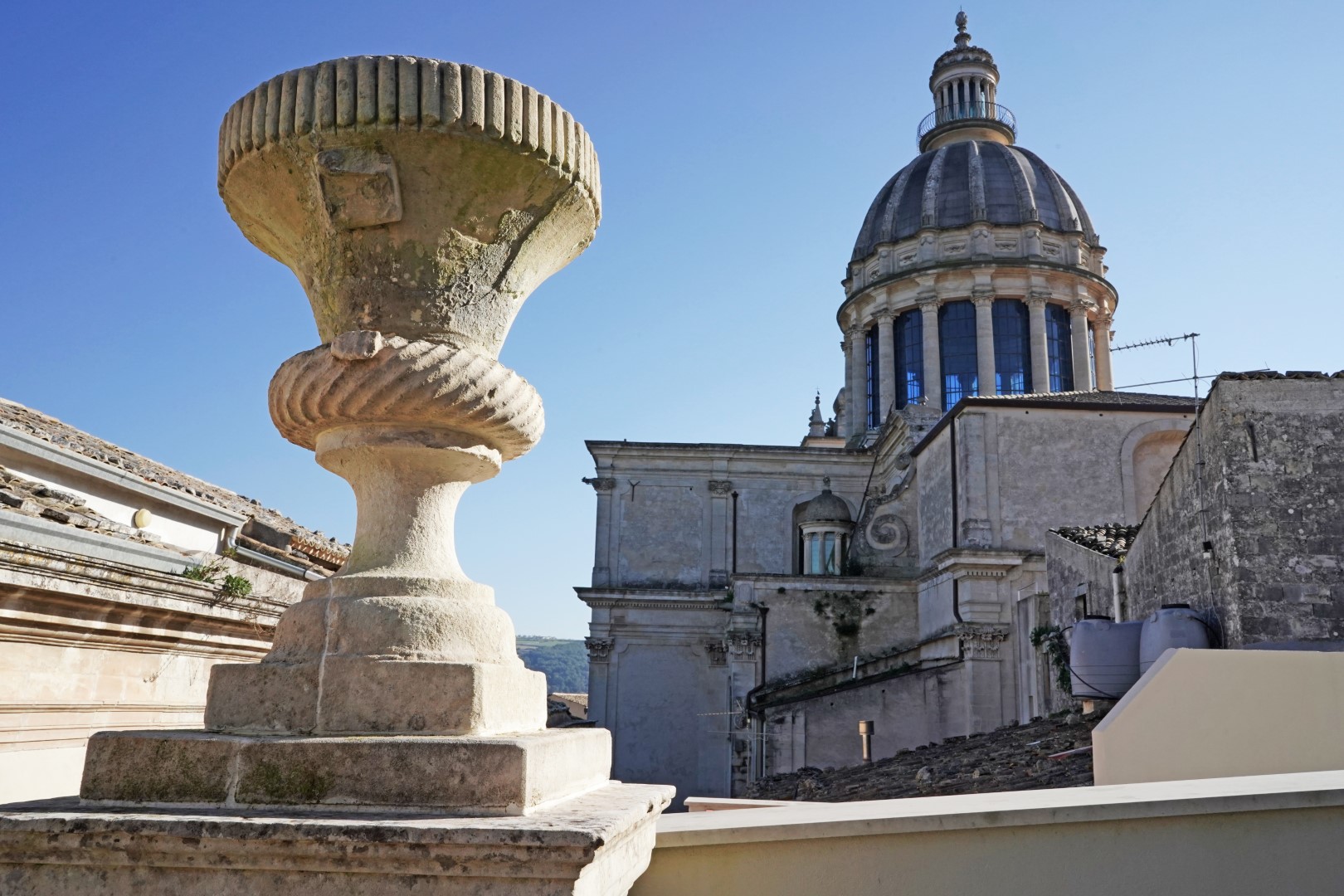
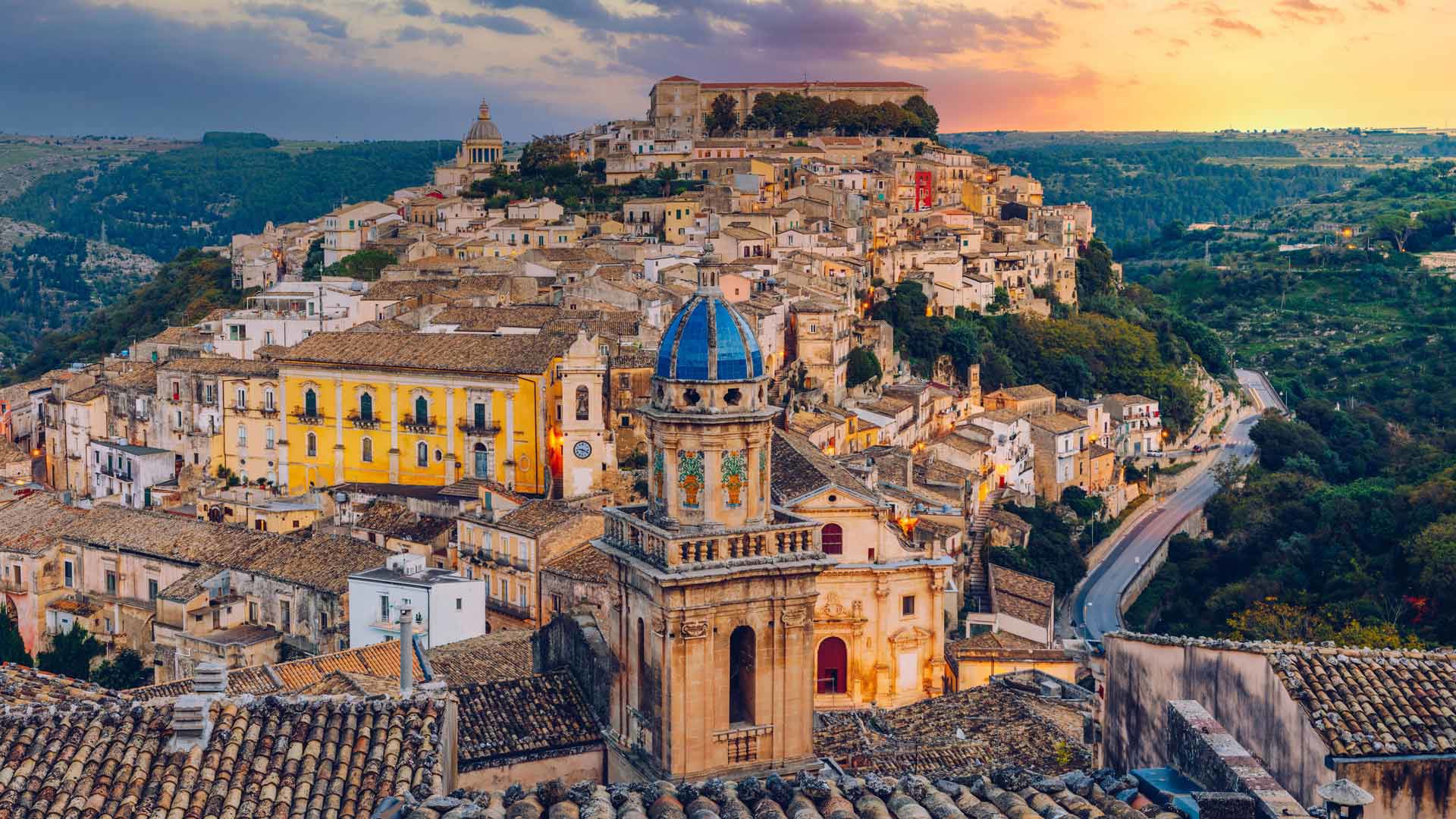
Ragusa Ibla is the lower, older half of a city with two personalities. After the catastrophic 1693 earthquake leveled the Val di Noto region, the Ragusan aristocracy made a stubborn choice: rebuild their palazzi and churches right back on the rubble, in the fashionable Baroque style of the day. The result is one of the most coherent Baroque urban landscapes on earth, now recognized as a UNESCO World Heritage Site alongside seven neighboring towns. But here's the thing — this isn't a museum piece. People live here. Old men argue on benches in Giardino Ibleo. Cafes spill onto Piazza Duomo on weekends. And the whole place became internationally famous as the filming location for Inspector Montalbano, the beloved Italian detective TV series. Locals are fiercely proud of both legacies. The city's split identity — modern Ragusa Superiore up on the hill, ancient Ibla carved into the gorge below — isn't just geography. It's character. Ibla is connected to the upper town by a staircase of roughly 300 steps and local bus lines, and the contrast between them is striking. Superiore feels like a working Sicilian city. Ibla feels like it was dreamed up by a Baroque architect with an unlimited budget and no flat land to work with. The local dialect around Ragusa and Modica is one of the oldest and most distinct forms of Sicilian — shaped by centuries of Greek, Arab, Norman, and Spanish rule — and older residents still slip into it freely.
cultural_context_headline: BAROQUE SOUL, DUAL CITY
Local Customs
[ "Riposo is real.
Shops and businesses close for a few hours in the early afternoon — typically around 13:00-16:00. Don't show up expecting everything to be open at 14:30. Plan your errands for the morning or evening.", "Dress for churches. The Cathedral of San Giorgio and other churches have signs requesting no shorts or singlets. Keep a scarf or light layer in your bag — this is enforced, not just suggested.", "Address strangers formally. Use 'Lei' (the formal 'you') with shopkeepers, restaurant staff, and older locals until invited to switch to the informal 'tu'. It's a small thing that earns immediate warmth.", "Aperitivo before dinner. Locals don't eat dinner at 6pm. The rhythm is aperitivo at Piazza Duomo around 19:00-20:00, dinner after 20:30 or even 21:00. Sit down for a meal at 18:00 and you'll be eating alone.", "At the Festa di San Giorgio, watch for 'All Trounu' — the moment during the procession when the bearers raise the statue of San Giorgio to the sky with outstretched arms. It's the emotional peak of the whole celebration and locals go quiet right before it.", "Bargaining is not expected in artisan shops. Fixed prices are the norm. Engage with the craftspeople, ask about their work, buy if you love it — but don't haggle.", "Caciocavallo Ragusano is local. Order it. The cow's milk cheese from this region has DOC status and ranges from mild to sharp depending on age. Try it at Casa del Formaggio in Ibla, where the Dipascuale family has been making it for nearly 80 years." ]
local_customs_headline: SLOW PACE, LATE DINNERS
Safety
Ragusa Ibla is genuinely safe.
During the day, it's essentially worry-free — 94 out of 100 visitors report feeling completely at ease. Evening is fine too, with 78 out of 100 feeling fully secure after dark. The town has no real violent crime to speak of. What you do need to watch for: tourist-area scams near Piazza Duomo — overpriced taxi fares (always agree on a price before getting in), restaurants adding hidden charges to bills in tourist-heavy spots, and the occasional fake tour guide. Petty theft is rare compared to Palermo or Catania but not zero, so keep a hand on your bag in crowded festival moments like the Festa di San Giorgio. The ZTL (Limited Traffic Zone) is a practical hazard — ignore the signs and you'll get a fine sent to your home address weeks later. And physically: the streets are steep and uneven, the stairs are many. Watch your footing, especially after rain. Solo female travelers report Ragusa as comfortable and generally welcoming.
safety_headline: VERY SAFE
Getting Around
WALK EVERYWHERE (WITH CAVEATS)
Ragusa Ibla itself is best explored entirely on foot. The historic center is pedestrianized, and the narrow alleys genuinely don't work by car. Most of what you want to see — Piazza Duomo, the Giardino Ibleo, the churches — sits within a compact 15-20 minute walking radius. But getting there is a different story. Ragusa Ibla is a ZTL zone, closed to non-residential traffic. Drive in without permission and expect a fine. The practical move: park at Sisosta Parcheggio in Ragusa Superiore (paid, card accepted, near the tourist office and a free museum at Palazzo Zacco), then walk down the 340-step staircase for the full panoramic reveal, or take the local bus down. Bus lines 11 and 33 run Monday to Saturday; line 1 covers Sundays — they stop at Giardino Ibleo at the entrance to Ibla. If arriving by bus from Catania (about 2 hours, direct from the airport), you'll land at Autostazione Nodo Zama in Ragusa Superiore. From there, take a taxi or city bus to Ibla — don't try to walk with luggage. The bus timetables are thin late at night. One visitor reported only a 22:50 return bus on weekends and ended up in a €60 taxi back to Marina di Ragusa. For day-tripping to Modica, Scicli, and Noto, a rental car is genuinely the best call — pick one up in Catania for better prices.
Useful Phrases
Where to Stay in Ragusa Ibla
7 recommended properties