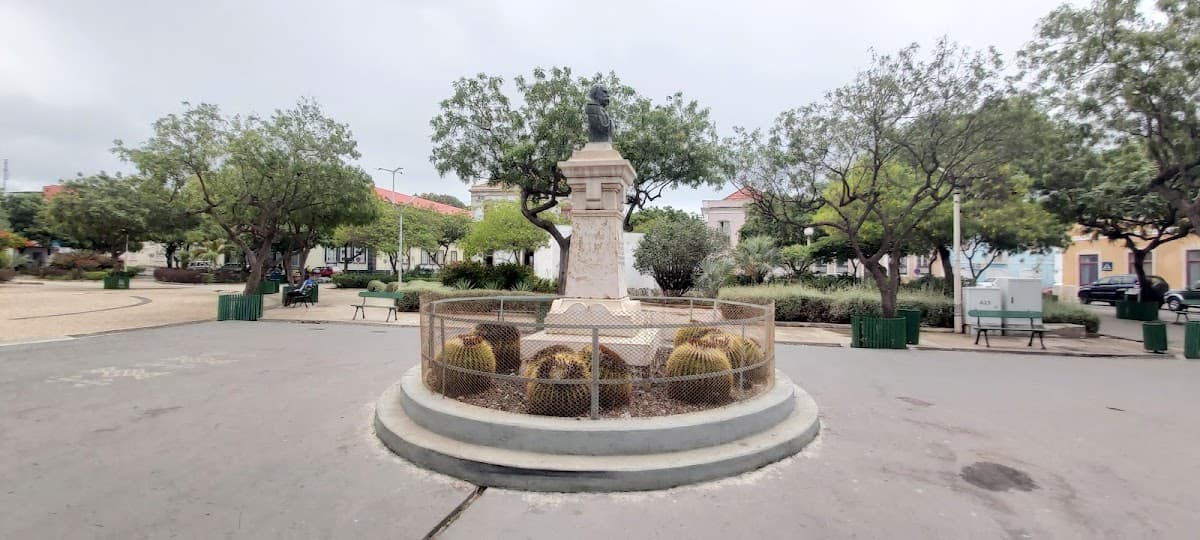
Praia
Cape Verde's vibrant capital where Africa meets Atlantic
Most people have never heard of Praia. That's exactly what makes Cape Verde's capital so appealing right now. This is where Portuguese colonial architecture meets West African rhythms, where you can surf decent waves in the morning and dance to morna music at night. The city sprawls across volcanic plateaus overlooking the Atlantic, and yes, it gets hot and dusty. But Praia rewards travelers who dig a little deeper with authentic Cape Verdean culture, surprisingly good seafood, and beaches that locals actually use. It's not polished like other island capitals, and that's the point.
Best Months
JAN · FEB · MAR · APR · MAY · NOV · DEC
~28°C · moderate crowds
Culture & Context
MORNA & CREOLE HYBRID
Praia is Cape Verde's capital and political hub, sitting on the southern tip of Santiago Island. It's the largest city in the archipelago, home to roughly 159,000–168,000 people. The city grew on a series of volcanic plateaus called "achadas," with the historic Platô (the original colonial mesa) still the geographical and psychological center of the whole place.
The culture here is a genuine hybrid: Portuguese colonial architecture and administrative legacy layered over deep West African roots. Morna music, the hauntingly melancholic genre that made Cesária Évora famous worldwide, is part of everyday life here. So is funaná, a much faster, accordion-driven rhythm that gets played at parties and festivals.
Creole (Kriolu) is the mother tongue of basically everyone, even though Portuguese is the official language used in government and schools. And here's the thing: Praia is a working African capital, not a resort. It has embassies, a university, port traffic, and neighborhoods that have nothing to do with tourists.
That's both its appeal and its challenge.
Local Customs
MORABEZA HOSPITALITY TIME
Morabeza is the defining concept of Cape Verdean hospitality. It doesn't translate perfectly, but think warm, generous, unhurried welcome. Thank a host with 'Obrigadu pa bo morabeza' and you'll get a genuine smile..
Older men play oril (a wooden board game with 12 holes and small balls, originally from West Africa) on benches outside homes and in public squares. Watch, ask to learn. It's a genuine icebreaker..
Music is not background noise. When morna or funaná comes on, people stop and listen, or start moving. Treating it as wallpaper is a social misstep..
Grogue (Cape Verdean sugarcane rum) is the local spirit and a social ritual. When someone pours you a glass, saying 'txin-txin' before drinking is expected. Refusing without explanation is mildly rude..
Cape Verdeans will regularly check in with 'Tud dret?' (everything alright?).
Respond with 'Sap!' meaning cool or fine. It signals you're relaxed and present..
Things run slow. Service in restaurants, transport schedules, official queues. Build buffer time into everything and don't let it visibly frustrate you..
Bargaining happens at markets like Mercado de Sucupira, but lightly. Aggressive haggling is not the style here. A small, friendly counteroffer is fine; a hard negotiation is not..
Dress modestly away from the beach. Praia is a city with daily working life. Wandering the Platô or market in beachwear stands out and not in a flattering way.
Safety
WATCH YOUR BELONGINGS
Praia is workable but requires actual street awareness. The US State Department rates Cape Verde generally at Level 1 (Normal Precautions) but flags Praia specifically with a Level 2 advisory due to higher rates of street crime. The real risks are pickpocketing and snatch-and-grab thefts, especially around markets, crowded stairways between neighborhoods, and at night.
The hillside staircases connecting neighborhoods are a particular problem. Canadian and US government advisories both explicitly say to avoid them, even during the day. Don't wear expensive jewelry or carry your phone loosely in downtown Praia.
Agree on taxi prices upfront and use official taxis rather than unmarked vehicles. Nightlife is fine in the Platô area but don't walk alone through poorly lit or isolated parts of the city after dark. Take a taxi instead.
Currency exchange scams exist, as do fake tour guides. The beach at Quebra Canela has strong currents. Several drownings happen annually near Praia.
Respect red flags. For medical emergencies, the main public hospital is Hospital Universitário Agostinho Neto. Private clinic Clinicando in Praia is faster, English-friendlier, and costs €20–30 for a consultation.
Travel insurance with medical evacuation coverage is genuinely recommended, not a formality. Emergency numbers: 130 for medical, 132 for police.
Getting Around
ALUGUERS & HAGGLED TAXIS
Getting around Praia is mostly about aluguers, the shared minibuses that are how the city actually moves. Fares run 25–50 CVE ($0.25–0.
50) for most routes. There's no app and no timetable. They fill up and leave.
Once you accept that rhythm, they work fine. The main aluguer departure hub is in the Fazenda district. For taxis, always agree on the price before you get in.
Drivers sometimes quote inflated rates to new arrivals and there's no meter to settle disputes. A cross-city taxi fare shouldn't exceed 1,500 CVE (~€14) during the day or 1,800 CVE at night. From the airport (Nelson Mandela International, about 6km from Platô), city buses run to Platô and Achada Santo António for under €1 but only when they have passengers and run during daytime.
A taxi from the airport is more predictable at around €10–15. For inter-island travel, TACV and BINTER run regular flights (30–60 minutes) to Sal, São Vicente, Fogo, and others for €50–100. Ferry routes connect Praia to Maio, Fogo, and São Vicente via Armas and Atlantic Line (roughly €25).
Walking is fine in the Platô but the hillside stairways connecting neighborhoods should be avoided, especially alone or at night.
Useful Phrases
Itineraries coming soon
We're working on adding amazing itineraries for Praia. In the meantime, try the app to create your own!
Money-Saving Tips
- 1.Bring euros or US dollars - exchange rates are better than using escudos from home
- 2.Haggle at Sucupira Market but not in restaurants - prices are usually fixed for food
- 3.Shared aluguers cost 10 times less than taxis for the same route
- 4.Buy Strela beer at supermarkets (80 escudos) instead of bars (200+ escudos)
- 5.Many small restaurants don't accept cards - keep cash for meals under 1,000 escudos
Travel Tips
- •Learn basic Portuguese phrases - English isn't widely spoken outside hotels
- •Carry toilet paper and hand sanitizer - public facilities often lack both
- •Pack reef-safe sunscreen - the sun reflects intensely off volcanic rock
- •Download offline maps - GPS signals can be spotty in mountainous areas
- •Respect photography rules - always ask before photographing people, especially in markets