Palm Jumeirah
Culture & Context
LUXURY ISLAND REPUBLIC
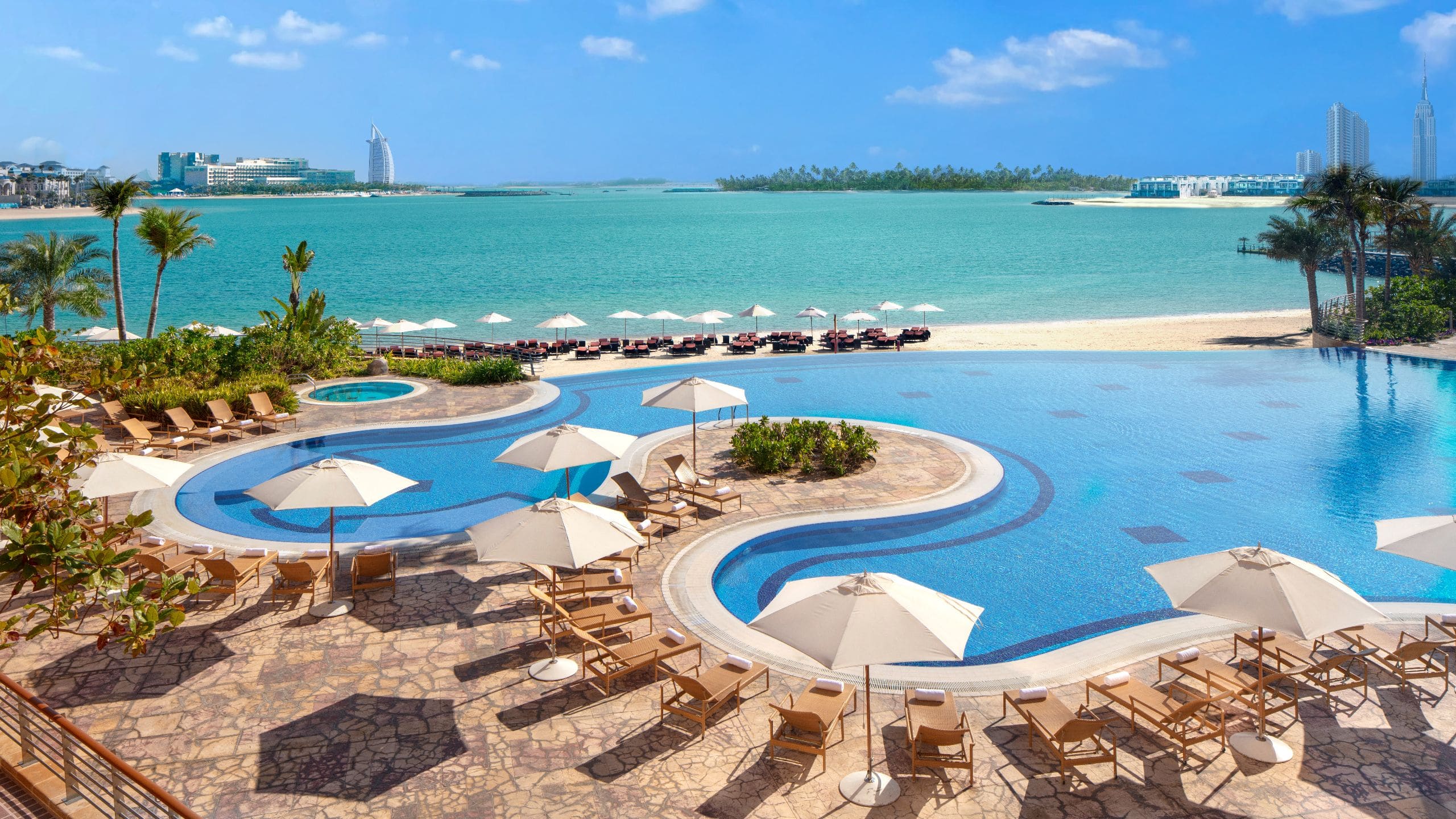
Palm Jumeirah is one of the most audacious engineering projects ever built. Constructed entirely from reclaimed sea using sand dredged from the Gulf floor, it's a man-made island shaped like a palm tree, extending into the Arabian Gulf. From above, you can clearly see the trunk, 16 fronds, and the crescent breakwater that wraps around the outside. Completed in the early 2000s by government developer Nakheel Properties, it became the defining image of Dubai's ambition.
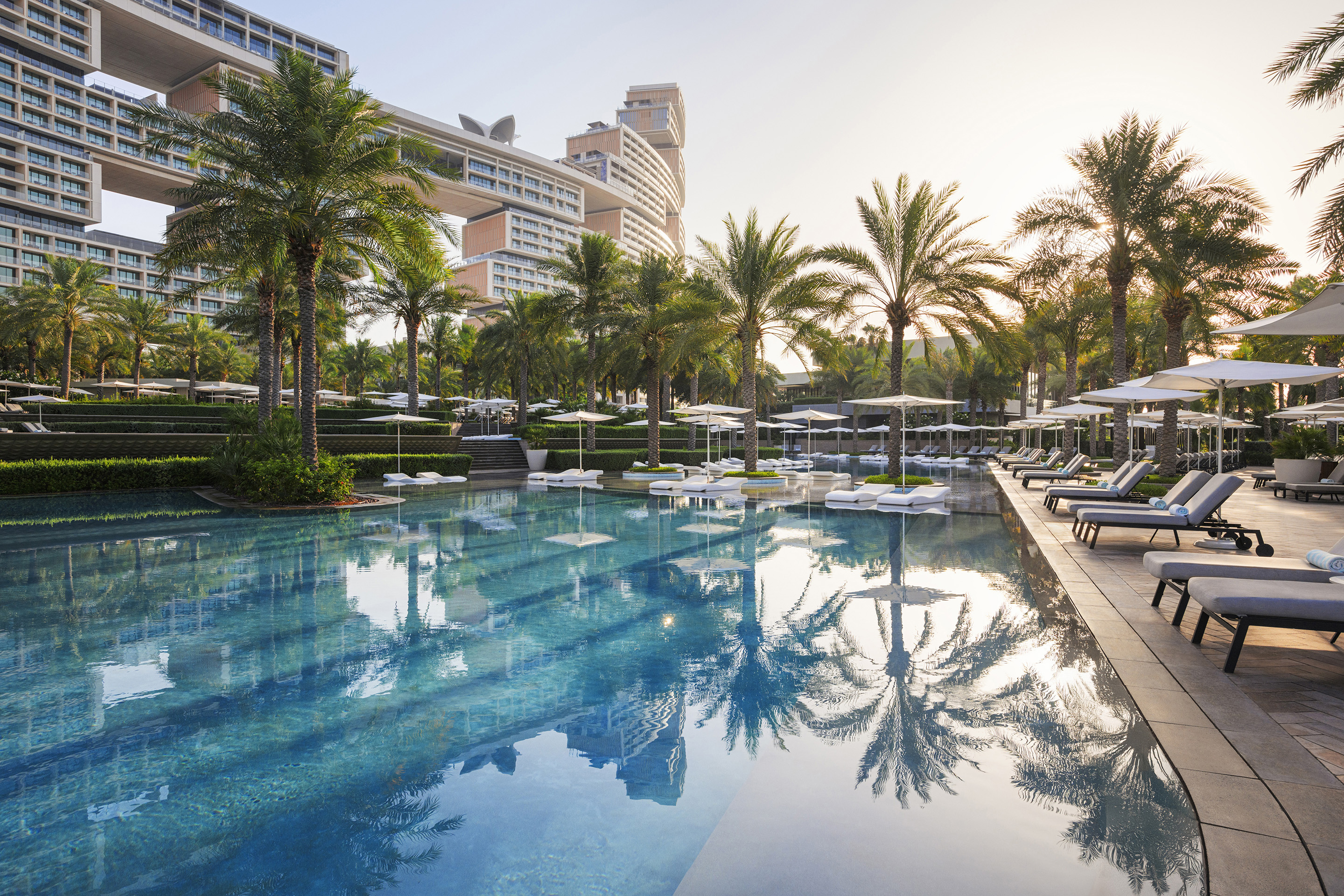
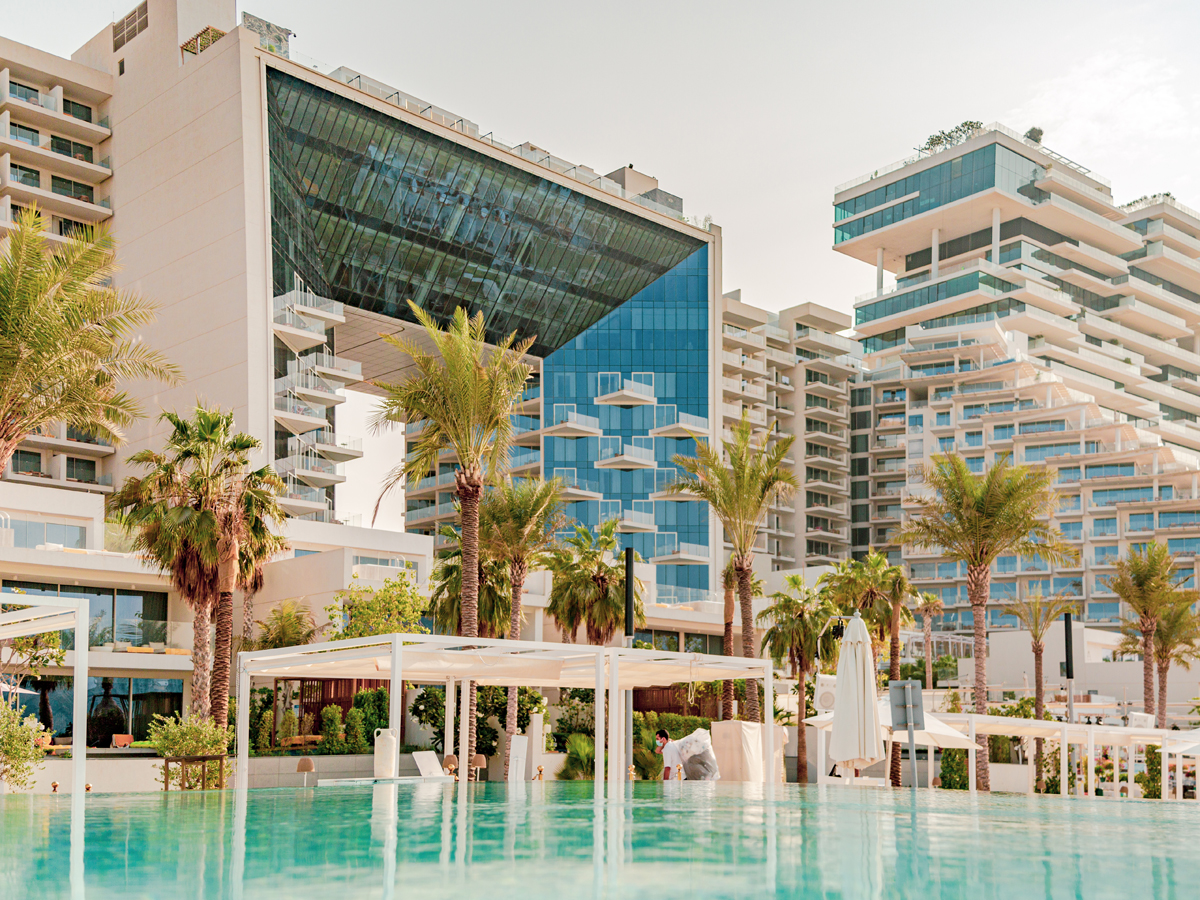
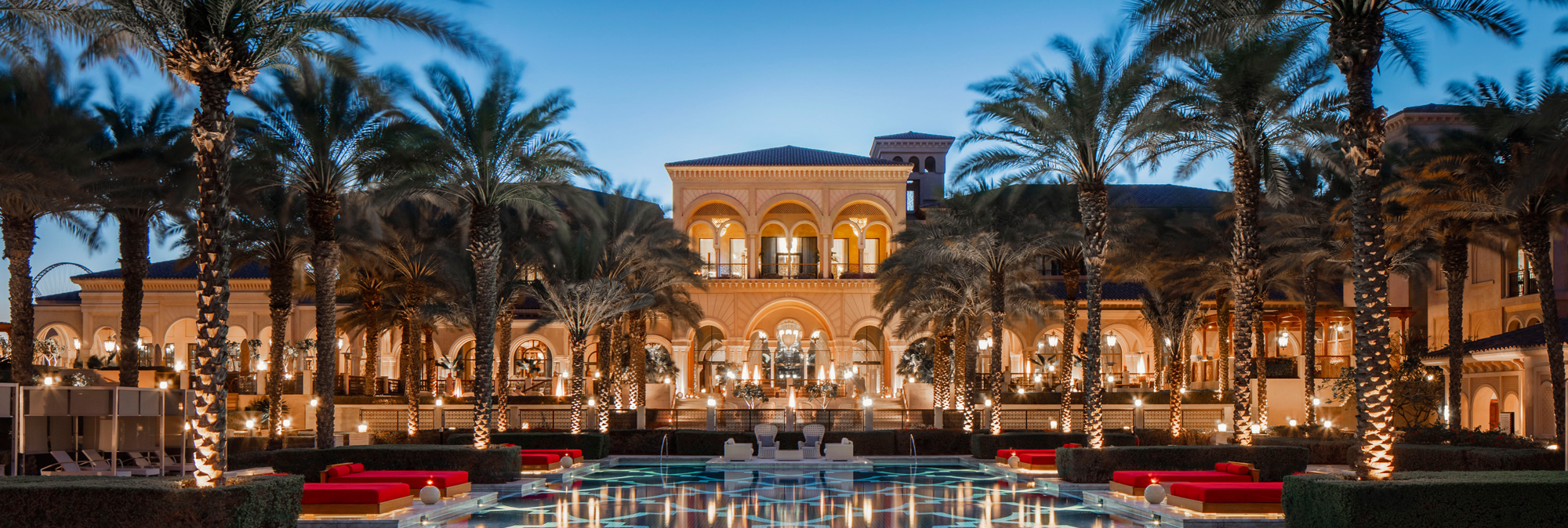
The island operates as its own world. You can check into a resort on Monday and not feel the need to leave until Friday — and plenty of people do exactly that. It's home to some of the biggest hotel names on earth: Atlantis The Palm (and the newer Atlantis The Royal), One&Only, Fairmont, FIVE, Sofitel, and from 2026, the brand-new Six Senses The Palm, which opened with just 61 rooms on a private stretch of the West Crescent.
The culture is unapologetically luxury-first. Beach clubs run a tight door policy. Dinner reservations at waterfront restaurants book out weeks in advance. The social scene peaks on Thursday and Friday nights (the UAE weekend). But the island also has a permanent community — families, expats, long-term residents — and a real neighborhood feel along the trunk with cafés, pharmacies, and parks.
Dubai as a whole is an Islamic emirate where local law is shaped by religious values, but Palm Jumeirah sits firmly in the more liberal, international end of the city. Bikinis are fine at beach clubs and resort pools. Alcohol flows freely at licensed venues — which covers virtually every hotel and beach club on the island. But public drunkenness is still illegal, PDA is discouraged, and modest dress is expected when you step beyond the pool deck.
The UAE has declared 2026 the "Year of the Family," and the island leans into that with multi-generational offerings: Aquaventure water park, Lost Chambers Aquarium, and family-friendly boardwalk routes. Also coming in 2026: electric air taxi vertiports, with Palm Jumeirah as one of four launch points in Dubai.
cultural_context_headline: LUXURY BUILT FROM SCRATCH
Local Customs
Dress modestly outside beach and pool areas.
Bikinis are fine at licensed beach clubs and resort pools, but cover up before walking through the hotel lobby or heading to a mall. Shoulders and knees covered is the general rule in public spaces..
Alcohol is only legal at licensed venues — which covers virtually every hotel, beach club, and restaurant on Palm Jumeirah. But drinking on the street, in parks, or in unlicensed spaces is illegal. Public intoxication can lead to arrest regardless of where you were drinking..
Public displays of affection are restricted. Holding hands between spouses is generally fine; kissing or more intimate contact in public is not. This applies across all of Dubai, including the Palm..
Use your right hand for greetings, handing over money, and eating. The left hand is considered unclean in Islamic tradition.. Don't photograph people — especially women and local families — without explicit consent.
It's not just rude; it's illegal. Stick to landscapes, architecture, and tourist attractions.. During Ramadan (expected approx.
Feb 19–March 20, 2026), avoid eating, drinking, or smoking in public during daylight hours out of respect. Hotels serve food normally; just be discreet on the street.. Bargaining isn't really a thing on the Palm itself — prices are fixed at resorts and malls.
Save your bargaining energy for the Gold Souk and Spice Souk in Old Dubai.. Friday is the holy day. Government offices and some services run reduced hours.
But the Palm's hotels, malls, and restaurants operate normally — Friday brunch is actually one of the week's biggest events.. The UAE declared 2026 the Year of the Family. Expect more family-oriented programming, events, and promotions across hotels and attractions throughout the year.
Safety
VERY SAFE, KNOW THE RULES
Dubai consistently ranks among the safest cities on earth — Numbeo ranked it #2 globally in 2025/26. Violent crime aimed at tourists is extremely rare. Palm Jumeirah specifically, with its resort-heavy, security-staffed environment, is one of the most controlled spaces in an already tightly monitored city. Walk the 21km crescent boardwalk at midnight and you'll feel perfectly comfortable.
That said, "safe" in Dubai means something specific. The laws are strict and enforced. Public intoxication outside licensed venues is illegal and can result in arrest. Any public display of affection beyond hand-holding can get you in trouble. Obscene gestures — even a frustrated wave at a driver — can technically land you in court. Posting something critical about the government or UAE authorities on social media has led to real legal consequences for tourists.
A few practical notes: photograph carefully. Taking photos of people — especially women and families — without consent is illegal. Same goes for government buildings and military installations. Petty crime is rare but not zero; pickpocketing can happen on public transport. Use only licensed taxis, and don't sit in the front seat. Uber and Careem are fully regulated and tracked.
Regarding regional context: there were incidents of intercepted projectiles over Dubai in late February/early March 2026 during the broader Israel-Iran tensions. Daily life and tourism continued normally. The UAE government maintained a "safe bubble" posture, and hotels and attractions remained fully operational throughout. Check your government's travel advisory before departure for the most current picture.
Rip currents are a real danger along the Gulf coast. Swim only in designated areas and pay attention to beach flags.
safety_headline: VERY SAFE, STRICT LAWS
Getting Around
MONORAIL, TAXI & TRAM
Getting onto the Palm is straightforward. Drive in from Sheikh Zayed Road or Jumeirah Road. Take a taxi or Uber/Careem — both are affordable and reliable. Or use public transit: take the Dubai Metro to DAMAC Properties or Dubai Marina station, transfer to the Dubai Tram, then ride to Palm Gateway station where the Palm Monorail begins.
The Palm Monorail is the island's signature transit — it runs down the trunk from Palm Gateway all the way to Atlantis at the top of the crescent, with a stop at the Atlantis Aquaventure waterpark. It gives elevated views of the Gulf and skyline. Buy a day pass if you're planning multiple trips up and down.
Multiple RTA bus lines run through the community for day-to-day movement. Taxi stands are located throughout. For something different, water taxis connect parts of the Palm waterfront.
In 2026, Dubai is launching fully electric air taxis (Joby Aviation eVTOL aircraft) from four vertiports across the city — Palm Jumeirah is one of them. These carry a pilot plus four passengers at speeds up to 320 km/h. It's expensive and new, but it exists.
The island is not particularly walkable between major points — distances are large and summer heat (May–September) makes outdoor walking brutal. Plan to use transport or ride-shares for anything beyond the immediate boardwalk area. Parking is available along the Palm West Beach strip and near Nakheel Mall, but fills up fast on weekends.
transport_headline: MONORAIL & RIDE-SHARE
Useful Phrases
Where to Stay in Palm Jumeirah
5 recommended properties
Explore Palm Jumeirah
BUILD YOUR
PALM JUMEIRAH PLAN
Insider picks, smart timing, and a plan ready when you are.
Start Planning