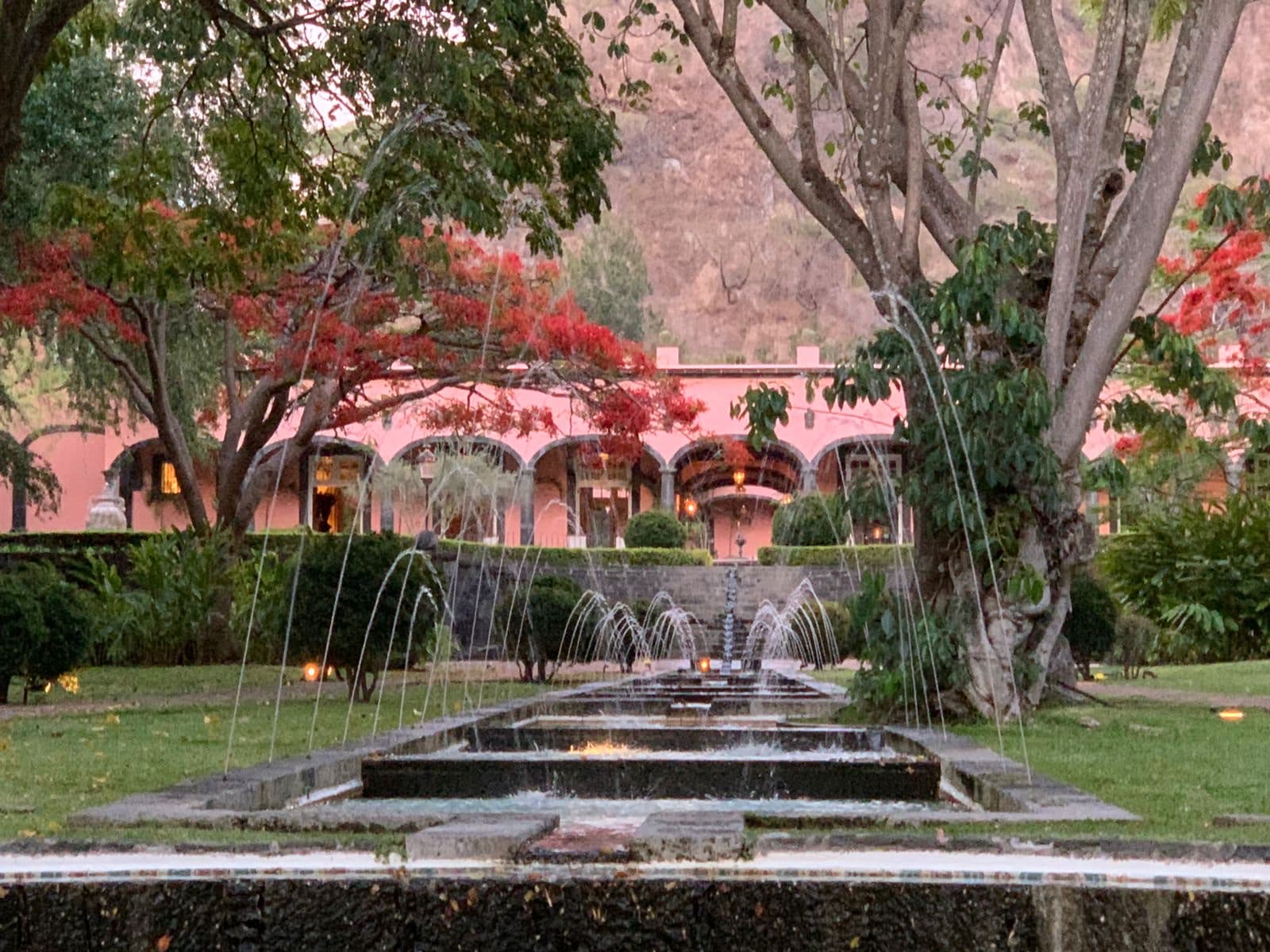
Hacienda de San Antonio
Colonial elegance meets modern luxury in historic Mexican charm
Look, most people have never heard of Hacienda de San Antonio. And honestly? That's part of its charm. This isn't your typical Mexican destination plastered across Instagram feeds. Instead, you get 16th-century colonial architecture wrapped around a luxury resort that somehow manages to feel both historic and utterly contemporary.
The hacienda sits on 347 acres of manicured gardens and ancient stone buildings, where Spanish conquistadors once walked the same corridors you'll explore today. But here's the thing — this place doesn't just preserve history, it elevates it. Think hand-carved wooden doors opening to infinity pools, and 400-year-old chapel walls lit by modern chandeliers.
The magic happens in those quiet moments. Morning coffee in the central courtyard while peacocks strut across century-old fountains. Sunset horseback rides through agave fields that stretch toward distant mountains. And evenings that unfold slowly over mezcal tastings in rooms where colonial governors once held court.
Best Months
JAN · FEB · MAR · APR · NOV · DEC
~27°C · peak crowds
Culture & Context
The hacienda's story dates to 1879, when it was the center of a coffee plantation so prized it was reportedly served at New York's Waldorf Astoria and drunk by the German Imperial family.
British financier Sir James Goldsmith bought the property in the 1970s and used it as a private highland retreat. His daughter Alix Marcaccini now oversees the interiors, which she designed herself using hand-made wool carpets from Oaxaca, European textiles, and pieces from the family's personal art collection.
The surrounding Comala region is culturally significant as the real-world setting for Juan Rulfo's 1955 magical realist novel "Pedro Páramo" — a book that directly influenced Gabriel García Márquez and Jorge Luis Borges. The town of Comala earned its "Pueblito Blanco" nickname in 1962 when all buildings were painted white with red-tiled roofs. Charreada (traditional Mexican rodeo) is a living tradition here — horses and horsemanship are taken seriously, and you'll spot booted cowboys in Colima City's plaza with mariachis singing under stone archways.
Local Customs
Botanas culture: At most plaza restaurants in Comala and Colima City, ordering a beer or drink automatically brings free bar snacks (botanas).
The more you drink, the more food arrives. Don Comalon on Comala's main plaza is famous for this tradition — don't leave without experiencing it..
Afternoon tea is a genuine daily ritual at the hacienda. Guests gather in the Yellow Room each afternoon for tea and pastries prepared by the kitchen. Skip it and you're missing one of the property's most charming moments..
Charreada etiquette: If you attend a Charreada (traditional rodeo) on the ranch or at La Petatera in Villa de Álvarez, dress respectfully. Cowboys here take their craft seriously — this isn't a tourist show, it's a centuries-old tradition.. Coffee ceremony: The hacienda grows and roasts its own coffee.
Morning breakfast begins with warm pastries and fresh-roasted estate coffee on the terrace. Asking staff about the roasting process is welcomed and opens up genuine conversations.. Ranch tours on Rancho Jabalí are best done early morning — the 5,000-acre working ranch sits 3,600 feet above sea level and hummingbirds, parrots, and flycatchers are most active at dawn.
Guided tours of the cheese and coffee roasting plants run throughout the day.. In Colima and Comala, shops and restaurants often close by 6pm — plan your day trips accordingly if you're exploring from the hacienda.
Safety
This is the most important thing to know before booking: Colima currently holds a Level 4 'Do Not Travel' advisory from the U.S.
State Department as of 2026 — the highest risk designation, shared with Guerrero, Michoacán, Sinaloa, Tamaulipas, and Zacatecas.
The advisory cites cartel violence, targeted killings, kidnappings, and roadblocks. U.S.
government employees are restricted from traveling to most parts of the state. The hacienda itself is an extremely private, gated, remote property with its own security — and longtime guests report feeling safe on-site. But the journey matters.
The hacienda recommends flying into Colima Airport (CLQ) and using their private vehicle transfer (a ~40-minute drive), which is the smartest approach. Avoid driving yourself, especially after dark. Do not attempt road trips through rural Colima or cross into adjacent Michoacán via Highway 110.
Always book transfers through the hacienda directly. Travel insurance with emergency medical evacuation coverage is essential — Mexico's public health system is not available to tourists, and private clinic costs must be paid upfront. Consult current official advisories at travel.
state.gov before finalizing any booking.
Getting Around
Flying in is the only sensible option.
Colima Airport (CLQ) is the closest airport, about 24 miles from the hacienda and roughly 40 minutes by road. The hacienda arranges private vehicle transfers from CLQ, Guadalajara (GDL, ~3 hours), and Manzanillo (ZLO, ~2.
5 hours) for up to 6 passengers. Private charter flights between the hacienda's own licensed airstrip and sister property Cuixmala (on the Jalisco coast) can also be arranged on request — a genuinely useful option for a combined coastal-highland itinerary. Once at the hacienda, you're on ranch land and everything is accessible on foot, horseback, ATV, bicycle, or via hacienda shuttle (surcharge applies).
For day trips to Comala or Colima City (~30 min drive), ask the concierge to arrange transport rather than renting independently. Uber operates in Colima City itself if you're spending a day in town. Intercity buses technically connect Colima City to Comala (20 min) and Manzanillo (90 min), but given the current security advisory, vetted private transport is strongly recommended over public options for foreign visitors.
Useful Phrases
Hacienda de San Antonio Itineraries
Things to Do in Hacienda de San Antonio
Hacienda Pool Area
120 min
Private Horseback Riding
90 min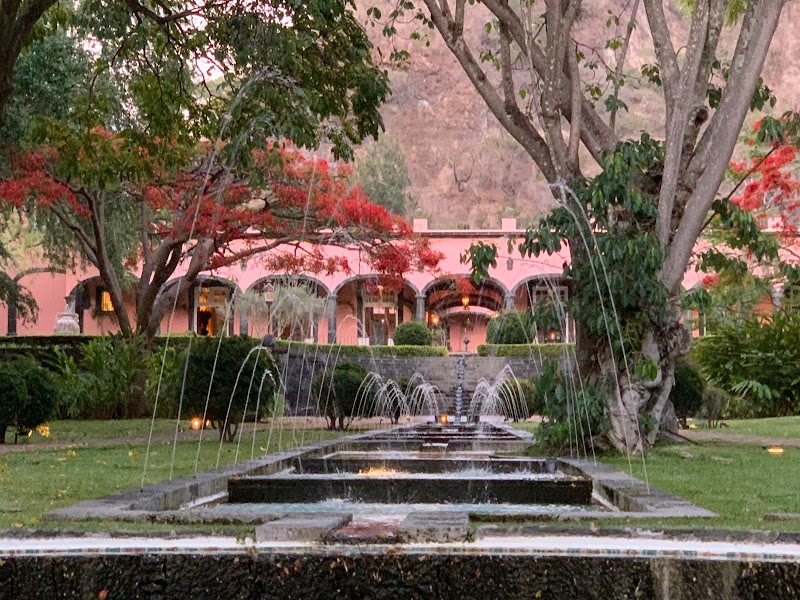
Organic Farm Tour
60 minMoney-Saving Tips
- 1.Book directly through the hacienda's website for 15% off rack rates and complimentary breakfast
- 2.Skip the resort spa treatments — local therapists in Tequisquiapan charge half the price for the same services
- 3.Bring your own wine for dinner — the corkage fee (150 pesos) costs less than their markup on bottles
- 4.Rent bikes in town for 100 pesos per day instead of paying the resort's 300-peso rate
- 5.Buy artisan goods at Tequisquiapan's Saturday market rather than the resort gift shop — prices drop by 40%
- 6.Pack hiking boots to explore the property's trails for free instead of paying for guided horseback tours
Travel Tips
- •Pack layers — colonial stone buildings stay cool even when it's hot outside
- •Download offline maps before arriving — cell service gets spotty in the mountains
- •Bring comfortable walking shoes for cobblestone paths that can be uneven and slippery
- •Learn basic Spanish phrases — staff speaks English but locals in nearby towns often don't
- •Book restaurant reservations upon arrival — the dining room fills up quickly during peak season
- •Carry cash for local excursions — many small businesses don't accept credit cards
Frequently Asked Questions
Explore Hacienda de San Antonio
BUILD YOUR
HACIENDA DE SAN ANTONIO PLAN
Insider picks, smart timing, and a plan ready when you are.
Start Planning