Outer Banks
Wild Atlantic barrier islands with shipwrecks and horses
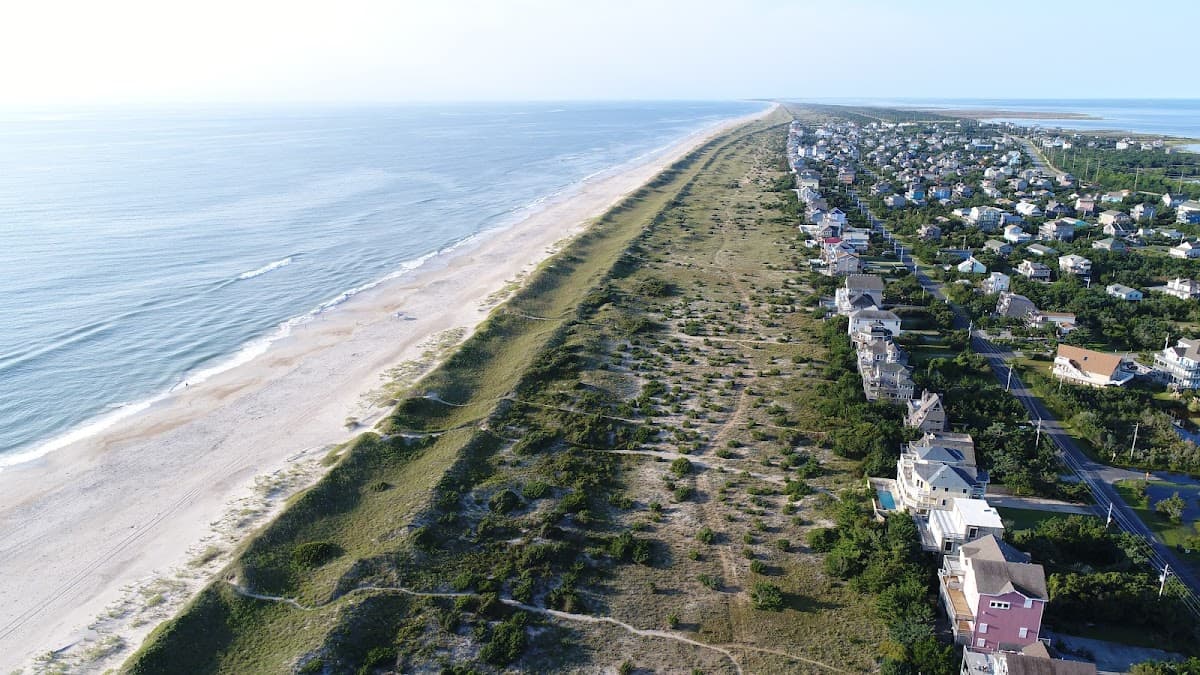
The Outer Banks stretch like a string of pearls off North Carolina's coast, 200 miles of barrier islands where wild horses roam free and shipwrecks tell stories of centuries past. This isn't your typical beach vacation. Here, you'll climb the tallest lighthouse on the East Coast, watch sunrise from Cape Hatteras, and maybe spot a few of the 400 wild horses that call Corolla Beach home. The OBX, as locals call it, moves at its own pace - slower than the mainland, faster than you'd expect when a nor'easter rolls in.
Best Months
MAY – OCT
~26°C · moderate crowds
Culture & Context
AMERICAN FIRSTS, LOST MYSTERY
The Outer Banks is a 100-mile chain of barrier islands off North Carolina's coast, and it does not operate like a typical beach destination. There are no boardwalks with arcades. No mega-resorts.
No Ferris wheels. What you get instead is a long, narrow sandbar perched between the Atlantic Ocean and a series of sounds, connected by two roads (US-158 and NC-12), and divided into a string of small towns that each have a genuinely different personality. It's the kind of place families return to for 20 years straight and develop serious loyalty to one specific town.
That loyalty can border on territorial. The locals here are a mix of year-round residents who work seasonal economies and "transplants" who fell in love on vacation and never left. The region carries legitimate historical weight: the Wright Brothers made their first powered flight at Kill Devil Hills in 1903, and the first English settlement attempts in America happened on Roanoke Island in 1585 and 1587.
The Lost Colony — the 117 settlers who vanished without explanation — still hasn't been solved, which gives the place an undeniably eerie backstory. In 2026, the OBX is leaning hard into America's 250th anniversary, calling itself the "Land of Beginnings." That branding is more than marketing; this stretch of coast genuinely has claim to a lot of American firsts.
The Netflix show "Outer Banks" gave the region a second wave of younger visitors, but real OBX culture predates the streaming age by centuries. The Outer Banks Brogue — a unique dialect shaped by isolation and Early Modern English roots — still survives among lifelong residents, particularly on Ocracoke Island.
Local Customs
MILEPOST NAVIGATION, TIP GENEROUSLY
Grocery stores hit peak chaos on Saturday and Sunday — this is changeover day when one set of renters leaves and another arrives. Do your big shopping on Monday or Tuesday morning. Your patience will thank you..
Rental homes run Saturday to Saturday during peak season. If you're trying to book mid-week or for a different span, you'll have more luck in the shoulder season (May or September/October).. Brew Thru is a local institution — a drive-through beer, wine, and cider store.
It's exactly what it sounds like and exactly as convenient as you'd hope. Don't skip it.. Beach flag colors matter.
Green means calm water. Yellow is moderate conditions. Red means stay out.
Purple flags signal dangerous marine life like jellyfish or sharks. Locals don't ignore these flags, and neither should you.. Everything here is measured in mileposts, not street addresses.
When someone tells you a restaurant is 'at milepost 8 on the Bypass,' that's a real, functional direction. Learn the milepost system before you arrive.. Don't dig holes on the beach deeper than your knees.
There have been sand collapse fatalities. Also, beach patrol vehicles can't pass over them. Fill holes before you leave..
Wild horses in Corolla and Carova are not a petting zoo. They are genuinely wild. Keep at least 50 feet of distance.
The fine for interacting with them is real and enforced.. Most of the beach north of Corolla proper (Carova, Swan Beach, North Swan Beach) is 4WD only. If you don't have a capable vehicle, you cannot get there.
Plan accordingly.. The OBX is casual. Flip flops and boardshorts are the default.
But locals draw a line at someone showing up to a sit-down restaurant in a rash guard or walking a grocery store in a bikini.. Tipping well at local restaurants matters more here than at major tourist destinations. This is a seasonal economy with long slow winters.
Service staff really feel the difference.
Safety
RIP CURRENTS DEMAND RESPECT
Rip currents are the primary danger on the OBX and they're not something to take lightly. They can move at up to 8 feet per second, which is faster than an Olympic swimmer can sprint. The ocean can look completely calm right next to a rip current channel. Look for dark patches of water, interrupted wave patterns, or foam moving steadily seaward. Text OBXBEACHCONDITIONS to 77295 to get daily beach condition alerts from Dare County, or check LoveTheBeachRespectTheOcean.com before heading out. Strongest rip currents typically occur a couple of hours on either side of low tide.
Watch the flag system: green is calm, yellow is moderate, red means stay out of the water. Purple flags mean dangerous marine life (jellyfish, sharks) are present. Locals don't ignore these flags, and lifeguarded beaches are far safer — drowning risk at a lifeguarded beach drops to roughly 1 in 19 million.
Hurricane season runs June 1 through November 30, with peak activity mid-August through late October. The barrier islands are narrow with limited evacuation routes, and NC-12 is prone to overwash and closure. Buy travel insurance when you book (not after a storm is already named — that's too late). Sign up for OBXAlerts.com for extreme weather notifications.
Crime is low. Dare County towns like Duck and Nags Head consistently get good safety ratings. Theft does happen in peak summer when tourist concentrations are high — don't leave valuables visible in cars at beach access points.
One underrated danger: don't dig sand holes deeper than your knees. Sand collapses have caused fatalities. Fill holes before leaving the beach — beach patrol vehicles cannot pass over them.
Getting Around
RENT CAR, FOUR-WHEEL NEEDED
You need a car. Full stop. The OBX has no meaningful public transportation, and the area spans over 100 miles. Fly into Norfolk International Airport (closest, roughly 1.5-2 hours to the northern OBX) or Raleigh-Durham International Airport (about 3 hours to the central OBX), then rent a car at the airport. Driving in is simpler if you're coming from Virginia or the mid-Atlantic — just take US-158 over the Wright Memorial Bridge into Kitty Hawk.
Rental cars are available on the islands at companies like Island Jeep and Car Rentals (next to Outer Banks Chrysler Jeep Dodge Ram). If you plan to do beach driving or access the 4WD-only northern beaches (Carova, Swan Beach), you specifically need a capable 4-wheel-drive vehicle with a low-range transfer case. All-wheel drive crossovers often get stuck. Rental 4WDs are available through OBX Jeep Rentals and similar local outfitters.
For getting between the central towns and Ocracoke Island, a ferry runs regularly and takes about 60 minutes from Hatteras Village. Book reservations online. It's the only way to Ocracoke short of a private boat.
Biking is genuinely viable in Duck, where the boardwalk and bike-friendly streets make car-free evenings possible. Kitty Hawk Kites and Ocean Atlantic Rentals offer bike rentals. But for the full OBX stretch, you'll be driving.
Saturday is changeover day. Do not try to arrive or leave on a Saturday unless you have exceptional patience. Traffic on US-158 heading on and off the island backs up dramatically. The Wright Memorial Bridge becomes a crawl. Sunday is nearly as bad. Mid-week arrivals are dramatically smoother.
Useful Phrases
Money-Saving Tips
- 1.Book vacation rentals directly with property management companies like Village Realty or Outer Banks Blue to avoid booking fees
- 2.Buy groceries on the mainland before crossing the bridge - Food Lion in Kitty Hawk charges tourist prices
- 3.Many beaches offer free parking if you arrive before 9 AM during summer season
- 4.Wednesday is locals' night at many restaurants with discounted seafood specials
- 5.Cape Hatteras Lighthouse climbs cost $10 for adults but the view from Jockey's Ridge dunes is free
- 6.Fill up your gas tank in Nags Head - stations get more expensive as you drive south toward Hatteras
Travel Tips
- •Download offline maps - cell service gets spotty south of Avon
- •Pack layers even in summer - ocean breezes can drop temperatures 15 degrees
- •Bring or rent a 4WD vehicle if you want to see wild horses in Corolla
- •Check ferry schedules for Hatteras-Ocracoke crossing - they run every 30 minutes but fill up quickly
- •Book lighthouse climbs in advance during summer - Cape Hatteras only allows 30 people per tour
- •Always check weather and road conditions before driving Highway 12 - it floods during storms
- •Bring cash for seafood shacks and small businesses that don't accept cards
- •Pack reef-safe sunscreen - the sun reflects off water and sand here more intensely than you'd expect