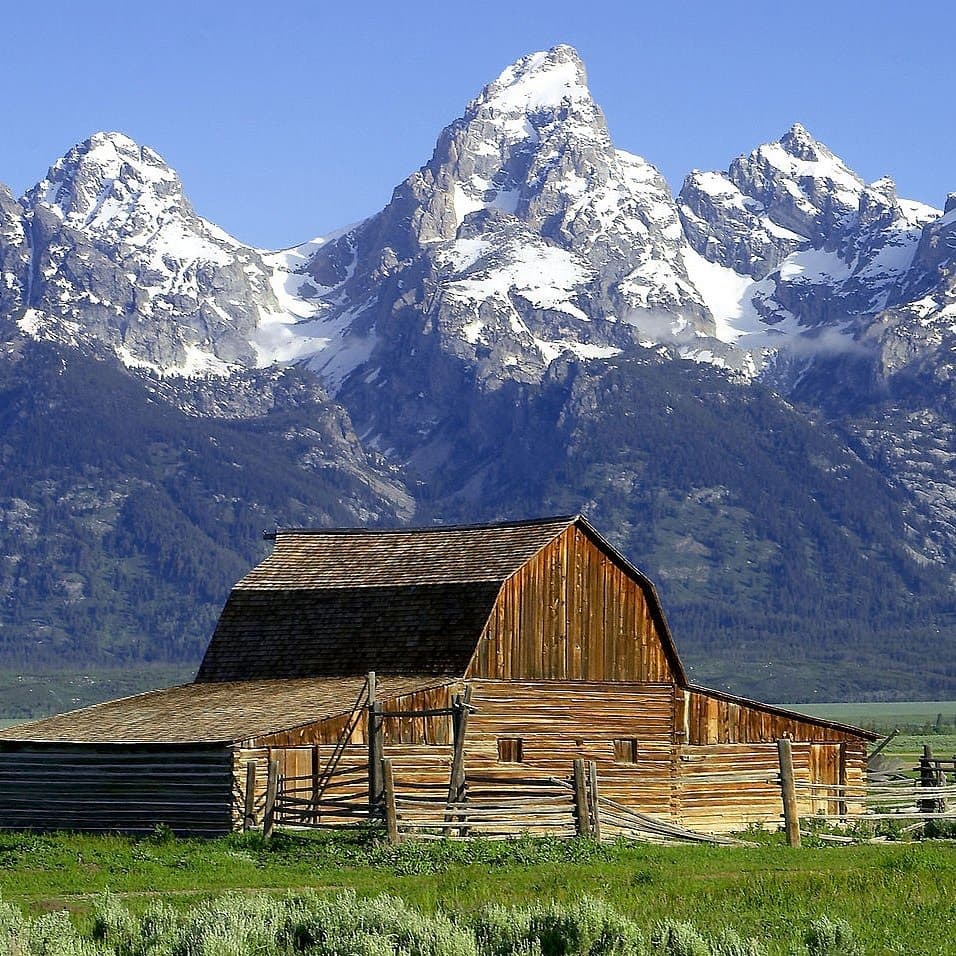
Grand Teton National Park
Dramatic peaks rising majestically from pristine alpine valleys
The Tetons don't mess around. These peaks shoot straight up from the valley floor without any foothills to soften the blow — just raw granite and snow-capped drama that'll make your Instagram followers question their life choices. Grand Teton National Park sits right next to Yellowstone, but it's a completely different animal. Here, you're not dodging tour buses to see geysers. You're scrambling up alpine trails, spotting moose in Jenny Lake, and realizing why Ansel Adams couldn't put his camera down.
Best Months
JUN – SEP
~24°C · high crowds
Culture & Context
RANCH MEETS RESORT WEALTH
Grand Teton sits inside the Jackson Hole valley — "the Hole" to anyone who's been here longer than a weekend. The culture is a genuine collision between old Wyoming ranching identity and a wealthy outdoor resort economy. Locals who can't afford Jackson proper live "over the pass" in Victor or Driggs, Idaho, commuting daily over Teton Pass on Highway 22.
That divide matters. The town of Jackson skews liberal by Wyoming standards (it voted differently than the rest of the state for years), but the surrounding county is deeply traditional — ranch culture, hunting, rodeo. Wildlife conservation is deeply embedded here, and locals take the 100-yard bear rule seriously.
Don't be the tourist who inches toward a moose for a photo. People notice, and they'll call you out. The park has been continuously inhabited for over 11,000 years; the Shoshone name for one of the tallest peaks, Teewinot, translates as "many pinnacles.
" That ancestral history often gets overshadowed by the postcard scenery, but it's woven into the place.
Local Customs
PULL OVER COMPLETELY ALWAYS
Don't stop your car in the middle of the road for wildlife — pull completely to the right of the white line, or find a pullout. Blocking traffic for a 'moose jam' is one of the fastest ways to annoy locals and rangers alike.. Bears are everywhere and bear spray is non-negotiable on trails.
Carry it on your hip, not buried in your pack. Locals borrow canisters from outfitters; some lodges lend them out.. Altitude hits hard here.
The valley floor sits at 6,320 feet; trails go to 13,770 at the Grand Teton summit. Drink water before you feel thirsty, go slow on day one, and don't push a hike if you feel a headache coming on.. Cash is becoming useless at park entrance stations — card and debit only at most locations..
Don't feed anything. Not squirrels, not ravens at your campsite. Fed wildlife becomes aggressive, dependent, and often has to be killed.
This is enforced.. Get up before dawn if you actually want parking at the popular spots. Schwabacher Landing fills its lot by 6am on summer weekends.
Jenny Lake campground is full by 8am. These are not exaggerations.. Bluegrass Tuesdays at the Wort Hotel (locals pronounce it 'wert') in Jackson are a genuine local tradition — free, crowded, and worth it.
Safety
WILDLIFE HAZARDS EVERYWHERE
Wildlife is the primary hazard people underestimate. The law is 100 yards minimum from bears and wolves, 25 yards from everything else — bison, moose, pronghorn. A bison looks docile until it isn't.
Posted speed limits are enforced partly because wildlife-vehicle collisions have been rising since 2000. Drive slow at dawn and dusk, especially in fall during migration. Bear spray is not optional on trails — carry it on your hip, not your bag.
Altitude sickness is real starting at the valley floor (6,320 ft) and much more serious at elevation. Symptoms include headache, nausea, and fatigue; descend immediately if they worsen. Thunderstorms move in fast, especially in July and August — get off exposed ridges and out of the water before noon.
Never hike alone in the backcountry. Pets are allowed in campgrounds and on paved roads but not on trails or in the backcountry; keep them leashed. Mice and bats sometimes get into park cabins — they can carry hantavirus and rabies.
Don't prop room doors open. The backcountry requires a permit and proper food storage (use bear canisters, not just your car). Cell service for calling 911 is unreliable in most of the park.
The park ranger line is 307-739-3399 for non-emergency visitor info.
Getting Around
CAR REQUIRED, NO TRANSIT
You need a car. Full stop. There's no meaningful public transit inside the park itself.
The START bus system connects Jackson to Teton Village, but that's for ski commuters — it won't get you to Oxbow Bend. Drive the inner Teton Park Road loop clockwise for the best light hitting the mountains in the morning (sun rises east, Tetons are west). The Moose-Wilson Road connecting Moose to Teton Village is narrow, winding, and not suitable for RVs or trailers — but it's one of the best drives for wildlife.
Traffic and parking get genuinely awful at Jenny Lake and Schwabacher Landing in peak summer (July-August). The three main entrance stations are at Moose Junction, Moran (east), and Granite Canyon — all cash-free, cards only. Seasonal road closures affect northern areas roughly November through May; check the NPS road conditions page before you go.
Flying in: Jackson Hole Airport (JAC) is actually inside the park boundary — one of very few commercial airports inside a national park. Car rentals there are expensive; book early.
Useful Phrases
Money-Saving Tips
- 1.Buy the America the Beautiful Annual Pass for $80 if you're visiting multiple national parks this year — it pays for itself after three visits
- 2.Pack your own lunch instead of buying $15 sandwiches at park lodges — trail mix and energy bars from grocery stores in Jackson cost half the price
- 3.Camp instead of staying in Jackson Hole hotels — you'll save $200+ per night and wake up inside the park
- 4.Rent bear spray in Jackson for $10/day instead of buying a $40 canister you might only use once
- 5.Fill up on gas in Jackson before entering the park — the nearest station inside charges premium prices
- 6.Take the Jenny Lake boat shuttle ($20 roundtrip) to cut hiking distance in half and save your energy for the good stuff
Travel Tips
- •Start hiking by 7 AM during summer to beat crowds and afternoon thunderstorms — parking lots fill up by 8 AM on weekends
- •Download offline maps before you go — cell service is spotty throughout the park and GPS can't save you on mountain trails
- •Bring bear spray and know how to use it — both black bears and grizzlies are active throughout the park
- •Pack layers even in summer — mountain weather changes fast and afternoon storms roll in quickly
- •Stay on marked trails to protect fragile alpine vegetation — shortcuts create erosion and damage the ecosystem
- •Book accommodations in Jackson Hole months ahead for summer visits — everything fills up during peak season
- •Check trail conditions at visitor centers before heading out — snow can linger on high-elevation trails into July
Frequently Asked Questions
Explore Grand Teton National Park
BUILD YOUR
GRAND TETON NATIONAL PARK PLAN
Insider picks, smart timing, and a plan ready when you are.
Start Planning