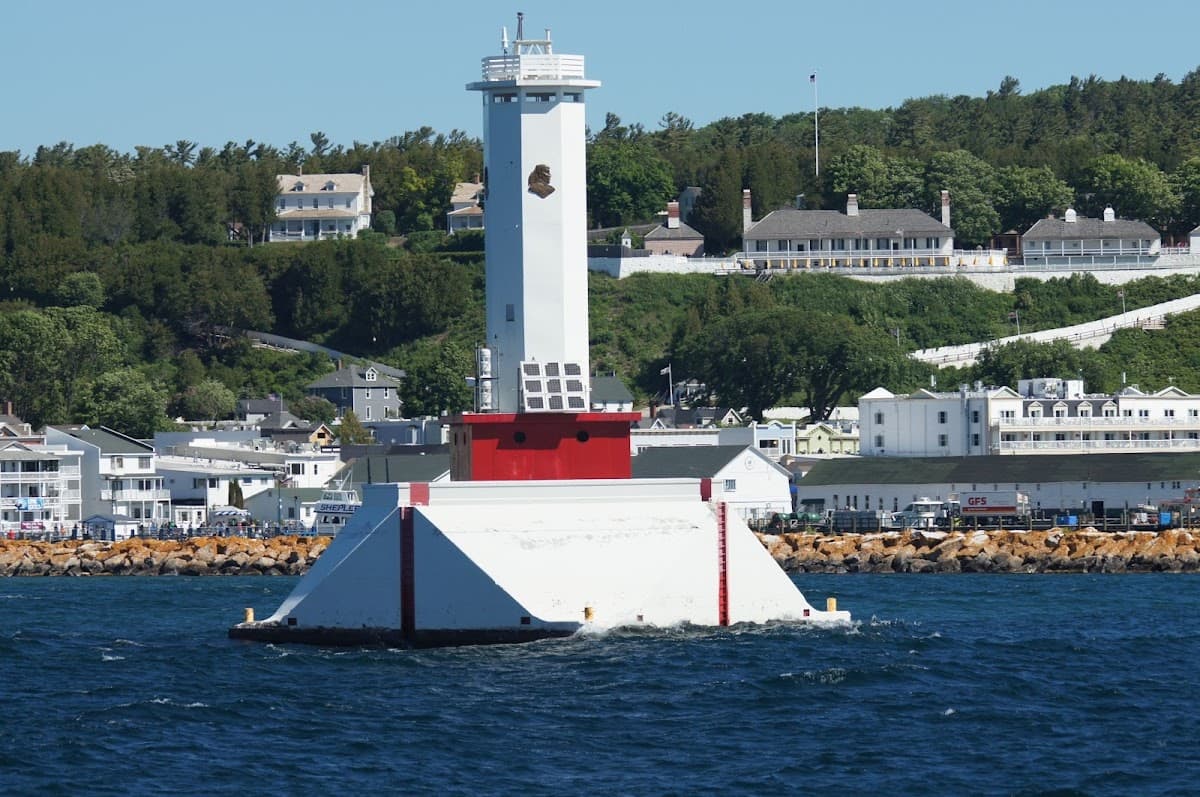
Mackinac Island
Michigan's car-free Victorian island frozen in charming time
Step off the ferry and into 1887. Cars haven't been allowed on Mackinac Island since 1898, so horse-drawn carriages clip-clop down Main Street past Victorian storefronts selling world-famous fudge. The Grand Hotel's 660-foot porch stretches like a white ribbon across the bluff, while bicycles lean against picket fences and the scent of lilacs drifts from cottage gardens.
This 3.8-square-mile island in Lake Huron moves at the pace of a leisurely bike ride. You'll hear hoofbeats instead of honking, smell fresh lake air instead of exhaust fumes, and find yourself slowing down to match the island's unhurried rhythm. Sure, it gets touristy in summer and everything costs more than the mainland. But there's something magical about a place where the biggest traffic jam involves a carriage full of day-trippers stopping to let horses drink from a water trough.
Best Months
MAY – OCT
~21°C · moderate crowds
Culture & Context
CAR-FREE SINCE 1898
Mackinac Island has been car-free since 1898. That's not a gimmick — it's just how things are here, and locals take it seriously. The island sits in the Straits of Mackinac between Michigan's Upper and Lower Peninsulas, and its isolation has preserved a kind of Victorian-era pace that feels genuinely different from anywhere else in the Midwest.
About 500–600 people live here year-round, mostly in Harrisonville. The rest of the population is seasonal workers, cottage owners, and somewhere north of a million annual visitors. The island was originally Ojibwe land — the name comes from 'Mi-shi-ne-macki naw-go,' meaning Great Turtle, which is why the island's highest point is called Fort Holmes and the harbor park is called Great Turtle Park.
French missionaries and fur traders arrived in the 1600s, British forces built Fort Mackinac in 1780, and American tourists started arriving en masse in the Victorian era. The Grand Hotel opened in 1887 and has been setting the cultural tone ever since. In 2026, it celebrates its 140th season.
Fudge arrived around the same time as mass tourism. The Murdick family started making it on marble slabs in full view of passersby in the 1880s, and the practice has never stopped. The island produces more than 10,000 pounds of fudge per day during peak season.
82% of the island is state parkland. That means most of what you're looking at — the forests, the limestone formations, the bluff trails — is publicly accessible and free. It also means the island has stayed remarkably intact compared to almost any other tourist destination in the Great Lakes region.
Local Customs
LOCK YOUR BIKE
Say 'Mack-uh-naw,' not 'Mack-in-ACK.' Locals notice immediately and won't always correct you. Just fix it before you arrive..
Cars have been banned on the island since 1898 — no exceptions for tourists. Emergency vehicles only. You walk, bike, or take a horse-drawn carriage.
Get comfortable with it before you show up expecting an Uber.. The fudge shops blow warm, sweetened air directly into the street to pull you in. It's a deliberate tactic and has been for over a century.
Knowing this won't stop it from working.. Last ferry matters. Miss it and you're spending an unplanned night on the island.
Summer last departures are typically between 8 PM and 10:30 PM, but check the schedule for your specific date and dock.. Bike right, walk left on M-185. The 8.
2-mile shoreline loop gets crowded in peak summer and things move faster than you'd expect when rental bikes and horse carriages share the same car-free highway.. The Grand Hotel charges $12 just to walk onto the property if you're not a guest. Worth it for the 660-foot porch and gardens, but don't show up expecting free access.
Dinner at the Grand requires a jacket for men.. Locals call themselves 'islanders.' Cottage owners who summer here are 'cottagers.
' Seasonal workers are a whole separate category. Then there's everyone else — the fudgies. Respect the hierarchy..
Doud's Market on Market Street is America's oldest family-operated grocery store. Stock up here for picnic supplies rather than paying restaurant prices for every meal. Marquette Park and Fort Holmes are great picnic spots..
Dogs are welcome on both ferry companies (no extra charge on Shepler's), in most of the state park, and at many outdoor restaurants. Worth knowing if you're traveling with a pet.. Book accommodations early for July weekends and the yacht race weeks (July 10–14 and 18–21).
Some properties require 2-night minimums during peak periods.
Safety
VERY SAFE
Mackinac Island is genuinely one of the safer places you'll visit in the Midwest. The city has recorded fewer than eight violent crimes per year consistently, and most years it's five or fewer. No cars means no car break-ins, no traffic accidents, and no vehicle-related crime.
Stolen bicycles account for roughly 63% of all thefts — lock your rental if you're leaving it unattended anywhere. Per-capita crime statistics can look alarming on paper, but those numbers are calculated against a resident population of around 500 people while the island hosts over a million visitors per year. The math is misleading.
One genuine scam to watch for: fake ferry booking pages on social media that request personal and credit card information. Only buy tickets through sheplersferry.com or arnoldtransitcompany.
com directly. The biggest practical risk is missing the last ferry. Check the departure schedule before you explore — last boats in summer typically leave between 8 PM and 10:30 PM depending on the season and dock.
If you miss it, you're spending money on an unplanned night on an island where rooms aren't cheap. Weather can shift fast in the Straits of Mackinac, especially in spring and fall. Sign up for Mackinac County RAVE Emergency Alerts by texting 'MackinacEAS' to 67283 to get weather and ferry cancellation alerts via text.
Getting Around
FERRY & BICYCLES
Getting to Mackinac Island means taking a ferry. There is no other realistic option for most people. Two companies serve the island: Shepler's Ferry (operating since 1945) and Arnold Transit Company (founded 1878, formerly Star Line).
Both are now owned by Hoffmann Marine but operate independently. In 2026, round-trip fares are $39/adult and $27/child on Shepler's, or $37/adult and $25/child on Arnold Transit. Add $3 for online booking on either.
Both companies depart from Mackinaw City and St. Ignace. The Mackinaw City crossing takes about 16–20 minutes on a fast catamaran.
The St. Ignace Arnold classic ferry takes 30–40 minutes and is a more leisurely ride. Free parking is available at both dock locations when you buy a ferry ticket — the free lot at 311 S.
Nicolet St. in Mackinaw City (near I-75 Exit 338) has a free tram to the dock, though it fills early on summer weekends. Note: there's currently a contract dispute between the City of Mackinac Island and Hoffmann Marine.
Ferry service is running normally in 2026, but the situation bears watching for 2027 travel planning. Once on the island, forget cars. Bikes are the best way to cover ground — rentals run $10–$15/hour or up to $90/day.
The 8.2-mile M-185 loop is the only state highway in the U.S.
that bans motor vehicles. Horse-drawn taxis run $5–$10/person. The narrated carriage tour hits the major inland sites in about two hours for under $40.
Everything in the downtown core is walkable from the ferry docks.
Useful Phrases
Money-Saving Tips
- 1.Ferry tickets cost $27-30 round trip per adult – book online for small discounts and skip the dock lines
- 2.Bring your own bike if staying multiple days – daily rentals add up fast at $40+ per day
- 3.Pack snacks and water bottles – island prices run 30-50% higher than mainland Michigan
- 4.Stay on the mainland in Mackinaw City or St. Ignace for cheaper hotels, then day-trip to the island
- 5.Visit in May, September, or October for lower hotel rates and thinner crowds
- 6.Skip the expensive carriage tours and rent bikes to explore at your own pace
- 7.Buy fudge at the end of your trip – carrying it around the island gets messy and heavy
Travel Tips
- •Pack layers – lake weather changes quickly and the island can be 10 degrees cooler than the mainland
- •Wear comfortable walking shoes with good grip – horse manure makes sidewalks slippery
- •Make dinner reservations early, especially for July and August visits
- •Bring cash – some smaller shops and carriage drivers prefer it over cards
- •Check ferry schedules before planning your day – the last boat back to the mainland leaves around 10 PM
- •Book accommodations well in advance for summer stays – the island has limited rooms
- •Don't overpack – you'll likely be walking or biking with your luggage from the ferry dock
Frequently Asked Questions
Explore Mackinac Island
BUILD YOUR
MACKINAC ISLAND PLAN
Insider picks, smart timing, and a plan ready when you are.
Start Planning