Negril
Jamaica's laid-back beach paradise with legendary sunsets
Negril isn't just another Caribbean beach town. This seven-mile stretch of white sand on Jamaica's western tip moves at its own pace — slower, easier, with sunsets so good they stop conversations mid-sentence. Here's where Bob Marley used to hang out, where cliff jumping is a daily ritual, and where the most stressful decision you'll make is choosing between jerk chicken and curry goat. The town splits into two distinct vibes: Seven Mile Beach for endless sand and gentle waves, and West End for dramatic cliffs and that legendary sunset scene at Rick's Cafe. But Negril's real magic happens in between — in the beachside shacks serving the island's best ackee and saltfish, the sound systems pumping reggae until dawn, and the way time seems to stretch like taffy in the tropical heat.
Best Months
JAN · FEB · MAR · APR · DEC
~30°C · high crowds
Culture & Context
HIPPIE VIBE NEVER LEFT
Negril started as a hippie escape in the late 1960s and has never fully shaken that identity — which is honestly part of the appeal. The vibe is intentionally slow. Nobody is in a rush.
When someone says "mi soon come," that could mean ten minutes or two hours. Adjust expectations accordingly. Building codes here actually prohibit any construction taller than the tallest palm tree, so the skyline stays low and the beach feels human-scaled in a way that bigger Caribbean resort towns don't.
The town straddles two parishes — Westmoreland and Hanover — and about 6,900 people call it home year-round. English is the official language, but Jamaican Patois (or Patwa) is what you'll actually hear in daily conversation. It sounds like English playing at a slightly different frequency.
Give it a day and you'll start catching more than you think. Rastafarian culture runs through the place too — not as a tourist prop, but as a genuine part of daily life for many residents. Respect that, and don't treat it like a costume.
Local Customs
VENDORS ARE RELENTLESS
Beach vendors are persistent — and that's putting it mildly. A polite but firm 'no thank you' and keep walking is the move. Don't make eye contact if you're not interested, and never start negotiating if you don't plan to buy..
Pay in Jamaican dollars whenever possible. Many places accept USD, but the exchange rate they offer is usually terrible. Hit an ATM and use JMD for street food, route taxis, and market stalls..
Beachwear stays at the beach. Wandering into a local community in a bikini top is seen as disrespectful. Throw on a cover-up when you leave the sand..
Politeness is genuinely valued. 'Please' and 'thank you' go a long way. Don't be the tourist who barks orders at vendors or restaurant staff..
Always agree on a price with any taxi before you get in. Red license plates mean the vehicle is an officially licensed route taxi. If someone without a red plate offers you a ride and claims route taxis are unsafe, they're just trying to charge you more — don't fall for it..
Don't photograph people without asking first. It's considered intrusive, and you'd be surprised how quickly a friendly interaction turns cold when someone pulls out a camera uninvited.. Watch for hidden fees at restaurants and bars — service charges sometimes appear on the bill without warning.
Ask for a breakdown before you pay.. Marijuana is decriminalized in Jamaica (possession of up to 2 ounces carries only a small fine), but it is not fully legal. Don't assume you can light up anywhere — especially not near families or in resort public areas.
Safety
SAFER THAN YOU'D THINK
Negril is one of Jamaica's safer tourist destinations, and the government knows tourism pays the bills — District Constables (tourist police) patrol the beach strips on ATVs and bicycles regularly. The U.S.
State Department downgraded Jamaica from Level 3 to Level 2 (Exercise Increased Caution) in January 2026, putting it in the same tier as France and Italy. That said, don't be naive. Petty theft is the most common issue for tourists.
Keep your phone in your pocket, don't flash jewelry or expensive cameras, and use the safe in your room. At night, stick to populated, lit areas. Don't wander alone after dark, and don't leave drinks unattended at bars.
The crime that makes international headlines is almost entirely concentrated in specific neighborhoods in Kingston and parts of Montego Bay — nowhere near where you'll be. Specific areas to avoid entirely: Logwood and Orange Bay in Hanover Parish (just north of Negril). For transport, only use red-plated taxis or pre-arranged private drivers — never get into an unlicensed vehicle.
Hurricane Melissa hit western Jamaica in October 2025 as a Category 5 storm and caused significant damage to the south coast, but the Jamaica Tourist Board confirmed Negril and its tourism infrastructure are fully operational heading into 2026. Medical care in western Jamaica is limited — private hospitals require payment upfront, ambulance response times can be slow, and common medications like insulin may be hard to find. Get travel insurance before you go.
Seriously.
Getting Around
ROUTE TAXIS & BIKES
Fly into Sangster International Airport in Montego Bay (MBJ) — it's the closest major airport, about 50 miles and a one-hour drive from Negril. Several shuttle companies run the route (Amstardmc, Travel Around Jamaica Tours, PPJTours), typically for $25–40 USD shared or $60–80+ for a private transfer. Book in advance, especially during peak season.
Once you're in Negril, route taxis (red license plates) run regularly along Norman Manley Boulevard and into West End. Fares are JMD 200–300 per person for short hops — confirm the price before you get in. A taxi from one end of Seven Mile Beach to the other runs JMD 700–2,500 depending on your negotiating skills and time of day.
Prices go up at night. Uber has expanded into Jamaica in 2026, which helps take the guesswork out of pricing for some routes. Bike rentals are available from several shops along the beach strip and are a practical way to cover the length of the beach or make the run to the West End.
If driving yourself, the main road through town is Norman Manley Boulevard (beach side) connecting to West End Road at the roundabout. Parking at spots like Woodstock Negril is free if you're dining there.
Useful Phrases
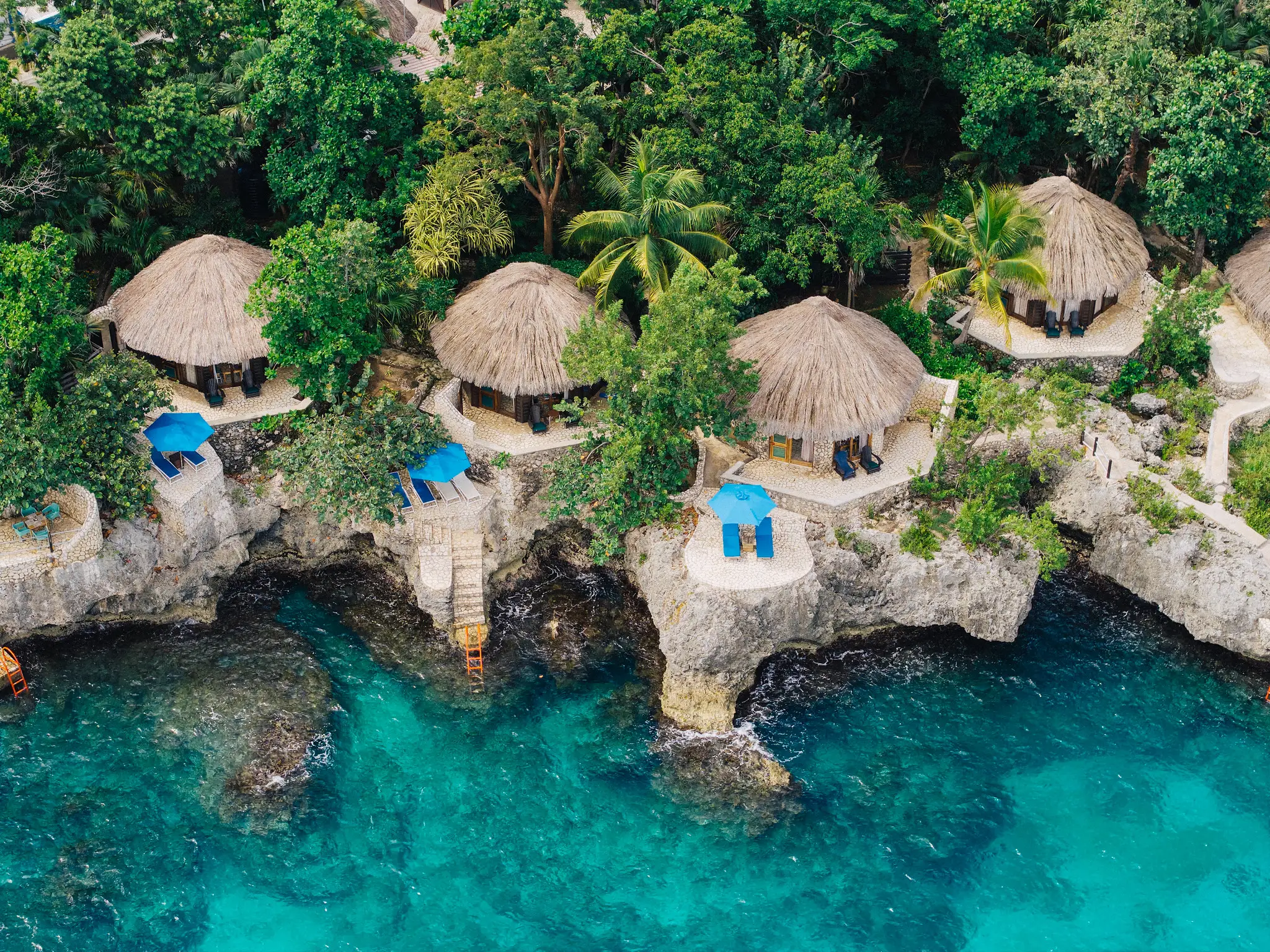
Where to Stay in Negril
2 recommended properties
Money-Saving Tips
- 1.Eat at local joints instead of resort restaurants — a full meal costs $8-12 versus $30+ at hotels
- 2.Buy Red Stripe at supermarkets for $2 each rather than $5 at beach bars
- 3.Book airport transfers through your hotel to avoid taxi price gouging at Montego Bay
- 4.Visit during shoulder seasons (May or November) for 40% lower hotel rates
- 5.Share route taxis for $2 instead of private taxis for $15 within Negril
- 6.Buy fruits from roadside vendors — mangoes cost $1 versus $5 at resort shops
- 7.Negotiate prices at craft markets — start at 30% of the asking price
- 8.Stay in West End guesthouses for $60/night instead of Seven Mile Beach resorts at $200+
Travel Tips
- •Bring reef-safe sunscreen — the coral here is protected and regular sunscreen is banned
- •Pack water shoes for exploring West End's rocky coastline and cliff areas
- •Download offline maps — cell service gets spotty away from the main tourist areas
- •Bring cash in small bills — many local spots don't take cards or have high minimums
- •Book Rick's Cafe sunset tables early in the day or prepare to stand in crowds
- •Try the local buses (route taxis) — they're safe, cheap, and run constantly along the main road
- •Respect the cliff jumping spots — locals know the safe spots and tide conditions
- •Learn basic patois phrases — locals appreciate the effort and service improves noticeably