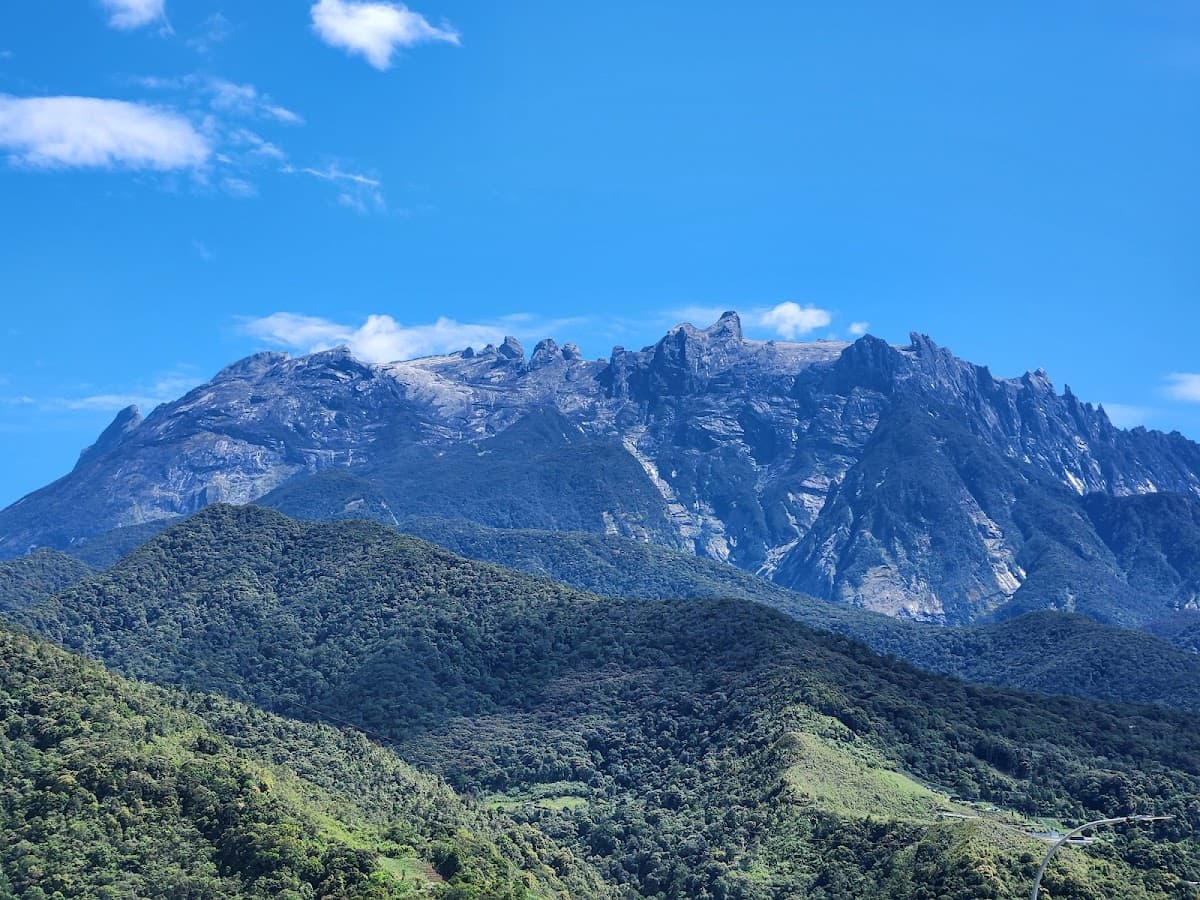
Mount Kinabalu
Borneo's towering granite peak and biodiversity hotspot
At 4,095 meters, Mount Kinabalu isn't just Malaysia's tallest peak—it's a granite giant that rises from Borneo's rainforests like something from another planet. The locals call it Aki Nabalu, the sacred resting place of spirits, and after you've hauled yourself up those final rocky scrambles to Low's Peak at sunrise, you'll understand why.
Here's the thing about Kinabalu: it's not technically difficult, but it'll humble you. The trail starts in tropical rainforest where hornbills call overhead, climbs through cloud forest draped in moss, then emerges onto bare granite slabs that feel more like the moon than Malaysia. And the biodiversity? This mountain hosts more plant species than all of North America and Europe combined.
Look, this isn't a casual weekend hike. You'll need permits, a guide, and at least two days. But standing on that summit as the sun paints the granite pink and orange—with the rest of Borneo spread out 4,000 meters below—makes every burning step worth it.
Itineraries coming soon
We're working on adding amazing itineraries for Mount Kinabalu. In the meantime, try the app to create your own!
Money-Saving Tips
- 1.Book permits and accommodation as a package deal through tour operators—individual bookings often cost 20-30% more
- 2.Rent gear in Kota Kinabalu rather than buying—places like Borneo Trails rent quality hiking boots and jackets for RM30-50/day
- 3.Pack your own snacks and energy bars—the limited food options at Laban Rata cost 3x normal prices
- 4.Share guide costs by joining other climbers—guides can take up to 6 people, splitting the RM230 fee significantly
- 5.Stay in Kundasang rather than KK the night before—saves on transport costs and puts you closer to the early morning start
Travel Tips
- •Start training 2-3 months before your climb—focus on cardio and leg strength, especially stair climbing with a weighted pack
- •Bring altitude sickness medication like Diamox, even if you've never had issues—the rapid elevation gain catches many people off guard
- •Pack extra batteries for your headlamp in an inside pocket—cold temperatures drain them faster than you'd expect
- •Download offline maps to your phone as backup navigation—GPS can be spotty in the cloud forest sections
- •Book a massage in Kundasang for after your descent—your legs will thank you, and it's much cheaper than in KK
Frequently Asked Questions
Explore Mount Kinabalu
Ready to explore Mount Kinabalu?
Get a personalized itinerary in seconds with Takeoff.
Free on iOS. No credit card required.