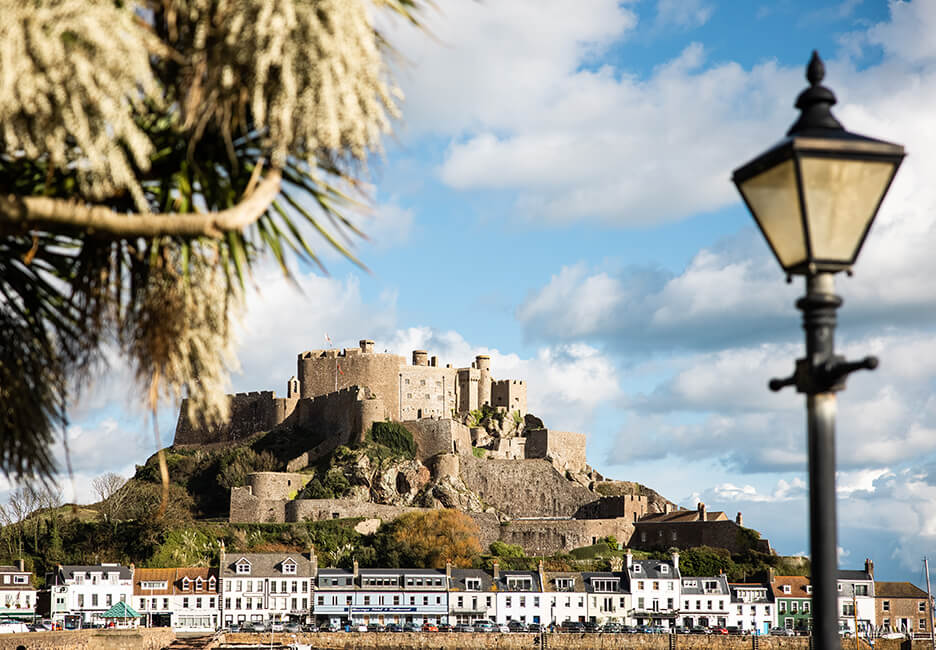
Jersey
Culture & Context
FRANCO-BRITISH ISLAND IDENTITY
Jersey sits 14 miles off the coast of Normandy and about 100 miles from mainland Britain, but make no mistake — it's a British Crown Dependency, not part of the UK and not part of France. That geographic and political in-between has shaped everything here. The island has its own parliament (the States of Jersey), its own currency (the Jersey Pound, pegged to sterling), its own postal service, and a flat income tax capped at 20% with no VAT and no capital gains tax. That low-tax status has made Jersey one of Europe's most significant finance hubs.
Culturally, it's predominantly English-speaking with French as a co-official language. But the real linguistic gem is Jèrriais, a Norman Romance language that pre-dates modern French. Fewer than 500 native speakers remain — mostly in their 70s and 80s — though there are active revival efforts in schools. You'll notice it on road signs, place names, and the occasional pub conversation. The word for beach here isn't "plage" (French) — it's "grève." And that tidal causeway to Corbière Lighthouse? The foghorn there is known as "la vache de Corbière" — the Corbière cow.
WWII sits heavy in the island's identity. Jersey was the only part of the British Isles occupied by Germany, from 1940 to 1945. Liberation Day on May 9 is the closest thing Jersey has to a national holiday. The Jersey War Tunnels, built by forced labour, are among the most sobering and well-curated WWII museums anywhere in Europe.
Famous locals include actor Henry Cavill, celebrity Lillie Langtry (the "Jersey Lily"), and the exiled French writer Victor Hugo, who lived here from 1852–1855. The island also has a serious dairy legacy — Jersey cattle have been the only breed allowed on the island since 1789. And come spring, the Jersey Royal potato (a protected designation variety only grown here) is practically a rite of passage.
cultural_context_headline: FRANCO-BRITISH CROWN DEPENDENCY
Local Customs
Don't call locals 'English' — they are Jerseymen or Jerseywomen (Jèrriais/Jèrriaises in the local language).
Some identify as Norman or even French. Calling someone from Jersey 'English' can genuinely offend..
Service culture is more French than British. Don't expect chirpy British-style service in restaurants — it's closer to Paris. Don't confuse that with rudeness; it's just a different register..
Look out for honesty boxes on roadsides near farms. You pick up fresh Jersey Royal potatoes, vegetables, or berries, leave your coins, and walk away. It runs on trust, and locals take it seriously..
Liberation Day (May 9) is the most important day in the Jersey calendar — it's a public holiday marking the end of WWII German occupation in 1945. Don't treat it lightly; the occupation is living memory for older islanders.. Always check tide tables before walking causeways or exploring tidal zones.
The tides here are among the fastest and highest in the world. The sea at low tide can look like it's miles away, then race back in with barely any warning.. The Battle of Flowers takes place every second Thursday of August — one of Europe's largest floral carnivals with floats, dancers, and performers.
Book accommodation well ahead if visiting in August.. Branchage is the island's twice-yearly custom requiring landowners to trim hedges and vegetation bordering public roads before official inspections. The word is also used jokingly to mean 'a haircut.
'. Jersey Royals appear in May and June. If you're on the island then, try them simply boiled with Jersey butter.
Locals are genuinely proud of these potatoes — they have Protected Designation of Origin status and are only grown here.
Safety
VERY SAFE ISLAND
Jersey is one of the safest places you'll visit anywhere in Europe. It's a small, tight-knit community of around 103,000 people, and serious crime is rare. The island operates both a professional police force and a centuries-old honorary policing system — each parish has its own volunteer honorary unit, a tradition that has been part of Jersey life for hundreds of years.
The main safety concern for visitors isn't crime at all. It's the tides. Jersey has the second highest tidal range in the world, and the sea moves fast. The causeway to La Corbière Lighthouse can be cut off in minutes. There's an audible klaxon warning system at the lighthouse, but visitors still get caught every year by misjudging tidal times. Check tide tables before walking out to any tidal island or exploring rock pools. The RNLI monitors the four most popular beaches from May through September. Outside of towns and villages, there is essentially no street lighting, so bring a torch if you're walking after dark on rural roads — the lanes are also very narrow.
Driving requires extra care on the island's tight country roads, many with 15mph speed limits. Taxi fares run significantly higher than the UK mainland — a 10-mile weekday journey costs around £34 vs. £24 in comparable UK areas.
safety_headline: VERY SAFE, WATCH TIDES
Getting Around
CAR, BUS & BIKE
Getting to Jersey: Flights connect directly from multiple UK cities including London Gatwick (easyJet), London Heathrow, Manchester, Liverpool, Glasgow, Belfast, and Leeds Bradford (Jet2). International options include Dublin (Aer Lingus), Düsseldorf (Eurowings), and Munich (Lufthansa). Note: there are no direct flights from Paris — you'd have to route via a UK airport. Ferries run from Poole and Portsmouth (around 4–5 hours) and from Saint-Malo, France.
On the island: The bus network covers the whole island and is genuinely good, with extra coastal services in summer. From the airport, Route 15 is the most direct into St Helier. The radial design of routes means St Helier is the best base if you're relying on public transport.
Car hire is available at the airport and in St Helier from Avis, Europcar, and Hertz, plus local firms that can offer better rates. Expect around £365 for a week's hire. Roads have tight corners and 15mph speed limits in some lanes — opt for a smaller vehicle. Parking in St Helier costs around £0.97/hour, or £157/month for a season pass.
Bikes are arguably the best way to explore. The Railway Walk from St Aubin to La Corbière follows a flat, paved former train track. The 48-mile Jersey Tidal Trail circles the whole island. Hire shops are dotted around the island, and some tour operators give discounts to visitors who arrive by bike or bus.
transport_headline: BUS, BIKE & HIRE CAR
Useful Phrases
Where to Stay in Jersey
5 recommended properties