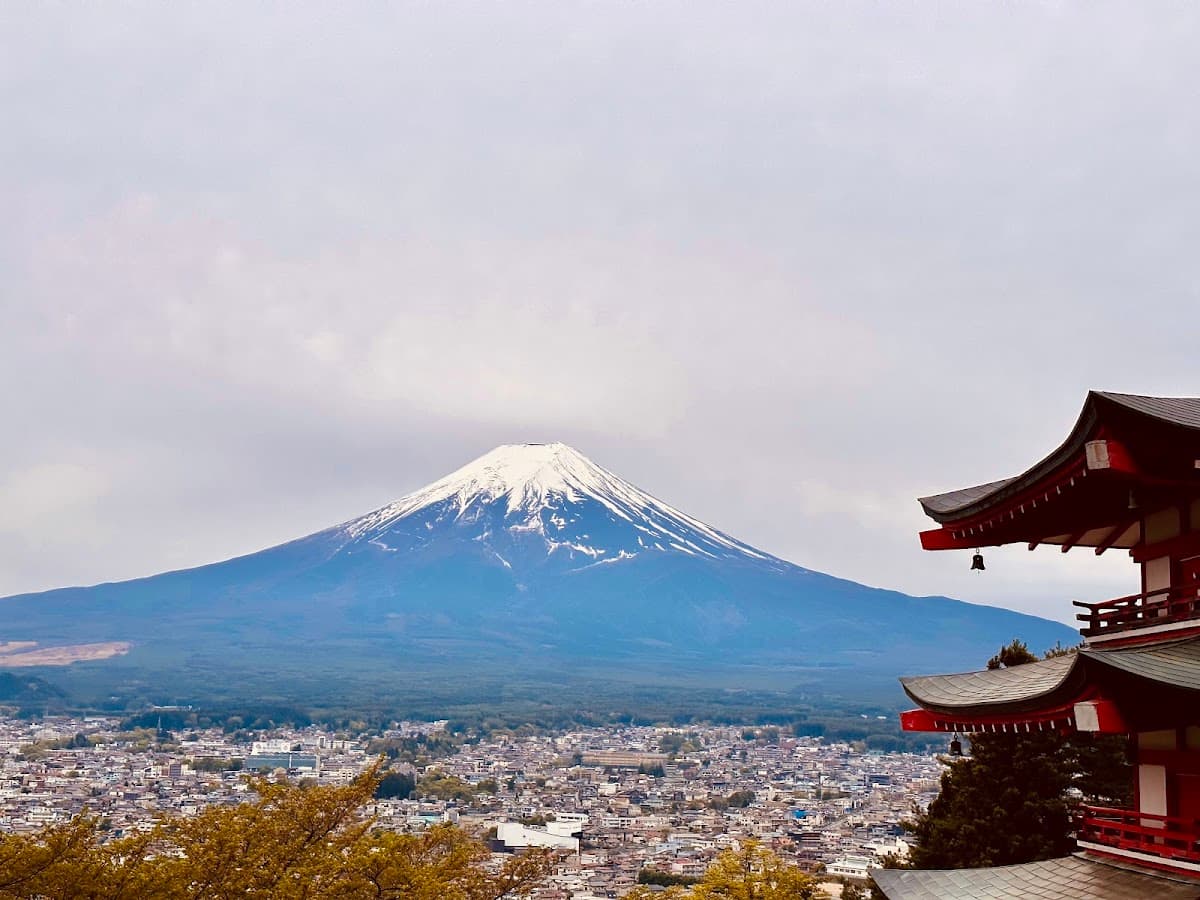
Mount Fuji
Japan's sacred peak and ultimate symbol of natural perfection
Mount Fuji isn't just Japan's tallest peak—it's the country's spiritual heart. This perfectly symmetrical volcano has drawn pilgrims and adventurers for over a thousand years, and one look at its snow-capped cone rising 12,389 feet above the surrounding plains explains why. But here's what the postcards don't tell you: climbing Fuji is tough. Really tough. The air gets thin, the weather turns nasty without warning, and your legs will feel like concrete by hour six. Still, watching sunrise paint the crater rim gold while all of Japan spreads below? That's worth every grueling step up the volcanic scree.
Best Months
JUL – SEP
~26°C · high crowds
Culture & Context
SACRED PILGRIMAGE, ONCE ONLY
Fuji is not just a mountain. It's a Shinto sacred site that has been the object of pilgrimage worship for centuries, home to the goddess Konohanasakuya-hime. Shrines and torii gates line every trail.
That's worth knowing before you treat the whole thing like a fun fitness challenge. There's an old Japanese proverb that sums up the relationship people have with it perfectly: 富士山に一度も登らぬバカ、二度登るバカ — "A fool never climbs Fuji; a fool climbs it twice." Climb it once for the experience and the sense of achievement.
But going back? Locals think you've lost the plot. The mountain was inscribed as a UNESCO World Heritage Cultural Site in 2013, partly for its artistic and spiritual influence.
Hokusai's Thirty-Six Views of Mount Fuji helped introduce it to the world. Even now, the mountain shapes everything in the surrounding towns — the architecture, the festivals, the food. Fujiyoshida's udon is famous.
Wasabi grown from Fuji snowmelt has its own devoted fanbase. And if you go in summer and don't get the summit views (roughly a 30–40% success rate on clear days), that's just Fuji being Fuji. The mountain hides behind clouds constantly, especially mornings in summer.
October through February gives you the sharpest, clearest views.
Local Customs
PACK OUT ALL TRASH
No trash cans exist on any trail. Everything you carry up, you carry back down. Pack a dedicated garbage bag and attach it somewhere accessible — the wind can grab loose packaging without warning..
Toilet donation boxes are at every mountain restroom. Put in ¥100–¥300. These composting toilets are expensive to maintain at altitude and that fee keeps the system functional..
On the Yoshida Trail, there's a tradition of ringing a bell at each station to pray for safe passage. It costs a small fee at some stations. Locals take it seriously — join in if you want to..
Keep noise low in mountain huts after dark. Other climbers wake at 2–3am for summit sunrise. A phone alarm going off at full volume at 1am in a shared sleeping space is the kind of thing that follows you in reviews..
Smoking is prohibited on all climbing routes. No exceptions.. Don't pick wildflowers, pocket rocks, or take anything from the mountain.
Fuji is a World Heritage site and stripping it of natural materials is both culturally offensive and legally problematic.. Faster climbers pass on the outside — step aside and let people through. Blocking narrow rocky passages for a photo shoot while a line of exhausted people stacks up behind you is considered extremely rude..
At shrines along the trail and at the summit shrine, treat the area with the same quiet respect you'd give any active religious site. Loud behavior near shrine structures is looked down upon.. The proverb 富士山に一度も登らぬバカ、二度登るバカ (baka ni noboru baka) is well-known but only mildly self-deprecating if you've done it twice.
Say it to a local and they'll likely smile and nod.
Safety
ALTITUDE & HYPOTHERMIA RISK
Altitude sickness hits a significant number of climbers on Fuji. Symptoms — headache, nausea, dizziness — can start at the 7th or 8th station. The fix is always the same: slow down, hydrate, rest.
Do not push through serious symptoms toward the summit. Descending is the cure. Even in July and August, summit temperatures can drop to near 0°C before sunrise, and wind chill makes it worse.
Hypothermia is a real risk if you're underprepared. Rangers at the 5th Station trailhead gate can and will turn you back if you show up without proper boots, waterproof rain gear (jacket AND pants), and cold-weather clothing — this is now a formal check in 2026. The 2 PM gate closure is strict.
Without a mountain hut reservation, you cannot pass the gate between 2 PM and 3 AM. Plan your arrival accordingly or book a hut in advance. Budget a minimum of ¥7,000 for hut accommodation if doing a night climb for sunrise.
Mountain rescue in Japan is expensive and not automatically covered by standard travel insurance — look for a policy explicitly covering hiking above 3,000 meters. Fuji is an active volcano (last erupted 1707), and eruption monitoring is ongoing. The Japan Meteorological Agency tracks activity; check official alerts before your trip if there's any news.
Thunderstorms appear without warning on summer afternoons — watch the sky and get below the exposed ridge sections if you see lightning building over the peak.
Useful Phrases
Money-Saving Tips
- 1.Mountain hut water costs ¥500 per bottle—bring a water filter and refill from streams below 8th station
- 2.Pack your own food rather than buying at mountain huts where simple meals cost ¥1,500-2,000
- 3.Take the highway bus from Shinjuku to Kawaguchiko (¥1,800) instead of expensive train connections
- 4.Rent climbing gear in Kawaguchiko rather than buying—full kit rental costs ¥3,000 vs ¥15,000+ to buy
- 5.Climb on weekdays when mountain hut prices drop by 20-30%
- 6.Buy a Fuji climbing stick at the 5th station for ¥1,000—collect stamps at each station for ¥300 each as a cheaper souvenir than gift shop items
Travel Tips
- •Start your climb around 10 PM to reach the summit for sunrise—headlamps are mandatory for night climbing
- •Acclimatize by spending a day hiking around the Fuji Five Lakes before attempting the summit
- •Download offline maps—cell service is spotty above the 7th station
- •Bring cash only—no credit cards accepted at mountain huts or stations
- •Pack altitude sickness medication and know the symptoms—headaches and nausea are early warning signs
- •The descent is harder on your knees than the ascent—trekking poles are essential for the loose volcanic scree
- •Book mountain huts in advance during July-August or risk sleeping outside in freezing temperatures
- •Check weather forecasts obsessively—mountain weather changes in minutes and can turn deadly
Frequently Asked Questions
Explore Mount Fuji
BUILD YOUR MOUNT FUJI PLAN
Insider picks, smart timing, and a plan ready when you are.