Lalibela
Ethiopia's mystical city of rock-hewn churches and pilgrimage
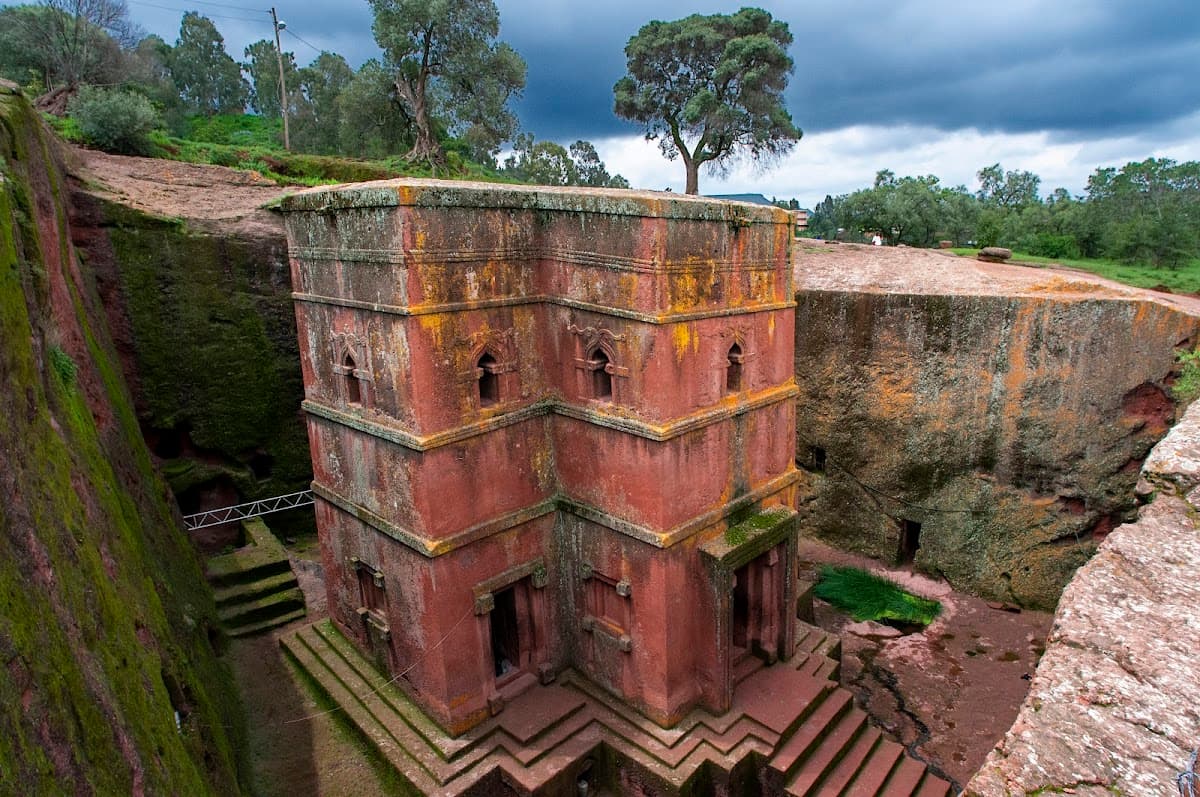
Eight hundred years ago, King Lalibela had a vision. He wanted to build a New Jerusalem in the Ethiopian highlands. What he created instead was something more remarkable — eleven churches carved entirely from solid volcanic rock, each one sunk into the earth like a secret waiting to be discovered.
Today, Lalibela draws pilgrims and travelers to what feels like the edge of the world. This isn't your typical tourist destination. Here, white-robed worshippers still gather for dawn prayers in churches that took decades to carve. The smell of frankincense drifts through stone corridors that echo with centuries of devotion.
But here's the thing — Lalibela tests you. The altitude sits at 2,500 meters. The roads are rough. The facilities are basic. And that's exactly why it rewards the travelers who make the journey.
Best Months
JAN · FEB · MAR · OCT · NOV · DEC
~24°C · moderate crowds
Culture & Context
CARVED FAITH, LIVING PILGRIMAGE
Lalibela sits at 2,600 meters in northern Ethiopia's Amhara highlands and has about 15,000 residents. The town is built around 11 rock-hewn churches carved directly from pink volcanic rock between the 12th and 13th centuries. These aren't ruins.
Every morning around 5:30am, white-robed pilgrims fill the trenches and tunnels, chanting. Incense smoke hangs in the air permanently. The story goes that King Lalibela carved them by hand to create a New Jerusalem, though historians suspect several centuries of builders did the work.
Doesn't make them less astonishing. Standing at the rim of the pit around Bet Giyorgis — a cross-shaped monolith sunk 12 meters into the earth — is one of those genuinely hard-to-process moments. Religion shapes every aspect of life here.
Most residents are Ethiopian Orthodox Christians, and festivals drive the town's entire calendar and economy. Don't visit expecting a living museum. This is an active pilgrimage site where tourists happen to show up, not the other way around.
Local Customs
SHOES OFF, RESPECT FIRST
Remove shoes before entering every church — no exceptions, no shortcuts. Cover shoulders and knees at all religious sites, regardless of the heat. Both men and women..
Ask permission before photographing people. Many locals will say yes, but assuming is disrespectful.. Photography near Tabots (the Ark of the Covenant replicas) is restricted or outright forbidden during ceremonies.
Follow the priest's lead.. Eat with your right hand. This matters at communal meals..
Greet with a handshake; some locals place their right hand on their heart to signal warmth. Mirror it back.. Bargain in markets, but do it good-naturedly.
Starting at half the asking price is normal.. Don't accept unsolicited 'free' coffee invitations from strangers outside the churches — you'll be handed a bill at the end.. Tipping is not widely expected but appreciated.
10-15% for genuinely good service is fine.
Safety
WATCH YOUR WALLET
Lalibela is considered one of the safer destinations in Ethiopia and violent crime against tourists is rare. But scams are everywhere and not subtle. Fake guides cluster around the church entrances offering free tours, then demand large cash tips at the end.
Always book licensed guides through your hotel or a reputable operator. Fake charity collectors and overcharging taxi drivers are common. Negotiate prices before getting in any vehicle.
Altitude is a genuine concern at 2,600 meters — take at least a day to acclimate before scrambling through tunnel networks or attempting hikes toward Asheton Maryam. Don't drink tap water. The road from the airport has military checkpoints but tourists are not harassed.
The broader Amhara region has experienced political instability in recent years, so check your government's travel advisory before departure and re-check closer to your travel date. As of early 2026, flights to Lalibela are operating normally.
Getting Around
FLY IN, WALK EVERYWHERE
Ethiopian Airlines flies daily from Addis Ababa to Lalibela (LLI) — roughly 1 to 1.5 hours in the air, round-trip fares typically $150-300 USD. Book early.
Flights sell out weeks before Genna and Timkat. The airport is 25km from town; arrange a hotel transfer in advance or bargain for a shared minibus taxi (about $10-20 USD, 30-45 minutes). There is no reliable overland public transport from Addis Ababa or other major cities — the bus journey takes two days and is genuinely rough going.
Within Lalibela, everything at the church complex is walkable, but the stone paths and uneven terrain mean proper shoes are non-negotiable. Tuk-tuks operate in town for short hops.
Useful Phrases
Itineraries coming soon
We're working on adding amazing itineraries for Lalibela. In the meantime, try the app to create your own!
Money-Saving Tips
- 1.Entry to the church complex costs $50 USD for foreigners — pay in cash at the gate
- 2.Local guides charge 500-800 birr per day, split the cost with other travelers
- 3.Camera permits cost 300 birr extra, video permits are 500 birr
- 4.Budget hotels start around 800 birr per night, mid-range options run 1,500-2,500 birr
- 5.Meals at local restaurants cost 150-300 birr, hotel restaurants charge 400-600 birr
- 6.Ethiopian Airlines flights from Addis cost $200-300 round trip, book early for better prices
- 7.Bajaj rides around town cost 20-50 birr, negotiate before getting in
- 8.Bring small bills — most vendors don't have change for large notes
Travel Tips
- •Visit between October and March for dry weather and clear skies
- •Start your church visits at 6 AM to catch morning prayers and avoid crowds
- •Bring a headlamp for the dark tunnel sections between churches
- •Pack altitude sickness medication — Lalibela sits at 2,500 meters
- •Dress conservatively: cover shoulders and knees, remove shoes in churches
- •Download offline maps — cell service is spotty around the church complex
- •Bring cash in small bills — ATMs are unreliable and most places don't accept cards
- •Book accommodation well in advance, especially for January's Timkat festival
- •Hire a local guide — they know shortcuts and can arrange access to restricted areas
- •Respect photography rules — no flash inside churches, and some areas are completely off-limits
Frequently Asked Questions
Explore Lalibela
BUILD YOUR LALIBELA PLAN
Insider picks, smart timing, and a plan ready when you are.