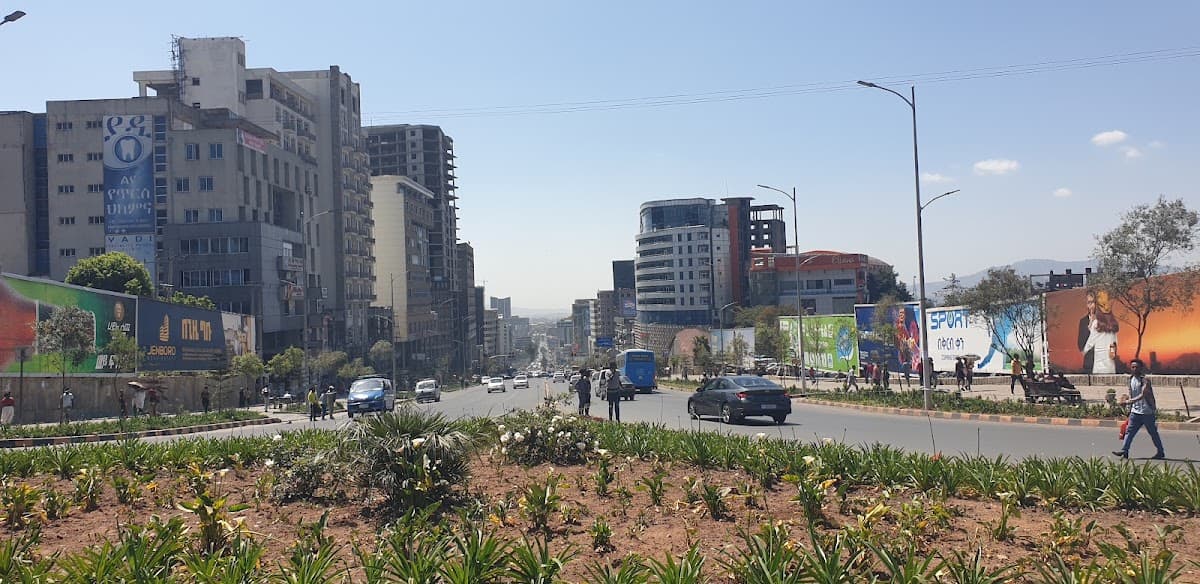
Addis Ababa
Ethiopia’s highland capital of culture
Addis Ababa sits at 2,400 meters above sea level, making it one of the world's highest capitals. But altitude isn't the only thing that sets this city apart. This is where coffee was born, where Lucy's bones rest in the National Museum, and where injera bread becomes an art form. The city pulses with energy — street vendors hawk fresh roasted coffee beans while traditional music spills from doorways. You'll find Orthodox churches standing next to modern glass buildings, and the largest market in Africa buzzing with life just blocks from quiet cafes serving the world's best coffee. Here's the thing: Addis isn't trying to be anything other than authentically Ethiopian, and that's exactly what makes it extraordinary.
Best Months
MAR · APR · MAY · SEP · OCT · NOV
~25°C · moderate crowds
Culture & Context
AFRICA'S POLITICAL SOUL
Addis Ababa translates to "New Flower" in Amharic — and it sits at 2,355 meters above sea level, making it the fourth-highest capital city in the world and the highest in Africa. That altitude is the first thing most visitors feel in their lungs.
The city is the political capital of Africa in a real sense. The African Union headquarters is here. So is the UN Economic Commission for Africa. Over 120 international missions and embassies operate from Addis, which gives it a cosmopolitan layer alongside the deeply local Ethiopian Orthodox culture that runs through everyday life.
The Ethiopian Orthodox Church shapes the calendar, the diet, and the rhythm of the city in ways that are visible on every street corner. Fasting days (Wednesday and Friday, plus extended Lenten periods) are widely observed — many restaurants serve only vegetarian food on these days without advertising it. Ask before ordering meat.
Here's the thing about coffee: Ethiopia is where coffee was discovered, and Ethiopians take that seriously. The buna ceremony is not a tourist activity — it's how friendships are maintained, business is discussed, and community is built. Being invited into one is a genuine mark of trust. Showing up with a few words of Amharic goes an enormous way. Locals aren't used to visitors making the effort, and it opens doors that English never will.
Local Customs
COFFEE CEREMONY SACRED
The coffee ceremony (buna) is not optional etiquette — it's a cornerstone of social life. If someone invites you to one, accept. The ceremony has three rounds: abol, tona, and bereka.
Leaving before all three is considered rude. The coffee is served black and sweet in tiny cups. Taste it first before asking for sugar adjustments, out of respect for the host's preparation..
Don't point at people or objects with a single finger. Use your whole hand or gesture with your chin instead. It reads as disrespectful here..
Always pass and receive objects with your right hand, or both hands. The left hand is considered unclean in many Ethiopian contexts.. Dress modestly, especially near religious sites.
Women need a headscarf and long skirt to enter Orthodox churches. Everyone removes shoes at the entrance. The Orthodox Church is central to daily life here — treat its spaces accordingly..
When offered food at someone's home, expect to be asked multiple times. Declining once is actually part of the dance — a show of politeness, not a real refusal. Accept on the second or third offer.
Refusing entirely is genuinely rude.. Elders get priority. Stand when someone older or of higher status enters a room.
Greet elders first in any group setting.. The Ethiopian calendar has 13 months and runs about 7–8 years behind the Gregorian calendar. Ethiopian time also runs differently — what locals call 1 o'clock is 7 AM by global standards.
Always double-check meeting times and confirm which clock system is being used.
Safety
WATCH YOUR BELONGINGS
Addis Ababa itself is stable, and the US State Department puts it at a Level 2 (Exercise Increased Caution) — significantly safer than most of the country outside the capital, which carries Level 3 or Level 4 advisories due to ongoing armed conflict in regions like Tigray, Amhara, and border areas. Do not travel outside Addis without verified, current local guidance. The Tigray situation in particular remained unresolved into 2026.
In the city: petty theft and pickpocketing are the main risks. Merkato, Meskel Square, Bole Airport, and any crowded tourist area are where it happens. The classic distraction-and-grab technique is common — one person engages you while a second empties your pockets. Keep a crossbody bag with a zipper, leave valuables at the hotel. Don't walk alone after dark in poorly lit areas. Bole and Kazanchis have decent nighttime security; Merkato at night is a different story.
Watch for stray dog packs near Meskel Square and Churchill Avenue after dark — they can be aggressive. Police checkpoint presence has increased near government buildings and the airport due to regional tensions; carry your passport or a copy at all times.
For transport: use the RIDE or ZayRide apps (Uber doesn't operate here). If taking a blue taxi, agree on the fare before you get in — meters exist but negotiating upfront is the standard practice. Don't share a taxi with strangers.
There is essentially no malaria risk inside Addis Ababa due to the elevation (2,355m above sea level), but altitude sickness is real for the first day or two. You'll get winded faster than expected. Healthcare is limited — only private hospitals offer reasonable basic care. Get comprehensive travel insurance before you go.
Getting Around
RIDE APP ESSENTIAL
Getting around Addis is an exercise in patience. Roads are chaotic, pedestrian infrastructure is poor (around 65% of roads lack proper sidewalks), and traffic jams are a daily fact of life.
The light rail (East-West Green Line and North-South Blue Line) covers 34km of track for around $0.30 per journey. It's the first light rail in sub-Saharan Africa, which is genuinely impressive — but by 2025, only about half the original fleet was operational due to spare parts shortages. Power outages cause delays. Still useful for getting between Megenagna, Bole, and the city center quickly when it's running. Crowded during peak hours.
RIDE and ZayRide are the local ride-hailing apps. Download both before you land. These are far more reliable than flagging blue taxis on the street, and pricing is transparent. Most drivers have some English. Blue taxis (metered cabs) cost $3–8 for most city journeys, but always negotiate the fare before you get in.
Minibuses are the cheapest option ($0.20–0.50) and are how most Addis residents get around, but routes are confusing and they're frequently overcrowded. Not recommended for first-time visitors.
Bole International Airport (ADD) is a major African hub. Ethiopian Airlines operates direct flights from much of Africa, Europe, Asia, and North America. Most visitors arrive here and it functions as the gateway for the rest of the country too.
Useful Phrases
Where to Stay in Addis Ababa
1 recommended properties
Itineraries coming soon
We're working on adding amazing itineraries for Addis Ababa. In the meantime, try the app to create your own!
Money-Saving Tips
- 1.ATMs are common in Bole and city center, but carry cash backup — many places don't accept cards
- 2.Negotiate taxi fares upfront; locals pay 50-100 birr for short rides
- 3.Street food costs 20-50 birr per meal, while restaurant meals run 200-500 birr
- 4.Coffee ceremonies at local houses cost 30-50 birr vs 150+ birr at tourist spots
- 5.Buy Ethiopian coffee beans at Merkato market for 300 birr/kg vs 800+ birr at hotels
- 6.Local buses cost 5 birr vs 100-200 birr for taxis covering similar distances
Travel Tips
- •Pack layers — mornings are cool, afternoons warm, and altitude makes temperature swings dramatic
- •Bring altitude sickness medication; the 2,400m elevation affects many visitors initially
- •Learn basic Amharic greetings — 'Selam' (hello) opens doors and gets smiles
- •Ethiopian calendar runs 7-8 years behind Western calendar and has 13 months
- •Tipping 10% is standard at restaurants; round up taxi fares to nearest 10 birr
- •Dress modestly when visiting churches — cover shoulders and knees
- •Download offline maps; GPS can be unreliable and street signs are in Amharic
- •Bring hand sanitizer and tissues — public restrooms vary widely in quality