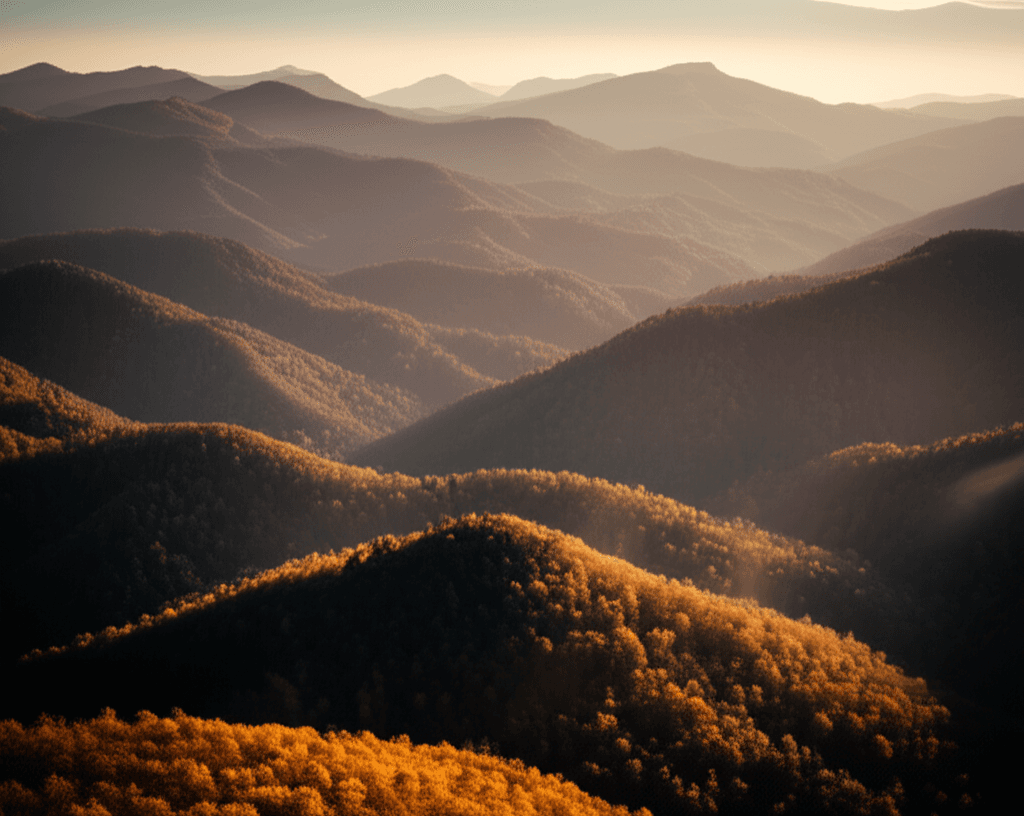
Great Smoky Mountains
America's most visited national park with misty mountain magic
The Great Smoky Mountains pull in over 12 million visitors each year, making it America's most visited national park. And honestly? They've earned that title. Those signature blue-gray mists rolling over ancient peaks create something special — a landscape that feels both wild and welcoming.
Here's what makes the Smokies different: you don't need permits for most trails, the park straddles two states (Tennessee and North Carolina), and you'll find everything from easy waterfall walks to challenging summit hikes. The mountains hold stories too — remnants of Appalachian settlements, old-growth forests that survived logging, and black bears that treat the park like their personal playground.
Look, the crowds can be intense, especially around Gatlinburg and Pigeon Forge. But venture beyond the main tourist strips and you'll discover why these mountains have captivated people for generations. The diversity here is remarkable: over 1,500 species of flowering plants, 200 bird species, and some of the best fall colors on the East Coast.
Best Months
APR · MAY · SEP · OCT
~24°C · high crowds
Culture & Context
APPALACHIAN CHEROKEE CROSSROADS
The Smokies sit at the crossroads of Appalachian and Cherokee heritage, and both leave real marks on the culture here. The Tennessee side carries a deep Scots-Irish mountain identity. Think bluegrass, moonshine, old-time storytelling, and a fiercely independent streak.
The North Carolina side, anchored by Cherokee, is the capital of Cherokee culture in the United States, and that history isn't just for tourists. It's living. Place names across the park — Oconaluftee, Cataloochee, Nantahala — are all Cherokee in origin.
Moonshine is genuinely part of the local story, not just a novelty. Ole Smoky Distillery and Sugarlands in Gatlinburg are actual working operations with roots in generations of mountain distilling. Dolly Parton is not just a celebrity here — she's practically civic infrastructure, with Dollywood serving as one of the region's biggest employers.
People take that seriously. And the park itself carries unusual weight: it was established in the 1930s partly through public donations, and locals still speak of it with a kind of ownership that you don't find at most national parks.
Local Customs
BEARS FIRST ALWAYS
Never feed a bear. It's a federal offense with fines up to $5,000 and potential imprisonment. A fed bear becomes a dangerous bear — the park has had to euthanize conditioned bears before.
People take this very seriously.. Don't cause a 'bear jam.' When a bear appears near a road, some drivers just stop in the middle of traffic.
Rangers hate it. It's dangerous and slows emergency response. Slow down, stay in your car, keep moving..
Download your trail maps offline before you leave your hotel. There are no cell towers inside the park. Getting lost without a map is very real and people do get hurt..
Say 'y'all come back now' when leaving a local shop and you'll get a genuine smile. It's not ironic here — it's just how people talk and what they mean.. Moonshine tasting is a real local activity, not just a tourist trap.
Ole Smoky and Sugarlands in Gatlinburg both let you sample free. Buy the blackberry or apple pie if you're new to it.. Cades Cove has 'Vehicle-Free Days' where the Loop Road closes to cars and opens to cyclists and walkers.
Check the schedule before driving out there — showing up on one of those days without a bike is a long walk.. On narrow mountain roads, the uphill car typically has right-of-way. If you meet someone coming the other direction on a one-lane stretch, the downhill driver backs up.
That's just how it works.. Check trail closure alerts on the NPS website (nps.gov/grsm) before any backcountry hike.
In spring 2026, both Ramsey Cascades Trail and Abrams Falls Trail had closures after bear incidents, including a visitor getting bitten.
Safety
BEAR COUNTRY RULES
Bears are the real safety story here. The park holds roughly 1,500 to 1,900 black bears — about two per square mile — making it one of the densest black bear populations in the eastern US. In April 2026, rangers responded to multiple incidents at Ramsey Cascades Trail (a bear chased a group and stole backpacks) and Abrams Falls Trail (a visitor was bitten after entering a closed area).
Both trails temporarily closed. Spring is especially active because mother bears emerge from dens with cubs searching for food. The official rule: stay at least 50 yards (150 feet) from bears at all times.
Violating this can result in fines and arrest. Never feed a bear — it's a federal offense with fines up to $5,000. If a bear approaches you, get big, raise your arms, shout, and slowly back away.
Running triggers a chase response. Report unusual bear behavior to rangers at 865-436-1230. Beyond bears, download offline maps before entering the park.
There is no cell service inside park boundaries. Clingmans Dome Road closes entirely December through March, and Newfound Gap Road can receive up to 69 inches of snow annually with temporary closures. Check nps.
gov/grsm/planyourvisit/temproadclose.htm for current conditions before heading out. Traffic on the Pigeon Forge Parkway and in downtown Gatlinburg gets genuinely terrible during peak season and fall foliage weekends — factor in 30–60 extra minutes for any drive during October.
Getting Around
BRING YOUR CAR
You need a car. Full stop. Rideshare exists but gets frustratingly slow during peak season — long waits, backed-up traffic along the Gatlinburg and Pigeon Forge corridor.
The closest major airport is McGhee Tyson (TYS) in Knoxville, about 45 miles from Gatlinburg's park entrance. Asheville Regional Airport (AVL) is roughly 60 miles from the Cherokee, NC entrance. Nashville (BNA) is a 3.
5-hour drive and worth considering if you want to add a city day. Once you're in the area, use the trolley systems smartly. Pigeon Forge's trolley costs $1 for most routes, $2.
50 for Dollywood service, and a $3 all-day pass covers everything. Park free at Patriot Park and take the trolley straight to Dollywood's entrance rather than paying $25 for Dollywood parking. Trolleys run 8am to midnight, March through early January.
Gatlinburg has its own color-coded trolley network with 100+ stops across town. The Tan Route takes you from downtown into Great Smoky Mountains National Park and back for $2 round-trip (runs June–October). Gatlinburg downtown parking costs $20+ per day.
Inside the park, parking fills up fast at popular trailheads — Laurel Falls and Alum Cave Trail lots are often full by 9am on weekends in summer. Go early or go late.
Useful Phrases
Where to Stay in Great Smoky Mountains
2 recommended properties
Under Canvas Great Smoky Mountains
luxury · Upscale safari-style glamping with a community campfire feel. Think West Elm furnishings inside a canvas tent, live music at the fire pit, and morning yoga on lululemon mats. Social but not rowdy — quiet time starts at 10pm.
Blackberry Farm
ultra-luxury · Refined Southern country estate with serious food-and-wine DNA. Think antiques, rocking chairs, wood-burning fireplaces, and Frette linens — but also a sommelier who can pull from 9,000 wine labels and a chef who grows half your dinner out back. Unpretentious in spirit, extraordinary in execution.
Itineraries coming soon
We're working on adding amazing itineraries for Great Smoky Mountains. In the meantime, try the app to create your own!
Money-Saving Tips
- 1.Skip the Gatlinburg SkyLift ($28 per adult) and hike to Cataract Falls for free mountain views
- 2.Pack lunches instead of eating at tourist restaurants — save $15-20 per person per meal
- 3.Buy a National Parks Annual Pass ($80) if visiting any other national park this year
- 4.Camp at Elkmont ($25/night) instead of staying in Gatlinburg hotels ($150+/night)
- 5.Fill up gas tanks before entering the park — stations inside charge premium prices
- 6.Download offline maps to avoid roaming charges in spotty cell coverage areas
Travel Tips
- •Start popular hikes before 8 AM to avoid crowds and secure parking spots
- •Keep car windows cracked while parked — the humidity can fog up windows completely
- •Bring cash for parking fees at some trailheads — card readers don't always work
- •Check weather at different elevations — it can be 20 degrees cooler at Clingmans Dome
- •Never approach or feed bears — they're wild animals, not photo props
- •Download the NPS Great Smoky Mountains app for offline trail maps and info
- •Wear bright colors during hunting season (fall) if hiking near park boundaries
- •Bring bug spray from April through September — the mosquitoes and ticks are relentless
Frequently Asked Questions
Explore Great Smoky Mountains
BUILD YOUR
GREAT SMOKY MOUNTAINS PLAN
Insider picks, smart timing, and a plan ready when you are.
Start Planning