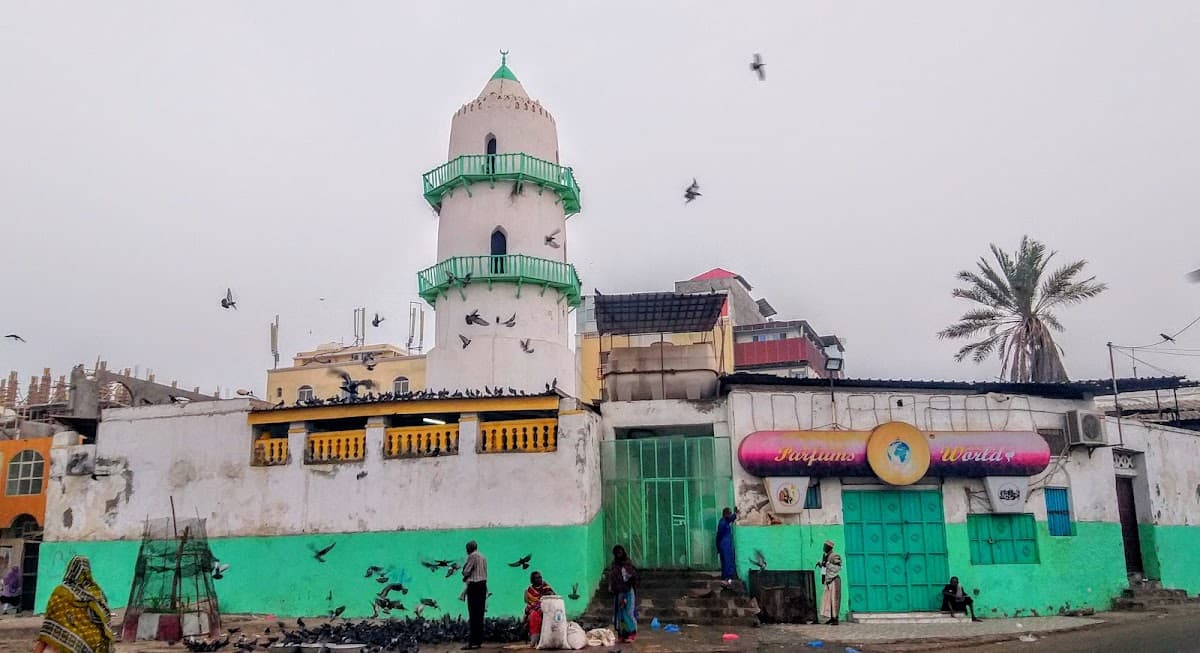
Djibouti City
Strategic Horn of Africa Port at Cultural Crossroads
Most travelers have never heard of Djibouti City, and that's exactly what makes it compelling. This compact capital sits at one of the world's most strategic crossroads, where the Red Sea meets the Indian Ocean and three continents converge. French colonial architecture shares streets with traditional Afar markets. The call to prayer echoes over shipping containers from around the globe.
It's not an easy destination. The heat can be crushing, infrastructure is basic, and tourist amenities are scarce. But if you're looking to experience a place completely untouched by mass tourism, where every interaction feels authentic, Djibouti City delivers something genuinely different.
Local Knowledge
Culture & Context
Djibouti City is the kind of place that stops you mid-step. Camels on the corniche. Khat-chewing locals under parasols. French legionnaires in crisp uniforms. Container ships the size of apartment blocks sliding past the port. All of it happening at once. The city sits where the Red Sea meets the Gulf of Aden, and that geography explains everything: it's been a crossroads for Arab traders, French colonizers, Afar and Somali communities, and now a rotating cast of military personnel from a dozen countries. Islam is the dominant religion and shapes the daily rhythm, from the early adhan echoing over the port to the communal stillness of Friday afternoons. Locals are genuinely warm. But the city doesn't perform for tourists. It runs on port logistics, khat deliveries, and the business of being one of the most strategically located harbors on Earth. Here's the thing: most visitors here are on business or passing through on their way to Somaliland or Ethiopia. If you want an easy, packaged destination, Djibouti will frustrate you. But if you can handle dusty, sun-bleached, and oddly cosmopolitan, you're in for something genuinely singular.
Safety
Djibouti City runs at a low base level of violent crime, which is genuinely good news for East Africa. But petty theft and pickpocketing are real, particularly in crowded markets, bus stations, and around the port. Foreigners are also a known target for price gouging by unlicensed taxi drivers. Keep your phone out of sight in the African Quarter, carry a money belt, and don't flash cash at Les Caisses market. After dark, avoid walking between neighborhoods alone. The African Quarter is best explored in daylight only. The main entertainment districts around Place Menelik and Heron are relatively safe at night if you stick to well-lit areas and taxi between venues. Presidential elections are scheduled for April 2026. Multiple government advisories warn against attending political gatherings during this period, as public assemblies can turn confrontational. Monitor local news. The Canada, Australia, UK, and US governments all advise against travel to the Djibouti-Eritrea border area (within 10km). The Somalia border region is similarly cautioned. Malaria is a genuine health risk. Bring prophylaxis, repellent, and cover up at dusk. Medical facilities in Djibouti City are limited and scarce outside the capital. Comprehensive travel insurance including medical evacuation coverage is not optional. Only drink bottled water.
Getting Around
Djibouti-Ambouli International Airport (JIB) sits about 6km south of the city center. The ride downtown takes 10-20 minutes and costs DJF 1,500-2,500 (roughly $9-15 by taxi). Agree on the fare before you get in. There is no bus from the airport. There is no SIM card shop at the airport either, so sort that out once you reach the city (Bawadi Mall is the easiest spot). Green-and-white taxis are everywhere in the city center but fares are always negotiated, not metered. Price gouging of foreigners via taxi is a documented issue, so ask your hotel to recommend a driver or at least tell you the going rate before you flag one down. Rental cars run $40-90/day and make sense only if you are venturing outside the city. Road infrastructure has improved on major routes, but do not drive outside the capital at night. Roads outside Djibouti City are poorly lit and present real safety risks. The Addis Ababa-Djibouti Railway exists but operates primarily for freight. Walking is viable within the European Quarter and market areas during cooler morning hours. In the afternoon, the heat (regularly above 35°C outside November-March) makes long walks inadvisable. The "weekend" effectively starts Thursday night, with Friday as the quiet day. Plan any logistics-heavy tasks for Saturday through Thursday.
Useful Phrases
Peace be upon you. The standard greeting in a Muslim-majority city. Use it everywhere.
And upon you peace. The standard reply. Learn both halves of this exchange.
Good morning/Good evening in French. French is the language of business and government. You will use this constantly in cafés and shops.
Peace in Somali. A friendly, casual hello used by the Issa Somali community. People light up when a foreigner tries it.
Hello in Afar. A mouthful, but attempting it earns instant goodwill in the African Quarter and at the market.
Thank you in Arabic. Works across the board in markets and restaurants.
How much does it cost? in French. Essential at any market stall.
Thank you very much in French. Warm and appreciated everywhere.
Local Customs
- •Khat (qat) chewing is a major social ritual, especially among men in the afternoon. You will be offered it. Politely declining is totally fine and causes zero offense.
- •Always greet people before getting to business. Walking into a shop or market without a 'Bonjour' or 'Salam' is considered rude.
- •Use your right hand for eating, passing items, and shaking hands. The left hand is considered unclean in Islamic culture.
- •Ask before photographing anyone, and absolutely do not photograph military installations, the port, or government buildings. This is strictly enforced.
- •Dress modestly everywhere outside your hotel pool. For women, covered shoulders and knee-length bottoms are the baseline. For men, avoid shorts in markets and mosques.
- •Many hotels will ask for a marriage certificate if you are checking in as an unmarried mixed-gender couple. It's enforced more at budget spots than at the Kempinski.
- •Friday is the day of rest. Many shops and offices close or operate reduced hours. Plan your market visits for Saturday through Thursday mornings.
- •Tipping is not obligatory but is appreciated. Around 10% in restaurants is appropriate if service charge is not already included.
- •Alcohol is available in licensed hotels and restaurants, but public consumption is frowned upon. Prices are steep because of heavy taxes.
- •When invited into a Djiboutian home, remove your shoes at the door. Accepting tea or coffee is a sign of respect, even if you just take a sip.
Itineraries coming soon
We're working on adding amazing itineraries for Djibouti City. In the meantime, try the app to create your own!
Money-Saving Tips
- 1.Bargain at the Central Market but expect to pay tourist prices - locals know you're not from around here
- 2.US dollars work everywhere and often get better rates than exchanging for Djiboutian francs
- 3.Hotel restaurants charge 3x local prices but guarantee food safety - budget accordingly
- 4.Taxi drivers quote high but settle for 60% of the initial price with patient negotiation
- 5.Import duties make alcohol expensive - a bottle of wine costs $40+ in restaurants
- 6.Internet cafes charge by the hour but hotel WiFi is usually free and faster
Travel Tips
- •Pack electrolyte tablets - the heat and dry air dehydrate you faster than you realize
- •Download offline maps before arriving - GPS signals can be spotty in the old town
- •Learn basic French phrases - English is rare outside international hotels
- •Respect local dress codes, especially when visiting mosques or traditional neighborhoods
- •Carry cash in small denominations - change for large bills can be scarce
- •Book accommodations in advance during cooler months - options are limited
- •Keep your passport accessible - military checkpoints are common due to international bases
Frequently Asked Questions
Explore Djibouti City
Ready to explore Djibouti City?
Get a personalized itinerary in seconds with Takeoff.
Free on iOS. No credit card required.