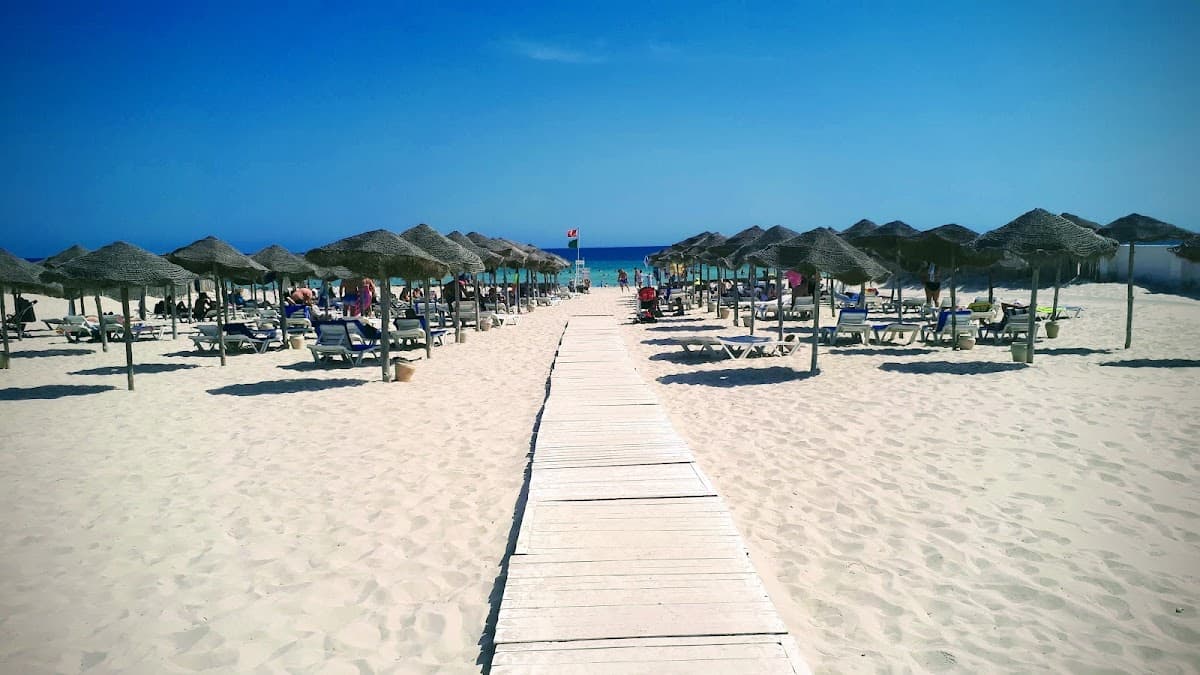
Djerba
Tunisia's Enchanting Island Paradise in the Mediterranean
Djerba floats in the Mediterranean like a forgotten dream. This Tunisian island manages something rare – it's both deeply traditional and completely relaxed. You'll find 2,500-year-old synagogues sitting next to beach clubs, and flamingo-filled lagoons just minutes from bustling souks. The island runs on island time, where three-hour lunches are normal and rushing anywhere feels absurd. Look, this isn't Mykonos or Santorini. Djerba keeps its secrets closer. But that's exactly why it works.
Local Knowledge
Culture & Context
Djerba sits in the southern Mediterranean, technically part of Tunisia but with an identity all its own. It's genuinely one of the most layered places in North Africa. Berber roots, Arab heritage, a Jewish community that's been here for over 2,600 years, Italian traders, Ottoman rulers — all of it left marks. The island is flat as a pancake (514 square kilometers, easy cycling terrain), which somehow makes exploring it feel less exhausting than the cultural density would suggest. About 1,500 Jews still live here today, concentrated mainly around Erriadh, and the El Ghriba Synagogue remains an active place of worship and the site of an annual pilgrimage. Tunisia received UNESCO World Heritage status for the island. French is widely spoken across shops, restaurants and hotels. English gets you by in tourist zones. But here's the thing: the local spoken language is Derja — a fascinatingly compressed mix of Arabic, Berber, French, Italian, and Turkish that even native Egyptian Arabic speakers find tricky to follow. One word of it in a souk and you'll get a much better price. The island runs on its own rhythm. Shops close between 1pm and 4pm for siesta, then reopen until 8pm. Don't fight it. Plan lunch accordingly.
Safety
Djerba is one of the safer spots in North Africa, and its island geography means access is easier to control. Violent crime against tourists is uncommon. The realistic threats are petty: taxi overcharging (agree the price before getting in, or use Bolt), souk vendors quoting tourist prices (start negotiations at half the ask), and unofficial 'guides' offering unsolicited tours near the synagogue and port. Use official guides only for organized excursions. The El Ghriba Synagogue has been the target of serious attacks twice — a 2002 al-Qaida truck bombing killed about 20 people, and in May 2023 a national guardsman shot and killed five people near the site during the annual pilgrimage. Tunisian authorities have significantly increased security around the synagogue and at island entry points since then. Be aware of your surroundings near major tourist attractions, and avoid isolated unlit roads at night. The border areas with Libya (southeast) and the desert south of Remada carry higher risk — these are nowhere near Djerba, but worth knowing if you're planning a broader Tunisia trip. Drink bottled water: tap water is fine for brushing teeth but can cause stomach upset. Hospitals and clinics are concentrated in Houmt Souk (Sadok Mokaddem Hospital on Avenue Habib Bourguiba). Some pharmacies operate 24/7 on rotating schedules. Travel insurance with medical evacuation is strongly recommended.
Getting Around
Getting there: Djerba-Zarzis International Airport (DJE) is on the west side of the island, near Mellita. Direct flights operate from multiple European cities. Car rental desks are at the airport — economy cars from €19/day for longer stays, €25–35/day for a week, typically including full insurance and unlimited mileage. On the island: renting a car is genuinely the best move if you're staying outside the tourist zone or want to explore Guellala, Erriadh, and the south coast properly. The island is completely flat so no 4x4 needed — a small hatchback works fine. Bicycles are practical around Midoun and Tezdaine. Taxis are plentiful but negotiate before you get in. Bolt (the app) operates here and bypasses the negotiation entirely. Public buses exist but are infrequent outside town centers. Horse-drawn carriages (caleches) are available in some tourist areas for slower sightseeing. To the mainland: two options. The free ferry from Ajim (southwest Djerba) to Jorf takes 15 minutes and runs regularly. Or drive across the Roman causeway (restored) at El Kantara toward Zarzis in the southeast — it connects directly to the main road network. From the mainland you can reach Tataouine and Matmata (Berber villages) or continue to Tozeur and the Sahara. A flight Djerba-Tozeur takes 45 minutes and runs around 200–300 TND if you want a Sahara day trip without the long drive. Internet: local SIMs from Ooredoo, Tunisie Telecom, or Orange — available at the airport, ID required for activation. Download speeds average 20–30 Mbps, which is workable but not fast.
Useful Phrases
Hello / Peace be upon you — the everyday greeting you'll use constantly
Goodbye — used when leaving a shop or parting ways
Thank you / Bless you — literally 'life to you,' this is the local thank-you that gets a genuine smile. Shukran also works but feels more formal.
Delicious — say this after eating and watch the cook light up
How are you? — the casual check-in. The expected reply is 'Alhamdulillah' (thanks be to God), said as one word
How much does this cost? — essential for any souk visit
It's a bit expensive — your polite counter-offer opener in any price negotiation
Excuse me / forgive me — use to get someone's attention or to apologize
Local Customs
- •Bargain in the souks — always. Start at roughly half the asking price and work up. Supermarkets and restaurants with menus have fixed prices, but anything in the market is negotiable.
- •Greet people with a smile and a handshake. It sets the tone. Tunisians place real value on warm greetings, and skipping them can read as rude even in brief transactions.
- •Remove your shoes before entering someone's home. This is non-negotiable and not asking will cause quiet offense.
- •Tipping is appreciated but not mandatory. Leave small change rather than a large percentage — 1-2 TND on a coffee, maybe 5 TND on a meal, is perfectly appropriate.
- •Don't rush through meals if you're a guest. Eating quickly signals you didn't enjoy it. Meals are social events here, not fuel stops.
- •Modest dress matters once you leave the beach zone. Bikinis and tank tops are fine on Sidi Mahrez beach and in resort areas, but covering shoulders and knees in Houmt Souk, Erriadh, and Guellala shows basic respect.
- •Don't photograph people — especially locals, security personnel, or religious sites — without asking first. The answer is usually yes, but ask.
- •Public displays of affection between couples are frowned upon outside hotel zones. Keep it low-key.
- •Tunisia is a Muslim-majority country. During Ramadan the island shifts pace dramatically: quiet days, intense late-night street life. Plan your meals around iftar timing if you visit then.
- •Overcharging by taxis is common in tourist areas. Always agree on the price before getting in, or insist on the meter. The app Bolt works in Djerba and eliminates the negotiation entirely.
Itineraries coming soon
We're working on adding amazing itineraries for Djerba. In the meantime, try the app to create your own!
Money-Saving Tips
- 1.Negotiate taxi fares before getting in – drivers expect it and often quote inflated tourist prices initially
- 2.Buy pottery directly from workshops in Guellala village rather than souk shops to save 30-40%
- 3.Local buses cost only 2 dinars between towns versus 10-12 dinars for taxis
- 4.Eat at restaurants away from the main tourist beaches – prices drop significantly just a few blocks inland
- 5.Many hotels include airport transfers in their rates, so ask before booking separate transport
- 6.Friday markets in Midoun offer better prices on local products than daily tourist markets
- 7.Bring cash – many smaller restaurants and shops don't accept cards, and ATM fees add up quickly
Travel Tips
- •Download offline maps before arriving – cell coverage can be spotty in remote beach areas
- •Pack reef-safe sunscreen – the Mediterranean sun reflects intensely off white sand beaches
- •Learn basic French phrases – more useful than Arabic for tourist interactions
- •Respect local customs when visiting religious sites – cover shoulders and legs at synagogues and mosques
- •Rent a car for maximum flexibility – the island is small but public transport is limited
- •Bring a light jacket for evenings, even in summer – sea breezes can cool things down quickly
- •Try to time visits to avoid French school holidays when the island gets significantly more crowded
Frequently Asked Questions
Explore Djerba
Ready to explore Djerba?
Get a personalized itinerary in seconds with Takeoff.
Free on iOS. No credit card required.