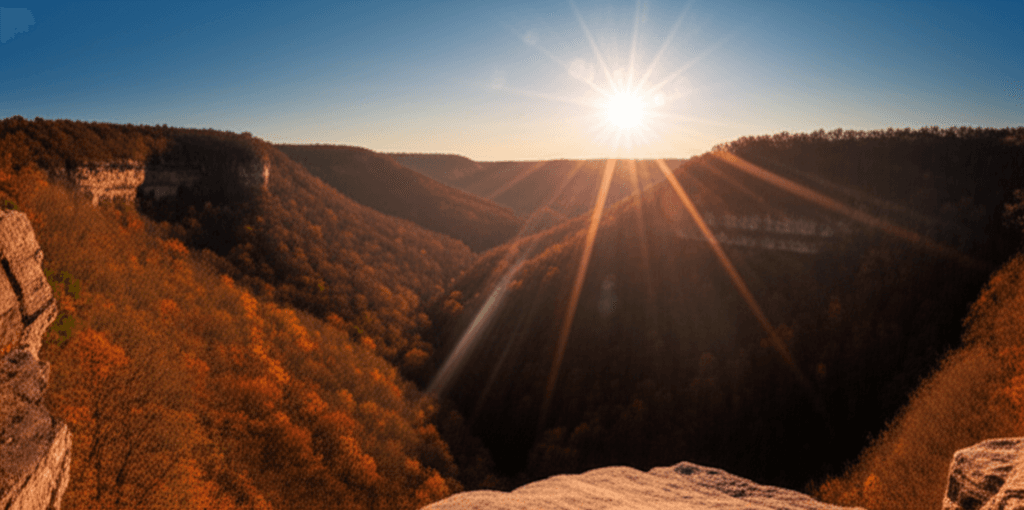
Cumberland Gap
Historic mountain pass where pioneers crossed into wilderness
Cumberland Gap sits where Kentucky, Tennessee, and Virginia meet, marking the spot where Daniel Boone led thousands of settlers through the Appalachian Mountains. Today, this National Historical Park offers 85 miles of hiking trails, Civil War battlefields, and some of the most dramatic mountain views in the Southeast. The town of Cumberland Gap itself is small—population 229—but it punches above its weight with decent lodging options and surprisingly good mountain food. Look, this isn't Gatlinburg with its tourist traps. It's the real deal: authentic Appalachian culture, serious hiking, and history you can actually touch.
Local Knowledge
Culture & Context
Cumberland Gap sits at the exact corner where Kentucky, Virginia, and Tennessee press together in the Appalachian Mountains. The town itself is tiny. Population: about 315 people. But the pass above it once moved an estimated 200,000 to 300,000 settlers westward before 1810. That's the whole deal here. This was America's original I-40, the Wilderness Road, cut by Daniel Boone in 1775. Today the downtown along Colwyn Avenue is almost entirely on the National Register of Historic Places, a handful of 1890s storefronts that somehow never got bulldozed. The 1996 Cumberland Gap Tunnel rerouted US 25E underground, which actually pulled heavy traffic away from town. Quiet now. Arguably too quiet on a Tuesday in May. The surrounding 24,000-acre national park spans three states and holds 85 miles of trails, a cave system, and a ghost town called Hensley Settlement that was occupied until 1951 and now feels like someone just walked out and never came back. Appalachian culture is the baseline here: folk music, storytelling, crafts, and a community that runs on genuine small-town rhythms, not tourism performance.
Safety
The park itself is low-risk for most visitors. But a few things to know. Black bears, bobcat, and white-tailed deer are all active in the park. Treat this like real backcountry: store food properly, don't approach wildlife. The Pinnacle Overlook road closes in inclement weather or when ice forms, so check before driving up. Gap Cave tours involve 183 steps across four levels. No children under five allowed in the cave, and capacity is limited. Book ahead by calling (606) 248-2817 up to one month in advance. Hensley Settlement tours via shuttle had been cancelled at some point due to road conditions, so confirm availability before building your trip around it. The shortest hike to Hensley is a 9.2-mile round trip if the shuttle isn't running. The town is generally safe and walkable. The broader Appalachian region has some economic challenges, but Cumberland Gap itself draws respectful visitors and holds a quiet, community-oriented atmosphere.
Getting Around
You need a car. Full stop. Zero percent of commuters use public transit here. The nearest airport with real options is McGhee Tyson (TYS) in Knoxville, Tennessee, about 60 miles south. The town sits right off US 25E. Getting to Pinnacle Overlook requires driving a 4-mile winding road to the top, and that road closes any time there's ice or bad weather. The Cumberland Gap Tunnel (built 1996) rerouted through-traffic underground, which means you won't accidentally drive through town at highway speed. To access different sections of the park you may need to go back through the tunnel and approach from a different direction. Plan that into your day. Some parking areas at the overlook have reportedly been fitted with high-pitched deterrent sounds, which a few visitors have found annoying. Not a dealbreaker, just odd.
Useful Phrases
A small valley or hollow between mountains. 'They live up in the holler' means they live in one of those narrow mountain coves. Used constantly in real conversation, not as a put-on.
About to do something. 'I'm fixin' to head up to the overlook' means you're about to leave. Common throughout Appalachian Tennessee and Kentucky.
Think, suppose, or figure. 'I reckon the trail's about two miles' is a completely normal sentence here. Works as a replacement for 'I think' in almost any context.
Appalachian double modal meaning 'might be able to.' 'You might could make it to Hensley and back before dark' is a genuine sentence you'll hear from a ranger or local. Don't correct it.
Over there, usually in the middle distance. 'The trailhead's just yonder past the parking lot' means it's not far, go that direction. Still used naturally, not ironically.
Referring to something on the other side of the ridge, which in the tri-state context could mean literally a different state. Context-dependent but you'll hear it when locals describe going to Middlesboro from the Tennessee side.
Local Customs
- •Appalachian hospitality is real here, not performed. Locals will genuinely stop to talk. Let them.
- •Bluegrass and old-time music are not background noise in this region. They're a living tradition. FolkFest and the various festivals treat music as cultural heritage, not entertainment product. Listen accordingly.
- •The pace is slow on purpose. Don't roll in expecting brunch at 10am with a wait list and a QR code menu. This is a coffee shop, antique shop, pack a lunch kind of place.
- •Conservative community values are the norm. Be respectful of local norms and you'll be treated warmly.
- •Trail etiquette matters. 85 miles of trails means you'll encounter other hikers. Yield on switchbacks, pack out everything.
- •Weekend visitors are warmly welcomed, but weekday visits can feel like you have the whole town to yourself. Some antique shops only open when they feel like it. Call ahead if something specific is your reason for coming.
Itineraries coming soon
We're working on adding amazing itineraries for Cumberland Gap. In the meantime, try the app to create your own!
Money-Saving Tips
- 1.Entry to Cumberland Gap National Historical Park is completely free—no entrance fees, no parking fees, nothing
- 2.Pack your own lunch and snacks; there's only one restaurant in town and prices reflect the lack of competition
- 3.Stay Sunday through Thursday for lower hotel rates—the Holiday Inn Express drops from $140 to $95 on weeknights
- 4.Buy gas in Middlesboro or Corbin before arriving; Cumberland Gap's single station charges premium prices
- 5.Download the NPS app for free audio tours instead of buying guidebooks at the visitor center
- 6.Camping at Wilderness Road costs $20 versus $120+ for hotel rooms, and the experience is more authentic anyway
Travel Tips
- •Download offline maps before you go—cell service gets spotty on mountain trails and you don't want to get lost
- •Bring layers even in summer; temperatures can drop 20 degrees from town to the peaks
- •Start hiking early, especially in summer—trails get crowded after 10 AM and afternoon thunderstorms roll in fast
- •Check trail conditions at the Visitor Center; some paths close after heavy rain due to muddy, dangerous conditions
- •Wear proper hiking boots, not sneakers; the rocky terrain will destroy regular shoes and twist ankles
- •Carry more water than you think you need—mountain air is dehydrating and there are no water fountains on trails
- •Tell someone your hiking plans; some backcountry areas have no cell service if you need help
- •Respect the wildlife; black bears are common and you don't want to surprise one on a narrow trail
Frequently Asked Questions
Explore Cumberland Gap
Ready to explore Cumberland Gap?
Get a personalized itinerary in seconds with Takeoff.
Free on iOS. No credit card required.