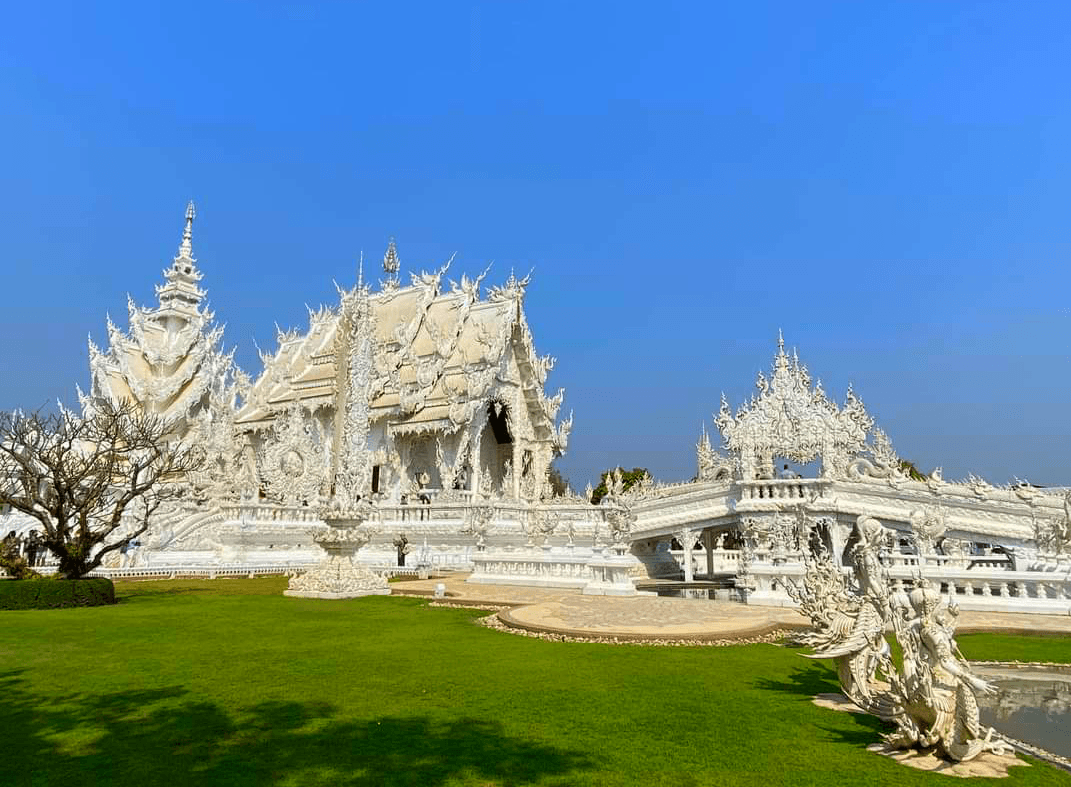
Chiang Rai
Golden Triangle's artistic soul reveals Thailand's creative edge
Chiang Rai isn't trying to compete with its famous southern neighbor Chiang Mai. And that's exactly what makes it special. This northern Thai city sits in the heart of the Golden Triangle, where Thailand meets Myanmar and Laos, but its real draw isn't geography—it's art. Contemporary temples that look like they belong in a sci-fi movie sit alongside traditional Lanna architecture. Local artists have turned abandoned buildings into galleries. The White Temple (Wat Rong Khun) gets all the Instagram attention, but the Blue Temple and Black House are equally mind-bending. Beyond the temples, you'll find hill tribe villages, tea plantations that stretch to the horizon, and some of the best boat trips in Southeast Asia. The city moves at a different pace than Bangkok or Phuket. Here, you can actually hear yourself think.
Itineraries coming soon
We're working on adding amazing itineraries for Chiang Rai. In the meantime, try the app to create your own!
Money-Saving Tips
- 1.Rent a scooter for multiple days—daily rates drop from 300 to 200 baht after day three
- 2.Visit temples early morning (6-8 AM) to avoid entrance fees at some smaller temples and tour groups
- 3.Eat at local markets instead of tourist restaurants—meals cost 40-80 baht vs 150-300 baht
- 4.Book accommodation during rainy season (June-October) for 40% lower rates with same quality
- 5.Buy coffee directly from hill tribe villages—1kg of premium beans costs 400 baht vs 800 in the city
- 6.Use songthaews (red trucks) instead of private taxis for day trips—negotiate group rates for 1,500 baht vs 3,000
- 7.Shop at Saturday Night Market for souvenirs—prices are 50% lower than hotel gift shops
Travel Tips
- •Download offline maps—cell service gets spotty in mountain areas between temples
- •Bring layers—December and January nights drop to 10°C while days reach 25°C
- •Learn basic Thai numbers—many vendors in hill tribe villages don't speak English
- •Carry cash—most temples, markets, and local restaurants don't accept cards
- •Respect photography rules—some temple areas prohibit photos, especially inside buildings
- •Start temple visits early—White Temple gets packed with tour buses after 9 AM
- •Pack mosquito repellent for evening market visits—dengue cases spike during rainy season
- •Book Mae Salong accommodation in advance—only a few guesthouses exist in this mountain town
- •Try local specialties like khao soi and sai ua—northern Thai cuisine differs significantly from central Thai food
Frequently Asked Questions
Explore Chiang Rai
Ready to explore Chiang Rai?
Get a personalized itinerary in seconds with Takeoff.
Free on iOS. No credit card required.