Binz
Culture & Context
BÄDER GLAMOUR & BALTIC SOUL
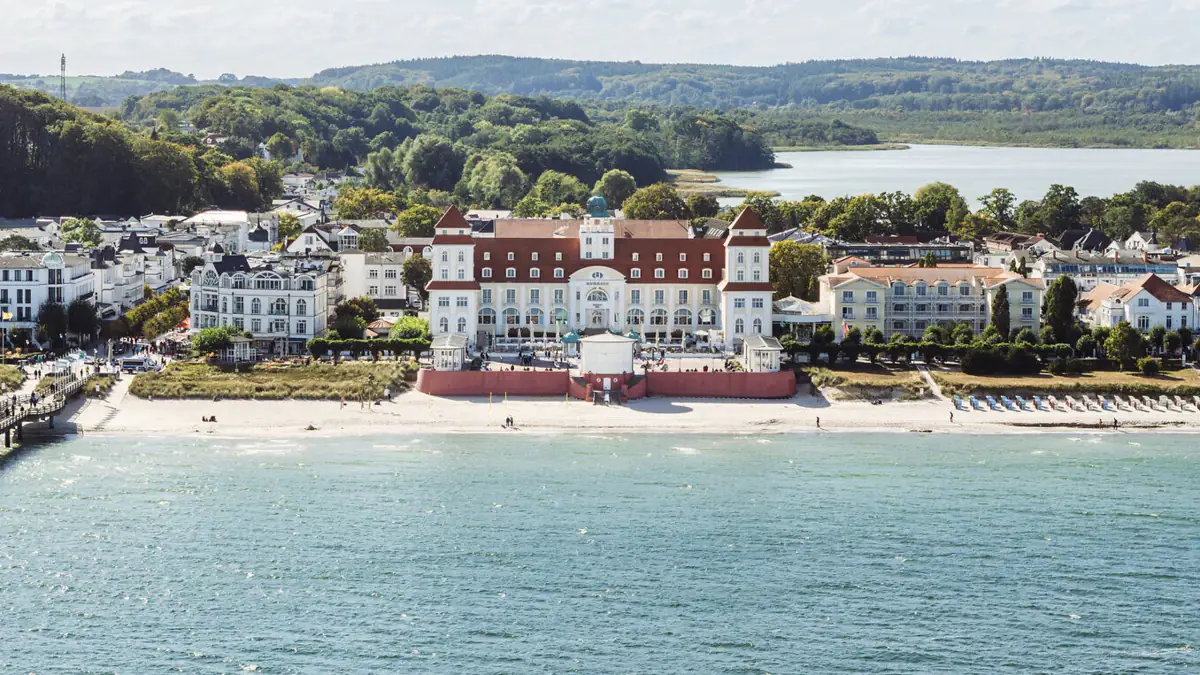
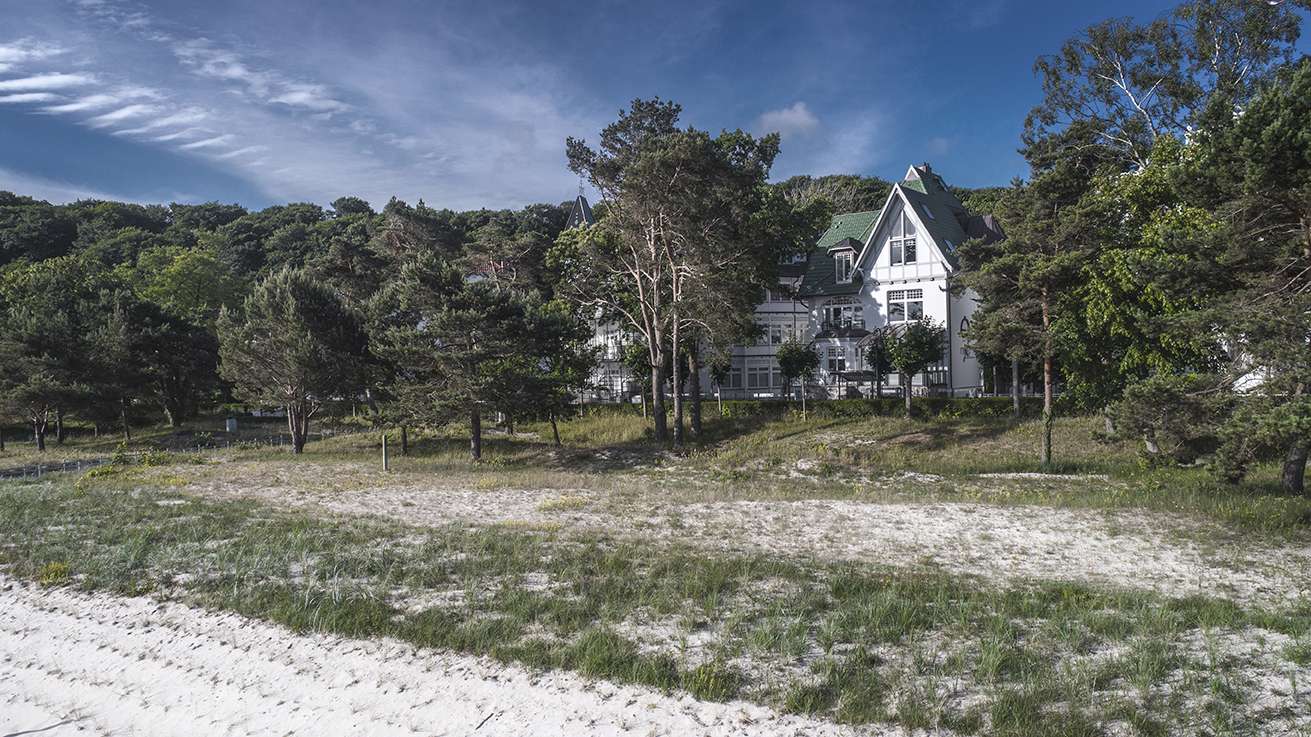
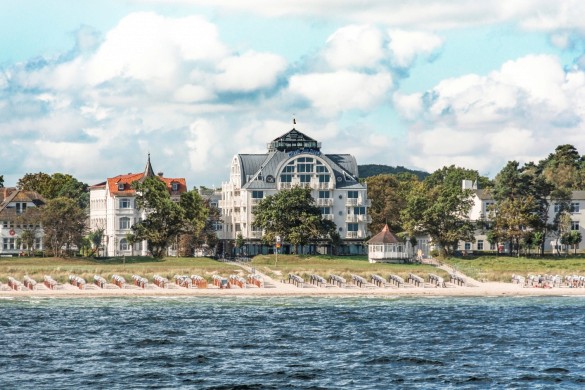
Binz is Germany's poshest seaside resort, perched on the island of Rügen in Mecklenburg-Western Pomerania. It has been pulling in vacationers since the 1880s when the Prince of Putbus first invited guests to bathe here. What followed was a building boom of ornate white villas in "Bäderarchitektur" — an elaborate resort style fusing Art Nouveau, neoclassicism, and historicism, with carved wooden balconies, turrets, and decorative gables at almost every turn.
Today it's firmly the domain of well-heeled German families and couples. The vibe is elegant but relaxed: Aperol Spritzes on seafront terraces, wicker Strandkörbe lined up across five kilometers of fine white sand, and the occasional steam whistle of the Rasender Roland narrow-gauge railway chugging past. The shadow of GDR history looms nearby at Prora — a vast, unfinished Nazi-era complex just up the beach — but Binz itself leans hard into its pre-war resort identity. Its full name, Ostseebad Binz ("Baltic Sea Spa Binz"), tells you exactly what it's all about.
CULTURAL CONTEXT HEADLINE: BALTIC BELLE ÉPOQUE
Local Customs
Pay your Kurtaxe without grumbling.
It's €3.40 per person per day in Binz — one of the highest on Rügen — but it covers free beach access, resort bus rides, and public toilets.
Your accommodation collects it. Bring cash for it or check if card payment is accepted.. Book a Strandkorb early in summer.
These iconic hooded wicker beach chairs cost €12–€19 per day in Binz (top end of the island's price range). Without one, you'll be fighting the wind. In July–August, they're gone by mid-morning..
FKK (Freikörperkultur, nudist) areas are designated on the beach and taken seriously. Wandering into one unintentionally is a faux pas. Signage marks the zones..
Germans value Ruhezeiten — quiet hours typically 10 PM to 6 AM and sometimes midday. This applies at accommodations and in residential streets. Party noise after 10 PM will earn you sharp words from neighbors..
Kitchens close early by southern European standards. Many restaurants in Binz stop serving at 8–9 PM. If you're planning a late dinner, book ahead and confirm the kitchen is still on..
Tipping is customary but modest — around 5–10% or simply rounding up the bill. Saying 'Stimmt so' ('Keep the change') is the normal way to tip when paying cash.. Dogs are genuinely welcome here.
There's a dedicated dog beach and a €2/day dog fee within the Kurtaxe system. Many restaurants and hotels are pet-friendly.
Safety
Binz is an exceptionally safe, family-oriented resort town.
Germany overall ranks 15th in the Global Peace Index. Violent crime is extremely rare here.
The main annoyance is summer traffic — Bahnhofstraße can get chaotic, with narrow pavements and some reckless drivers, so watch yourself on foot near the station. Pickpocketing risk is very low compared to German cities. The beach is regularly certified with a Blue Flag for water quality.
Observe Germany's Ruhezeiten (quiet hours) from 10 PM to 6 AM — locals take this seriously.
Getting Around
The town itself is very walkable.
Hauptstraße, the promenade, and the beach are all within easy reach on foot. But getting TO Binz from the rest of Germany takes commitment. Direct IC trains run from Berlin (roughly 3.5 hours) and Hamburg via Rostock. Ostseebad Binz Bahnhof sits right in the center of town — handy.
Once on the island, the Rasender Roland (Raging Roland) narrow-gauge steam railway links Binz to Putbus, Sellin, Baabe, and Göhren. Slow, atmospheric, and practical. Local buses cover wider areas, though services thin out in winter. Your Kurkarte (visitor's tax card) — which you'll receive upon check-in — covers free rides on the Bäderbahn (resort bus). From Sweden, take the Trelleborg–Sassnitz ferry (about 2.5 hours). By car, cross the Rügenbrücke from Stralsund then take the B96 to Bergen and the B196 into Binz. Parking fills fast in July and August. TRANSPORT HEADLINE: WALK OR STEAM TRAIN
Useful Phrases
Where to Stay in Binz
4 recommended properties