Badlands National Park
Dramatic Landscapes of Layered Rock and Fossil Treasures
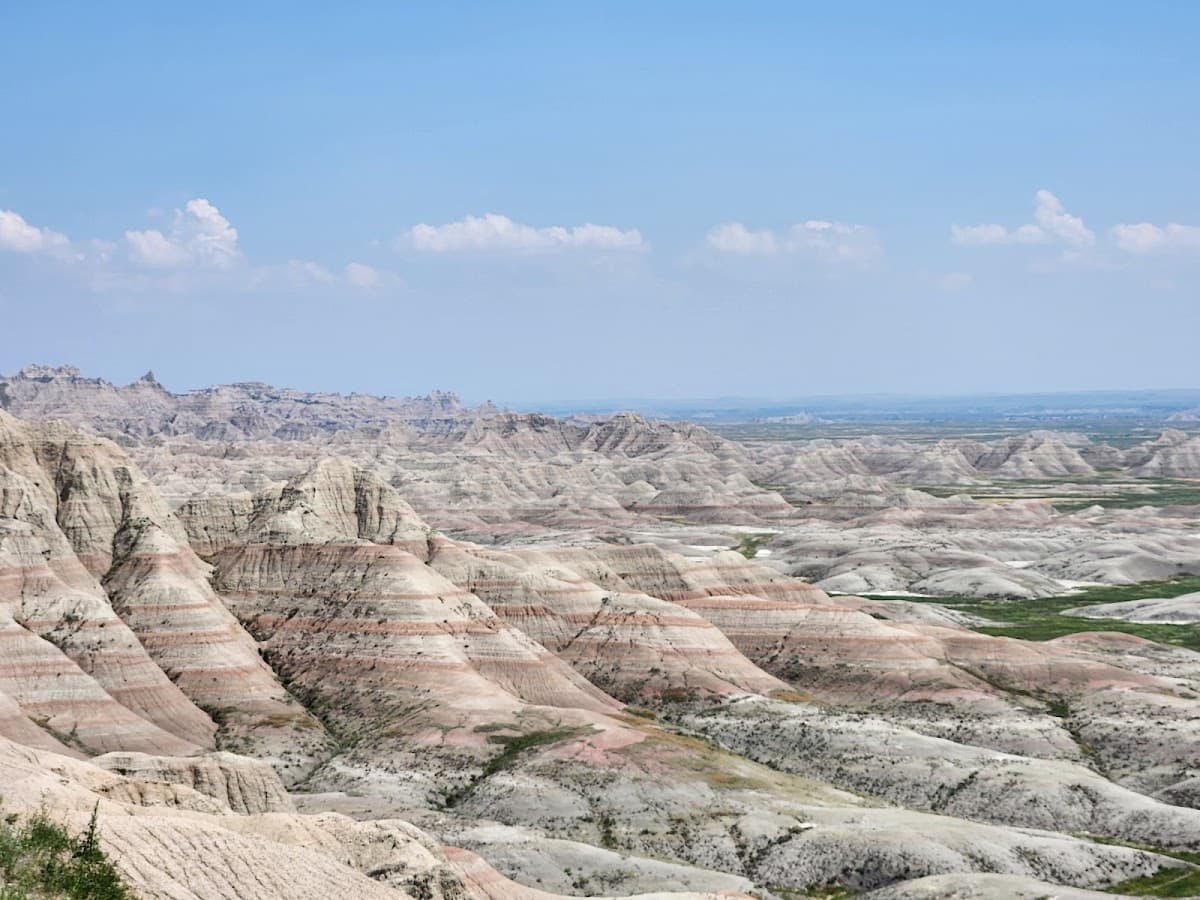
The Badlands hit you like a geological slap in the face. One minute you're driving through endless prairie, the next you're staring at 244,000 acres of eroded buttes and spires that look like they belong on Mars. This South Dakota park serves up some of the most alien landscapes in America, plus world-class fossil beds where you can actually touch 35-million-year-old bones. And here's the thing – it's still refreshingly uncrowded compared to Yellowstone or the Grand Canyon.
Local Knowledge
Culture & Context
The Lakota people called this place Mako Sica, meaning "bad lands," long before any park designation existed. The name wasn't an insult — it was practical. Wet clay turns to glue when it rains, jagged canyons make navigation brutal, and water is scarce. The South Unit of the park sits entirely within the Oglala Lakota Pine Ridge Reservation, which means that part of the park carries active cultural and political weight that most visitors don't realize. During World War II, parts of the Badlands were used as a bombing range, and unexploded ordnance still sits in remote, off-limits areas. The park also contains one of the world's richest fossil beds from the Oligocene epoch (roughly 23–35 million years old), with three-toed horses, saber-toothed cats, and giant pigs all represented. The French fur trappers who passed through called it "les mauvaises terres à traverser" — bad lands to travel across — almost certainly borrowing the term directly from the Lakota. This is ancient, contested, scientifically important land. Treat it accordingly.
Safety
Summer heat is the most underestimated danger here. Temperatures regularly exceed 100°F in July and August, and there is almost no shade anywhere in the park. Carry a full gallon of water per person per day — not a suggestion. The most common serious injury is twisted or fractured ankles from loose footing on the formations. Wear closed-toe shoes with actual ankle support. Flip-flops are a bad idea that rangers will visibly judge. Rattlesnakes live in the park. Watch where you put your hands and feet, especially when scrambling on rocks. Ticks are present in tall grass — check yourself. Bison can weigh up to 2,000 pounds and run 35 mph. Give them at least 100 yards. People get gored every year at parks across the country by ignoring this. Lightning is fast and violent here. During storms, get off high ground immediately and return to your vehicle. The terrain turns to slick, sticky clay when wet — don't hike on it after rain. Cell service is spotty, so don't rely on it for navigation or emergency communication. The backcountry near Sheep Mountain Table in the South Unit has unexploded WWII-era ordnance in some remote areas. Stay on designated access routes there and pay attention to any posted restrictions. No campfires anywhere in the park.
Getting Around
Three entrance points: Pinnacles Entrance (take I-90 east to Exit 110 at Wall, SD, then south on Highway 240 for about 8 miles — best if coming from Rapid City or the west), Northeast Entrance (I-90 west to Exit 131 at Cactus Flat, then south on Highway 240 for 3 miles — best from the east), and Interior Entrance (take Highway 44 north to Highway 377 in Interior, SD, then 2 miles north). The main paved road is Highway 240, the Badlands Loop Road. It takes about an hour straight through, but plan for 3 hours if you're actually stopping. The Sage Creek Rim Road (Route 590) is gravel and takes you through the wilderness area in the western section — fine for regular vehicles but take it slow. High-clearance vehicles are needed for reaching places like Sheep Mountain Table in the South Unit. No public transit serves the park. You need a car. The closest major airport is in Rapid City, about 1 hour from the North Unit. No gas stations inside the park — fill up in Wall before entering. The park is fully cashless, so only cards work at entrance stations.
Useful Phrases
Bad lands — the Lakota name for this territory. Literally 'land that is bad,' referring to terrain that's nearly impossible to farm, cross on foot, or find water in. This is the original name, and using it correctly shows you actually know something about where you are.
We are all related — a foundational Lakota phrase used in ceremony and daily life. It reflects an understanding that all living things are connected. The South Unit of the park sits within the Pine Ridge Reservation, and this phrase carries real weight in the surrounding communities.
The French fur trapper version: 'bad lands to travel across.' They almost certainly borrowed this concept directly from the Lakota. It became 'badlands' in English — a geological term that now applies to eroded terrain on every continent.
Local shorthand for the Badlands Loop Road (Highway 240), the main paved drive through the North Unit. When locals or rangers say 'drive the loop,' this is what they mean — roughly an hour straight through, three hours if you actually stop at overlooks.
Local Customs
- •No cash. Anywhere. The park went fully cashless in 2023 and it's permanent — card only at all entrance stations.
- •No collecting anything. Fossils, rocks, plants, artifacts — all strictly prohibited. People get caught and fined.
- •No campfires. The prairie wildfire risk is serious. Camp stoves and contained charcoal grills are fine in designated campground areas.
- •Closed-toe shoes are non-negotiable. Park staff will tell you this at every opportunity. The terrain is sharp, cactus spines are real, and rattlesnakes live here.
- •Carry one gallon of water per person per day in summer. The Badlands hits 90°F+ regularly in July and August and there is essentially no shade.
- •Give bison serious space. They can weigh 2,000 pounds and run 35 mph. People get injured every year by approaching too close for a photo.
- •Pets are restricted to developed areas, parking lots, and paved/gravel roadways only. They cannot go on any hiking trails or into the backcountry.
- •Fill your gas tank in Wall or another town before entering. There are zero gas stations inside the park.
- •Pick up a paper map at the entrance booth. Cell service is spotty and GPS is unreliable in parts of the park.
- •The backcountry is open to camping without a permit, but your site must be at least half a mile from any road or trail and not visible from one.
Badlands National Park Itineraries
Money-Saving Tips
- 1.Buy the America the Beautiful Annual Pass for $80 if you're visiting multiple parks – Badlands entry is $30 per vehicle
- 2.Cedar Pass Campground costs $30/night but Sage Creek is free primitive camping with pit toilets
- 3.Fill up your gas tank in Wall or Rapid City – no gas stations inside the park
- 4.Pack lunches and plenty of water to avoid overpriced concession food
- 5.Visit in shoulder seasons (May or September-October) for lower accommodation rates
- 6.Dispersed camping in Buffalo Gap National Grassland is free with a 14-day limit
Travel Tips
- •Download offline maps – cell service is spotty throughout the park
- •Bring layers – temperatures can swing 40 degrees between day and night
- •Check weather before hiking – flash floods can occur in narrow canyons
- •Stay on designated trails to protect fragile fossil beds and avoid rattlesnakes
- •Carry extra water – dehydration happens fast in the dry climate
- •Visit Fossil Exhibit Trail for hands-on paleontology without a guide
- •Keep food locked in your car – prairie dogs and coyotes are opportunistic
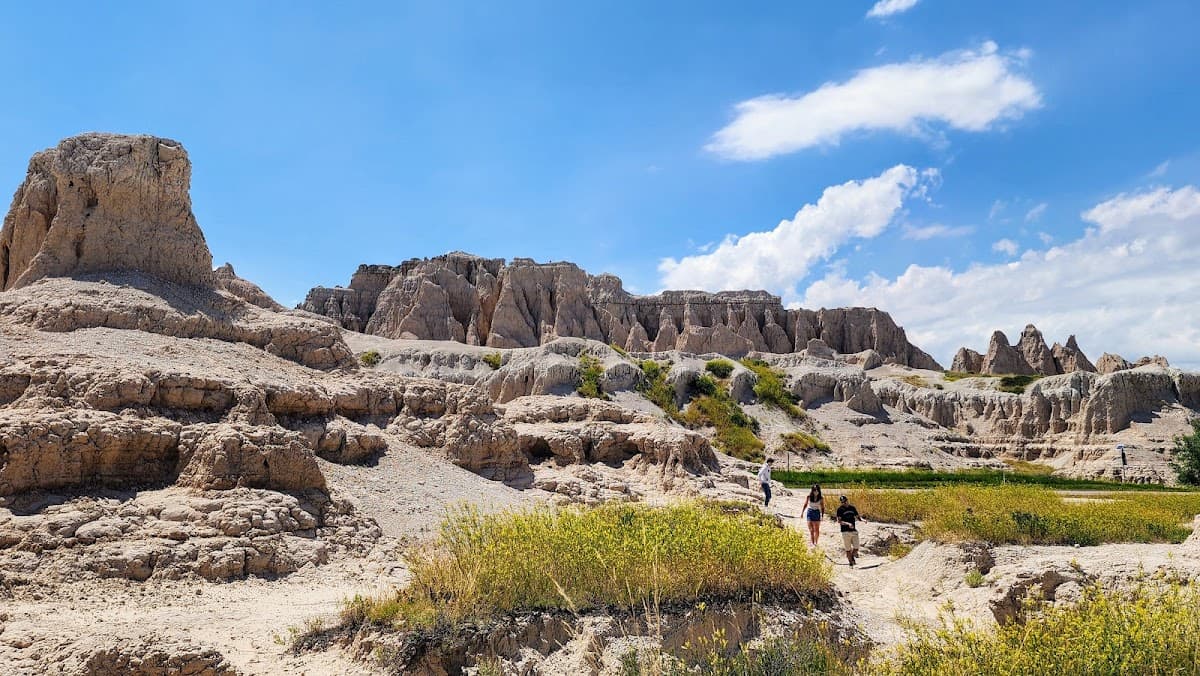
- •Wear sturdy shoes with good grip – the terrain is uneven and crumbly
Frequently Asked Questions
Explore Badlands National Park
Ready to explore Badlands National Park?
Get a personalized itinerary in seconds with Takeoff.
Free on iOS. No credit card required.