Bagan
Myanmar's Ancient Plain of Ten Thousand Temples
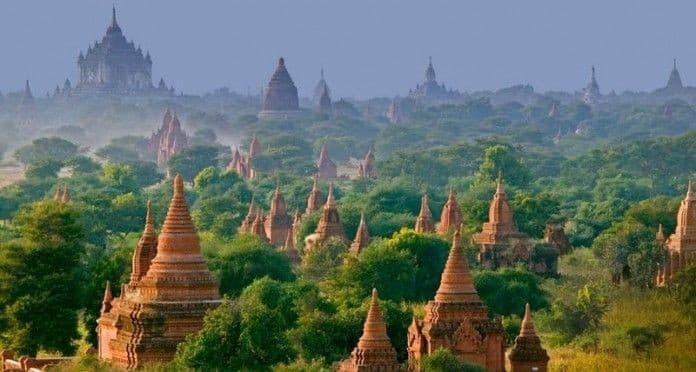
Picture this: sunrise over 2,000 ancient temples stretching to the horizon, their spires piercing the morning mist like something from a fever dream. That's Bagan on any given Tuesday. This isn't just another temple complex — it's an entire 26-square-mile plain dotted with Buddhist monuments built between the 11th and 13th centuries. And here's the kicker: you can still climb many of them.
Sure, the crowds have discovered Bagan since Myanmar opened up to tourism, but venture beyond Old Bagan's main cluster and you'll still find temples where your footsteps echo alone. The dirt roads kick up dust that coats everything in a fine layer of history. Local kids sell postcards from temple doorways their ancestors built 800 years ago.
But let's be real — this place tests your patience. The heat can be brutal, the infrastructure patchy, and navigating Myanmar's complex political situation requires careful planning. Still, watching hot air balloons drift over ancient stupas at dawn? That image burns into your memory forever.
Best Months
JAN · FEB · MAR · NOV · DEC
~31°C · peak crowds
Culture & Context
TEMPLES RULE DAILY LIFE
Bagan is the former capital of the Pagan Kingdom, which ruled from the 9th to 13th centuries. At its peak, the city had over 10,000 Buddhist temples, stupas, and pagodas. Today, around 2,200 survive across 104 square kilometers of dusty plains along the Ayeyarwady River.
UNESCO designated it a World Heritage Site in 2019. The place is genuinely big. Not "big for a heritage site" big.
Actually sprawling, open-skies, lose-your-e-bike-on-a-sand-track big. Buddhism isn't just historical backdrop here. It's active daily life.
Monks walk the grounds at dawn. Locals still make merit offerings at temple shrines. The city has been divided into four main zones since the 1990s, when the government relocated villagers out of Old Bagan.
That relocation created the split character the place has now: ancient ruins in one zone, modern guesthouses and restaurants in another. And here's the thing about the current political situation in Myanmar. The 2021 military coup changed everything.
Tourist arrivals are running at around 15% of pre-2021 levels. The country is under active civil conflict in many regions. But the "Tourist Kite" area (Yangon, Bagan, Mandalay, Inle Lake) has remained relatively calm.
A travel expert's on-the-ground inspection in January 2026 reported that Bagan's e-bike trails are the biggest hazard a local guide is managing at 5:30am. That said, this is a place you visit with eyes wide open, not on autopilot.
Local Customs
SHOES OFF ALWAYS
Remove your shoes before entering every temple, every time. No exceptions. Sandals or slip-on shoes are strongly recommended over laces..
Cover shoulders and knees at all religious sites. Myanmar takes this seriously. A sarong kept in your bag solves the problem instantly..
Climbing on temples is now prohibited under Myanmar law since Bagan's 2019 UNESCO designation. Don't do it. It damages the structures and you can genuinely get hurt..
Use your right hand to give or receive anything from elders or monks. Two hands is even better and signals real respect.. Don't point directly at people or sacred objects with a single finger.
Use an open hand or a slight chin nod instead.. Avoid discussing politics in public. Most Burmese are not fans of the current government, but putting someone in a difficult position by talking openly about it could get them into serious trouble..
During Thingyan, avoid splashing water on monks, pregnant women, or elderly people. It's considered genuinely disrespectful, not just a cultural quirk.. At markets, some gentle price negotiation is expected.
But don't push it too hard. Burmese haggling culture is softer than Thailand or Vietnam, and aggressive bargaining will just make everyone uncomfortable.
Safety
EYES WIDE OPEN
Bagan sits within what travelers call the "Tourist Kite" (Yangon, Bagan, Mandalay, Inle Lake), which is the relatively calmer core of a country under active military conflict. Bagan's temples have continued drawing visitors without safety incidents, and zero tourist safety issues were reported there in 2025. The March 2025 earthquake (7.7 magnitude, centered near Mandalay) did cause some damage to parts of the Bagan Archaeological Zone, but prominent temples remain accessible and restoration is ongoing with UNESCO support.
Road travel between cities involves military checkpoints. Overland routes should only be attempted during daylight. Flying between destinations is safer and honestly not that much more expensive. Don't take photos at checkpoints. Show your passport when asked and don't discuss politics.
Practical hazards in Bagan that have nothing to do with the political situation: heat is brutal from March to May, reaching 40°C. Carry water constantly. Sandy e-bike tracks have claimed more than a few tourists. Wear a helmet always. Exposed electrical wiring is genuinely common in parts of Myanmar. Don't touch clustered wire bundles and avoid stepping in puddles near wiring. Stray dogs are common. Medical facilities in Bagan are basic. Serious conditions require evacuation to Yangon or Bangkok. Carry comprehensive travel insurance that explicitly covers conflict zones and medical evacuation before you get on the plane.
Getting Around
E-BIKES DOMINATE
Getting to Bagan from Yangon: fly to Nyaung-U Airport (NYU), which takes about an hour. Domestic flights run roughly $60-100 one-way. The overnight bus from Yangon to Bagan (around 9-10 hours) costs roughly $5-8 on a VIP bus, but the route involves military checkpoints and is best done during daylight hours where possible. Flying is strongly recommended given the current security climate. International connections come through Yangon from Bangkok, Singapore, and Kuala Lumpur (all running reduced frequency as of 2026).
Once in Bagan, the e-bike is the definitive way to get around. Foreigners cannot legally rent motorbikes anywhere in Myanmar, so e-bikes fill that gap. Rental shops are everywhere in Nyaung U and most hotels will sort one for you. Cost is around $4-5 per day (6,000-8,000 kyat). The battery lasts about 30-40km on a full charge. Check the battery is actually full before you ride off. The small wheels struggle on deep sandy tracks, so ride slowly when you leave paved roads. No driving license is required. Always ask for a helmet. Horse carts are still available and worth doing for at least half a day. Private taxis run roughly $25 for a full day if you'd rather not ride. One important note: tuk-tuk drivers often quote double the real price. Come in low and negotiate up from there.
Useful Phrases
Money-Saving Tips
- 1.E-bike rentals cost 8,000-12,000 kyat ($6-9) per day — much cheaper than taxis at $40-50 daily
- 2.Eat at Nyaung-U morning market where mohinga costs 1,000 kyat vs 5,000+ kyat at hotel restaurants
- 3.Stay in New Bagan or Nyaung-U instead of Old Bagan to cut accommodation costs by 50-70%
- 4.Buy temple entrance passes early morning to avoid afternoon price markups from ticket touts
- 5.Hot air balloon rides drop from $400 to $300 in shoulder season (late October, early April)
- 6.Bargain hard for horse cart tours — starting prices of $40 can drop to $25 with negotiation
- 7.Bring your own headlamp instead of renting from temple vendors who charge 2,000 kyat per hour
- 8.Myanmar beer costs 2,500 kyat at restaurants vs 1,500 kyat at local shops — stock up for temple visits
Travel Tips
- •Download offline maps before arriving — cell service is spotty between temple clusters
- •Wear closed-toe shoes for temple visits as floors get scorching hot by midday
- •Bring a headlamp to explore dark temple interiors with incredible hidden murals
- •Start temple hopping at sunrise to beat crowds and afternoon heat
- •Stick to bottled water and avoid street vendor ice cream to prevent stomach issues
- •Respect local customs by covering shoulders and knees when entering temples
- •Book hot air balloon rides at least 3 days in advance during peak season (Dec-Feb)
- •Learn basic Myanmar numbers to negotiate prices at markets and with transport
- •Pack dust masks — temple roads kick up fine sand that coats everything
- •Carry small kyat bills for temple donations and market purchases