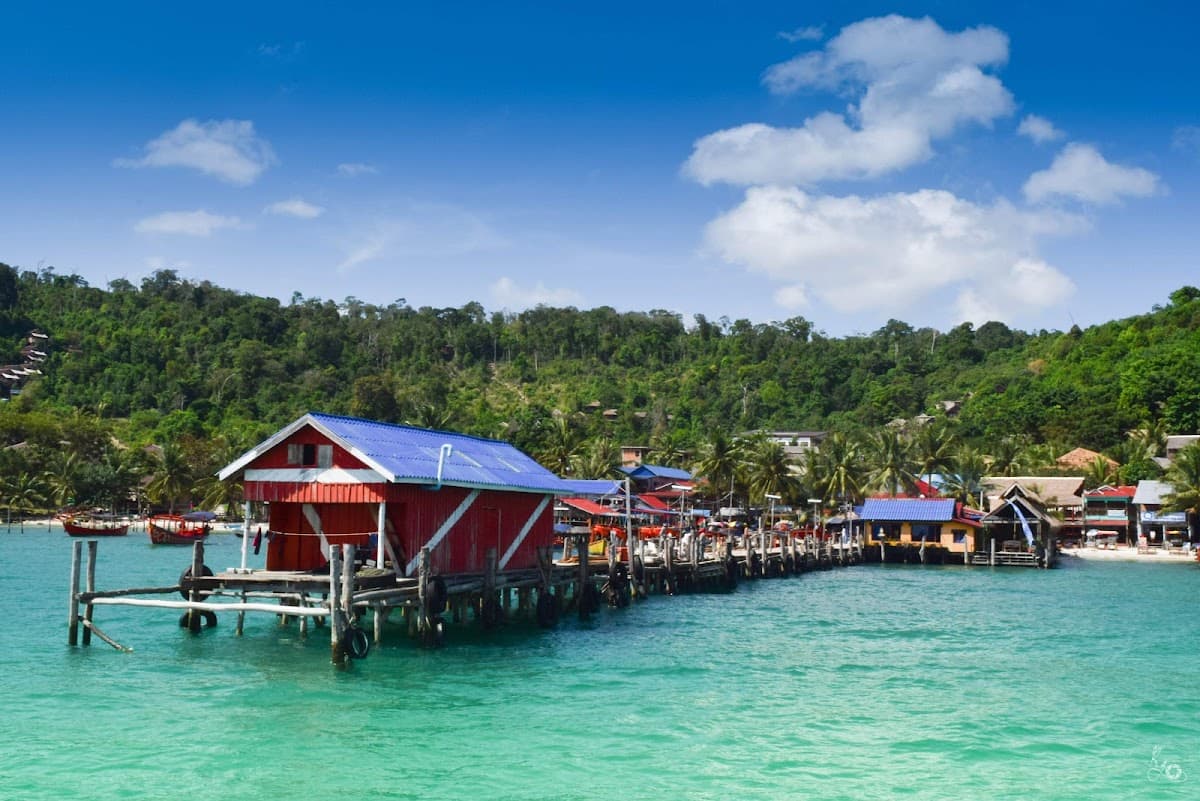
Koh Rong
Cambodia's pristine island escape with bioluminescent waters and jungle adventures
Forget everything you think you know about Cambodian islands. Koh Rong isn't your typical Southeast Asian beach destination — it's wilder, more mysterious, and honestly, a bit magical. Picture this: you're swimming at night and every stroke lights up the water with electric blue sparkles. That's the bioluminescent plankton, and it's just one reason this 78-square-kilometer island off Sihanoukville keeps backpackers and adventure seekers coming back.
The beaches here stretch for miles without a single high-rise in sight. Instead, you'll find bamboo bungalows tucked between coconut palms and jungle that comes right down to the sand. Sure, it's not as developed as Thailand's islands — the wifi cuts out, the power runs on generators, and you might share your beach walk with a monitor lizard. But that's exactly the point.
Best Months
JAN · FEB · MAR · APR · MAY · NOV · DEC
~33°C · high crowds
Culture & Context
FISHING VILLAGE BOOM
Koh Rong is Cambodia's second-largest island, sitting about 25km off Sihanoukville in the Gulf of Thailand. Four main village communities share it: Koh Touch in the southeast, Prek Svay in the northeast, Daem Thkov in the east, and Sok San in the west. Around 70% of the local population are fishermen, though tourism is rapidly pulling more people into the service sector.
In 2026, Long Beach on Koh Rong received a spot in a global Top 10 beaches ranking, which is starting to show in visitor numbers. New resort developments and a planned international airport are in the pipeline. The raw, generator-lit, cash-only island life you find today may look very different in a few years.
The upside of coming now is getting it before it gets polished to death. The downside is infrastructure that isn't ready for the crowds it's already pulling in peak season.
Local Customs
SAMPEAH & RESPECT
Always do the sampeah — palms pressed together at chest height with a small bow — as a greeting or thank you. It goes over well everywhere on the island, especially with fishing village locals in Sok San.. Use both hands when handing over money or receiving change.
One-handed exchanges can come across as dismissive or rude.. Cover your shoulders and knees when walking through Sok San or any fishing village. Beach attire is fine on the sand, but the moment you wander into a village, throw on a shirt..
Ask before photographing locals, especially fishermen and their families. It's a small gesture that matters more than you'd think.. Support Cambodian-owned businesses where possible.
The fishing families of Koh Rong have been here for generations; buying from Sok San village vendors keeps money with the community rather than with foreign resort chains.. Generators run out — especially in low season and at budget bungalows. Don't complain loudly.
Embrace the candles. This is part of the deal here.. Sandflies are vicious, particularly in dry season (November to May).
Locals know to bring DEET and to get off the sand at dusk when the bites get worse. Don't sleep on this.
Safety
CASH ONLY, SANDFLIES RAMPANT
No ATMs on the island. Full stop. Come with enough USD in small bills to cover your entire stay, plus a buffer.
Some Koh Touch establishments have card machines but charge 10% or more for the privilege. Sandflies are the number one complaint from visitors and they're still very much present in 2026, especially during dry season from November to May. Strong DEET repellent is your best defense.
Grab it in Sihanoukville before boarding the ferry — it's cheaper and more available there. Coconut oil has anecdotal support from local boat captains, but DEET is the scientifically backed option. If you get bitten, Tiger Balm helps with the itch.
Also worth checking your bungalow mattress for bedbugs when you check in — it's a known issue at budget accommodation. Medical facilities on the island are very basic. Anything serious means a boat back to Sihanoukville, which takes at least 45 minutes on a good day and can't always run in rough weather.
Get travel insurance that covers medical evacuation. Petty theft is low-to-medium risk in Koh Touch, so keep valuables out of sight in busy bar areas. Boats are weather-dependent, especially June through October.
Plan for flexible return dates in rainy season. The Cambodia-Thailand border region has ongoing military conflict (do not travel within 50km of that border), but this doesn't affect Koh Rong, which is safely on the southern coast.
Getting Around
FERRY-DEPENDENT ISLAND LIFE
Getting to Koh Rong means going through Sihanoukville first. Five ferry companies run from Sihanoukville's pier to Koh Rong: Speed Ferry Cambodia, Island Speed Boat Cambodia, Buva Sea, Angkor Speed Ferry, and GTVC. The round-trip fare on any of them runs around $25, and the fast boat takes about 45 minutes.
There's also a slow boat for $5 that takes 2.5 hours — skip it. Know exactly where your accommodation is before you get on the boat, because the ferry can drop at either Koh Toch pier or Long Set pier.
If you end up at the wrong one, a tuk-tuk or boat taxi to the right beach adds another $10. Ferries run three times daily, roughly at 9am, 11:30am, and 1:30pm — but always check current schedules with your accommodation. Book open-return tickets: one-way is $14, but an open return is $25 and lets you leave whenever you want.
During peak season (December through March), book ahead because boats fill up. Between islands, there's a $5 ferry connecting Koh Rong to Koh Rong Samloem. On the island itself, there are no cars and no real roads.
You walk, take longtail taxi boats between beaches (expensive and weather-dependent), or occasionally find a motorcycle for hire. Bus from Phnom Penh to Sihanoukville takes about 5 hours. Sihanoukville International Airport now has some direct regional connections, but most people arrive by bus or taxi from Phnom Penh.
Useful Phrases
Money-Saving Tips
- 1.Bring cash from Sihanoukville - no ATMs on the island and card payments are rare
- 2.Pack snacks and toiletries from the mainland to avoid inflated island prices
- 3.Book accommodation for multiple nights to negotiate better rates
- 4.Share boat transfers with other travelers to split the $20 cost between beaches
- 5.Eat at local fishing village restaurants for cheaper meals than tourist beach bars
- 6.Bring a reusable water bottle and purification tablets instead of buying bottled water daily
Travel Tips
- •Download offline maps before arriving - cell service is spotty across the island
- •Pack reef-safe sunscreen as regular sunscreen damages the coral reefs
- •Bring a headlamp or flashlight for navigating sandy paths after dark
- •Pack insect repellent - mosquitoes and sand flies are active at dawn and dusk
- •Wear water shoes for rocky areas and to protect against sea urchins
- •Book bioluminescence tours for moonless nights between November and March for the best glow
- •Bring seasickness medication if you're prone to motion sickness on boat transfers
- •Pack quick-dry clothes as humidity is high and laundry takes forever to dry