Pokhara
Himalayan gateway with serene lakes and mountain vistas
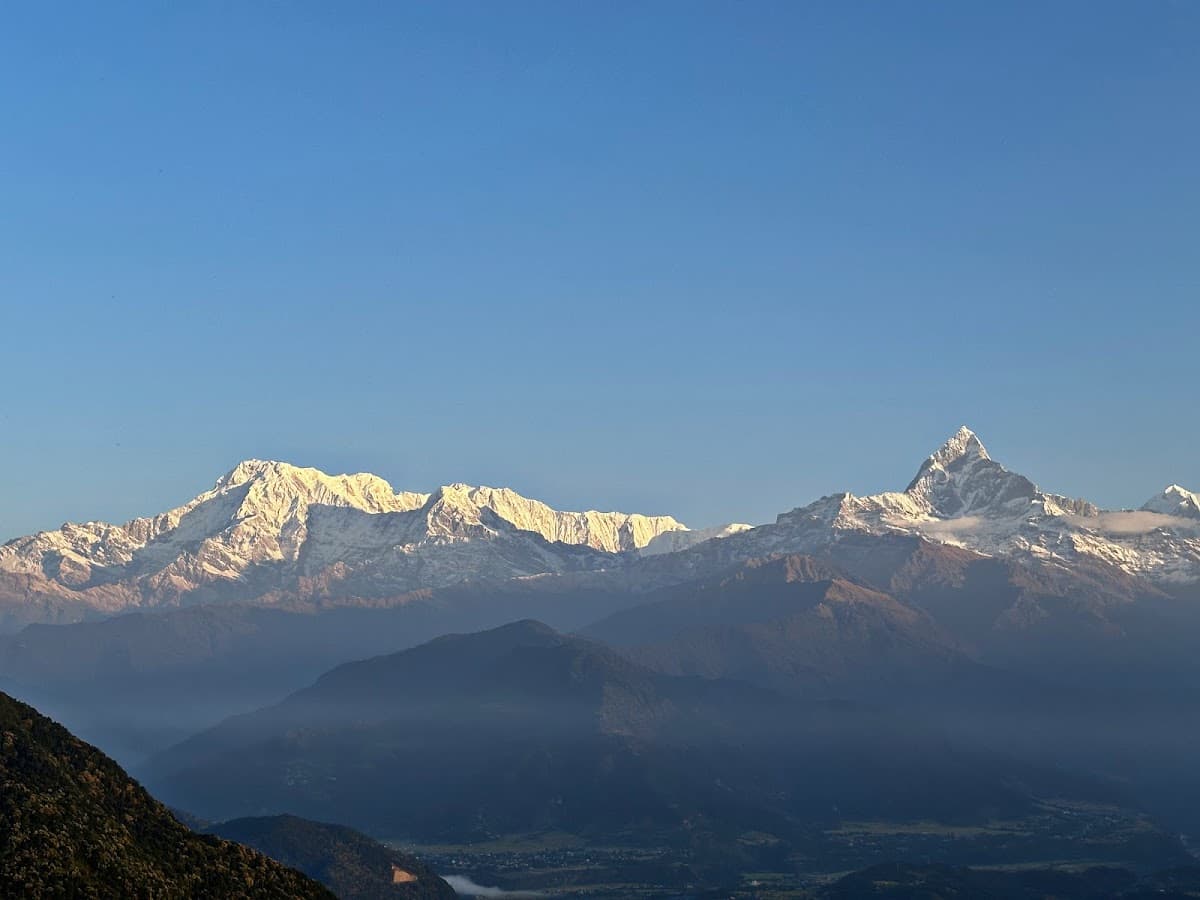
Pokhara sits at the foot of the Annapurna range like Nepal's chill cousin — the one who traded Kathmandu's chaos for lake views and mountain air. This isn't just another trekking pit stop. Sure, most people roll through here to start their Himalayan adventures, but smart travelers stick around to soak up the laid-back vibe along Phewa Lake.
The city sprawls across valleys and hillsides, with the tourist hub concentrated around Lakeside (Baidam). Here's where you'll find the guesthouses, restaurants, and that perfect lakefront spot for morning coffee with the Machapuchare peak reflecting in the water. But venture beyond the main strip and you'll discover local neighborhoods, hidden temples, and viewpoints that most visitors miss entirely.
Best Months
JAN · FEB · MAR · APR · OCT · NOV · DEC
~22°C · high crowds
Culture & Context
TREKKING HUB TRANSFORMED
Pokhara sits at 822 meters above sea level in Gandaki Province and is home to around 200,000 permanent residents. It's Nepal's second largest city and has been the gateway to Annapurna trekking since the 1970s. The Gurung, Magar, Brahmin, and Chhetri communities make up the cultural fabric here, and the Tibetan refugee settlement at Tashi Palkhel — where carpet weaving and Buddhist philosophy are still very much alive — sits just outside the main tourist area.
The city has transformed fast. Pokhara International Airport became fully operational in 2024-2025, and by 2026 it's handling regional flights from Delhi, Bangkok, and Dubai. The old trade route between China and India passed through here, which is part of why Pokhara has always felt more cosmopolitan than its size suggests.
Lakeside itself is somewhat of a tourist bubble — the cafés serve espresso and pizza alongside dal bhat, guesthouses have Wi-Fi, and everyone speaks English. But step 20 minutes in any direction and you're in a completely different Nepal. The International Mountain Museum on the outskirts documents serious Himalayan mountaineering history, including Maurice Herzog's 1950 Annapurna ascent.
It's world-class. The monsoon season (June–September) brings heavy rain, reduced mountain visibility, and the occasional landslide on roads. Trekking routes become harder.
Prices drop. The city doesn't shut down but it does slow way down.
Local Customs
RIGHT HAND, MODEST DRESS
Remove shoes before entering temples, monasteries, and most teahouse dining rooms. No exceptions, no matter how inconvenient.. Walk clockwise around stupas, chortens, and mani walls.
It's a Buddhist practice and the locals notice when you go the wrong way.. Give and receive things — money, food, gifts — with your right hand only. Or use both hands.
The left hand is considered unclean.. Never touch anyone's head, including children. The head is sacred in Nepali culture.
What feels like a playful hair-ruffle to you is genuinely offensive.. Cover shoulders and knees at religious sites. Lakeside is casual, but the Barahi Temple, World Peace Pagoda, and any temple in the Old Bazaar require modest dress..
Public displays of affection (kissing, hugging) are generally frowned upon, especially outside the tourist bubble of Lakeside. Keep it low-key in local neighborhoods.. Huge crowds and sold-out transport happen during Dashain (October) and Tihar (October/November) as Nepali diaspora returns home.
Plan transport and accommodation well in advance if visiting then.. Saturday is Nepal's official holiday — Barahi Temple on the lake island gets packed with local Hindu devotees. Good to know if you want a quiet boat visit, go on a weekday morning instead..
When someone asks 'Khana khanu bhayo?' they're not being nosy — it's a cultural greeting. The correct answer is either 'Khana khaye' (yes, I've eaten) or invite them to join you..
Tipping is customary and genuinely matters. Ten percent at restaurants where service charge isn't included, and tip guides, porters, and drivers separately — they rely on it.
Safety
SAFE, BUT STREET SMART
Pokhara is widely considered one of the safest cities in Nepal and the overall crime rate is low. But a few real things to know. Petty theft happens in busy Lakeside — keep your phone and wallet in a front pocket in crowded areas and at the bus station.
Taxis routinely overcharge tourists. Agree on a fare before getting in, or use the Pathao ride-hailing app (it's growing in Pokhara but less established than in Kathmandu). Do not swim in Phewa Lake.
There are strong undercurrents and debris — locals themselves don't swim there. The water looks calm and inviting. It's not.
Night bus travel on mountain roads is genuinely dangerous. Bus accidents on the Kathmandu-Pokhara highway are not rare. Stick to daytime travel.
Drink only bottled or filtered water. Tap water is not safe. Check the seal on any bottle you buy.
Solo trekking without a licensed guide has been restricted since 2025, so arrange one through a reputable Lakeside agency. Book through operators certified by the Civil Aviation Authority of Nepal (CAAN) for paragliding and aerial sports — don't just go with whoever approaches you on the street. Monsoon-season road travel (June–September) carries real landslide risk, especially toward Mustang.
Get solid travel insurance that covers helicopter evacuation — without it, an emergency rescue can cost $5,000-10,000. The US State Department classifies Nepal as a normal precaution destination with no elevated warning.
Getting Around
WALKABLE LAKESIDE HUB
Getting to Pokhara: Tourist buses from Kathmandu depart from Sorhakhutte Tourist Bus Park, usually between 7-8 AM, and cost NPR 1,300-2,700 one way (~$10-20). The ride takes 6-7 hours. Sit near the front to avoid the worst of the bumps and nausea on those switchback mountain sections.
Domestic flights take 25-30 minutes and run $80-120 from Kathmandu, with the new Pokhara International Airport also receiving some regional flights from Delhi, Bangkok, and Dubai in 2026. Getting around Pokhara: Lakeside is walkable — the main strip takes 40-60 minutes end to end on foot. Local buses connect Lakeside to the bus park and Old Bazaar for NPR 15-30 ($0.
10-0.20). Slow but functional.
Taxis cost $2-5 for most city journeys — negotiate the fare before you get in. Pathao (ride-hailing app) works in Pokhara but is less reliable than in Kathmandu. Boat crossings on Phewa Lake run $1-3 and a scenic lake tour runs $5-10/hour.
To access trek trailheads (Nayapul, Kimche, Jomsom), arrange jeep or bus transfers through any Lakeside agency. Motorbike rentals are available for $20-50/day if you're comfortable on mountain roads. Avoid night driving, especially June–August monsoon season.
Useful Phrases
Money-Saving Tips
- 1.Eat dal bhat at local places in New Road area for 150 NPR instead of tourist restaurants charging 400+ NPR
- 2.Stay in Damside or Sarangkot for half the price of Lakeside accommodations with better views
- 3.Rent motorcycles for 800-1500 NPR per day instead of taking taxis everywhere
- 4.Buy trekking gear at local shops rather than branded stores — same quality, 60% less cost
- 5.Negotiate taxi fares upfront — drivers quote tourist prices first, settle for 30-40% less
- 6.Book accommodation without meals included, then eat at local restaurants for authentic food at lower prices
Travel Tips
- •Carry cash — most places don't accept cards and ATMs charge high fees for foreign cards
- •Pack layers for temperature swings — mornings are cold, afternoons warm, especially October-March
- •Book Sarangkot sunrise trips the night before — taxis fill up quickly during peak season
- •Learn basic Nepali phrases — locals appreciate the effort and you'll get better prices
- •Bring a good camera or phone — the mountain reflections in Phewa Lake are Instagram gold
- •Check weather forecasts before booking mountain flights — clouds cancel most scenic flights
- •Respect local customs at temples — remove shoes and don't point feet toward shrines
- •Bargain at markets but not aggressively — small amounts matter more to vendors than to you