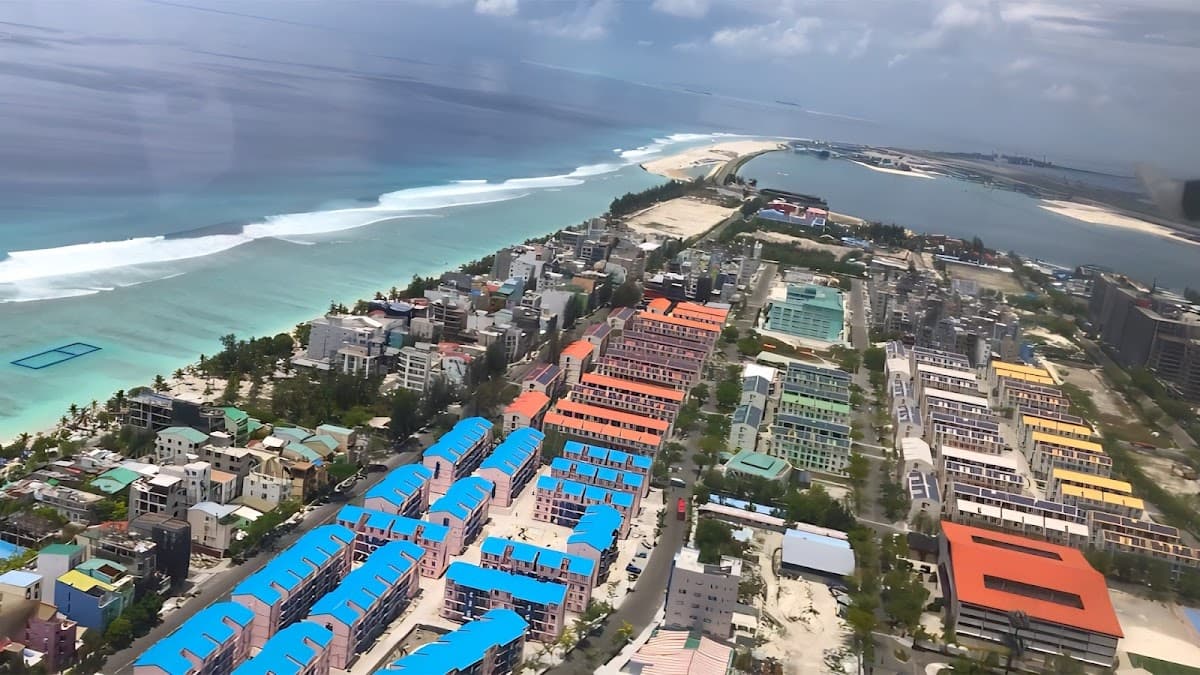
Hulhumale
Maldives' modern gateway to tropical paradise
Look, most people think the Maldives means $1,000-a-night overwater bungalows. But Hulhumale flips that script entirely. This artificial island, connected to Male by bridge, gives you those same turquoise waters and powder-soft beaches without the wallet-crushing price tag. Built on reclaimed land, it's where young Maldivians actually live and work — which means real restaurants, actual nightlife, and guesthouses that won't require a second mortgage. The beaches here rival any resort island, but you'll pay a fraction of the cost. And here's the kicker: you can walk everywhere, grab street food for $3, and still wake up to that postcard-perfect Indian Ocean view every morning.
Best Months
JAN · FEB · MAR · APR · DEC
~31°C · high crowds
Culture & Context
ISLAMIC CITY, NOT RESORT
Hulhumalé is a planned, reclaimed island built from scratch starting in 1997 to relieve the crushing population density of Malé, where 150,000 people are packed onto less than one square mile. Islam is the official state religion and shapes everything: the daily rhythm of prayer calls, the dress code on the streets, the absence of alcohol, and the social norms around mixed-gender public behavior. This isn't a resort island — it's a real city where about 50,000 people live, work, shop, and raise families.
Treat it accordingly. The island has a surprisingly cosmopolitan feel compared to older Maldivian islands, with wide streets, parks, and a growing café culture. But it's still a conservative Muslim community, and that matters the moment you step off the beach.
The Grand Mosque (Masjid Al Sheikh Qasim bin Al-Thani) with its gold dome is one of the most recognizable buildings on the island, visible from far out at sea. Non-Muslims can visit between 9am and 11am only, and not during any of the five daily prayer times. Hulhumalé is also in the middle of a major urban expansion: President Muizzu unveiled a revised master plan in May 2025 merging the planned Phase 3 directly with Phase 2, which will eventually house 250,000 residents.
Expect construction noise in Phase 2 areas.
Local Customs
NO ALCOHOL, COVER UP
No alcohol anywhere on the island. This is non-negotiable and legally enforced. Bringing alcohol onto Hulhumalé is illegal — it will be confiscated and you may face consequences.
The only legal option is to visit a licensed resort island for the day.. Dress modestly the moment you leave the beach or pool area. Shoulders and knees covered.
Women in particular should carry a light wrap. Bikinis are only acceptable in the specifically designated 'bikini beach' area at the southern end of the main beach — not on the regular public beach where local families swim.. Remove your shoes before entering any mosque or private Maldivian home.
It's not a suggestion.. Avoid public displays of affection. Holding hands is fine, but kissing or embracing in public will draw attention and is culturally disrespectful..
During prayer times (five times daily), tone it down near mosques. The call to prayer is broadcast from speakers across the island. Shops sometimes close briefly..
Don't photograph locals — especially women — without asking first. It's considered invasive.. Litter is a genuine problem on the beaches and streets.
Don't add to it. Many locals are frustrated by the trash situation.. Friday is the Islamic holy day.
Some government offices and services have reduced hours.
Safety
GENERALLY SAFE, STAY LIT
Hulhumalé is generally safe for tourists during the day. Crime rates have been declining — police reports from 2024 show theft cases dropping month over month. That said, gang-related incidents do occur, mostly concentrated in less-lit residential areas at night.
Stick to the well-lit main streets and the beachfront after dark, and you'll be fine. Don't wander into unfamiliar, low-traffic neighborhoods alone at night. Keep an eye on your belongings in crowded public areas and at the beach — don't leave bags or electronics unattended on the sand.
Political demonstrations in Malé occasionally escalate; keep your distance if you encounter one. Rip currents are real — only swim in marked areas and be aware that some stretches of beach have no lifeguard coverage. Emergency numbers: Police 119, Ambulance 102, Fire 118.
Tree Top Hospital on the island handles emergencies; serious cases are transferred to ADK Hospital or IGMH in Malé. For water activities, verify your operator has proper safety equipment and a license before booking.
Getting Around
BUSES, FERRIES & WALKABLE
Getting to Hulhumalé from Velana International Airport is easy and cheap. The Red Bus (routes R4/R5) runs every 30 minutes and costs MVR 20 (about $1.30).
As of 2026, many buses accept Mastercard/Visa, but carry cash to be safe. Taxis cost MVR 80–100 ($5–$6.50) and apps like Avas Pay and Cabmv now offer fixed pricing, which eliminates the airport surcharge confusion that used to catch people out.
From Malé, the public ferry runs frequently throughout the day and costs just MVR 10 (roughly $0.65) one way — a 15 to 20 minute crossing to the Hulhumalé Ferry Terminal. The Sinamalé Bridge connects all three islands (Malé, Hulhulé airport island, and Hulhumalé) by road, so taxi and bus travel between them is seamless.
Once on the island, the wide planned streets make it walkable. Cycling is popular and rental bikes are available. Taxis are easy to hail and short rides around the island are affordable.
For day trips to Malé, the ferry is the most pleasant option. For excursions to outer islands and atolls, speedboats depart from the port area — scheduled services to places like Maafushi cost around $25 USD; private speedboats run $150–$250 for further distances.
Useful Phrases
Money-Saving Tips
- 1.Book guesthouses directly through WhatsApp or phone calls to avoid booking platform fees - you can often negotiate better rates
- 2.Eat at local cafes and food trucks instead of hotel restaurants to cut meal costs from $25 to $5 per plate
- 3.Rent bicycles by the week for better rates - most places offer 7-day rentals for $30-35 instead of daily $8 rates
- 4.Take the public speedboat to Male for $2 instead of private transfers that cost $15-20 per person
- 5.Visit during shoulder season (May or November) when guesthouse rates drop 30-40% but weather is still decent
- 6.Buy snacks and drinks from local shops rather than hotel mini-bars - prices are 3-4 times lower
- 7.Book day trip excursions through local operators at the harbor instead of hotel concierges for 20-30% savings
Travel Tips
- •Pack reef-safe sunscreen - the coral protection laws are strictly enforced and regular sunscreen can result in fines
- •Download offline maps before arriving as WiFi can be spotty outside main accommodation areas
- •Bring a reusable water bottle - most guesthouses provide filtered water refills to reduce plastic waste
- •Learn basic Dhivehi greetings like 'Assalaamu alaikum' - locals appreciate the effort and it opens doors
- •Pack light, quick-dry clothes - the humidity means nothing stays completely dry for long
- •Bring flip-flops with good grip - the coral sand can be surprisingly slippery when wet
- •Keep cash handy as many small businesses don't accept cards, and ATMs can run out during busy periods
- •Respect local customs by covering shoulders and knees when walking through residential areas away from the beach